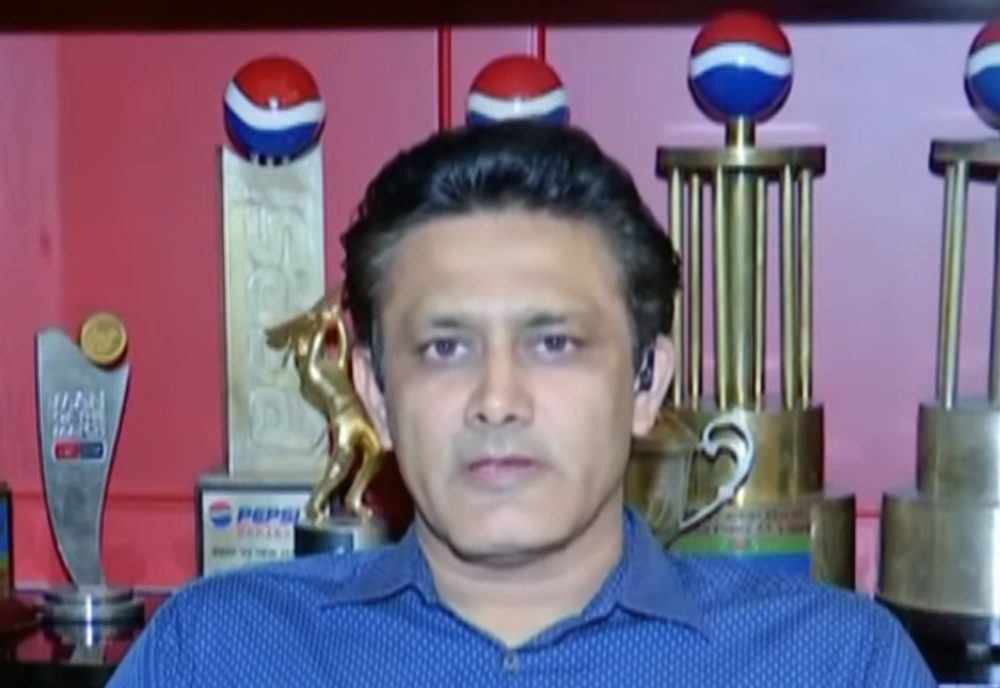
Ten wickets, one bowler. On February 7, 1999, Anil Kumble dismissed every Pakistan batter in the second innings of the Delhi Test, finishing with 10/74. Only England’s Jim Laker had previously taken all ten wickets in a Test innings.
It was an extraordinary afternoon built on familiar habits: accuracy, bounce and pressure that rarely eased. The Bangalore-born leg-spinner did not need extravagant turn to unsettle batters. Across 18 years of international cricket, that method brought him 619 Test wickets, India’s Test captaincy and a reputation for finding a way through when little seemed to be happening.
From Bangalore’s streets to Karnataka
Born on October 17, 1970, Kumble grew up in Bangalore, now officially Bengaluru. He joined the Young Cricketers club at 13, having begun playing in the city’s streets.
Initially a fast bowler, he switched to leg spin without entirely abandoning his original approach. His deliveries arrived quickly, often hurrying batters who expected more time against a spinner. That difference would become central to his career.
His first-class debut came for Karnataka against Hyderabad on November 30, 1989. Within five months, he was playing for India.
Cricket did not immediately push education aside. He completed a mechanical engineering degree at Rashtreeya Vidyalaya College of Engineering in 1992, balancing his studies with the demands of an international career already under way.
Karnataka remained an important part of his cricketing life. Even as national commitments took over, domestic cricket provided the starting point for a bowler whose success depended on repetition and control.
Finding his place in India’s attack
Kumble made his ODI debut against Sri Lanka at Sharjah on April 25, 1990. His first Test followed against England at Old Trafford on August 9.
He was not an instant fixture in every Indian side, but his progress accelerated in the early 1990s. He reached 50 Test wickets in his tenth match and 100 in his 21st. On Indian pitches, his pace and bounce made playing from the crease particularly hazardous.
One-day cricket offered another outlet. In the Hero Cup final against West Indies at Eden Gardens in November 1993, he took 6/12 as India defended 225. Those remained his best ODI figures.
A county season with Northamptonshire in 1995 broadened his experience. He took 105 County Championship wickets that summer, a performance that helped earn him recognition as one of Wisden’s five Cricketers of the Year in 1996. He also received the Arjuna Award in 1995.
At the 1996 World Cup, he led the tournament’s wicket-taking list with 15 wickets in seven matches. India’s campaign ended in the semifinal, but his ability to take wickets while restricting scoring had become indispensable.
Delhi’s perfect ten-and a different test in Antigua
Pakistan were chasing 420 at the Feroz Shah Kotla when Kumble began working through their batting order in February 1999. Their opening partnership reached 101 before he struck. Once the breakthrough came, he kept returning to the same demanding areas.
His tenth wicket, Wasim Akram caught by VVS Laxman, completed figures of 10/74 and sealed a 212-run Indian victory. He became the first Indian, and the second bowler in Test history, to take every wicket in an innings.
Three years later, a very different image came to define his persistence.
Batting against West Indies in Antigua in May 2002, he suffered a fractured jaw after being struck by Merv Dillon. With his jaw bandaged, he returned to bowl 14 overs and dismissed Brian Lara before leaving for treatment.
The episode was striking, but his broader contribution was less theatrical: long spells, repeated questions and wickets accumulated across conditions. He also remained part of India’s limited-overs plans, including the side that shared the 2002 ICC Champions Trophy with Sri Lanka after rain prevented a result in the final.
A century, the captaincy and the final spell
By the middle of the decade, Kumble had become the senior figure in India’s bowling attack. He received the Padma Shri in 2005, while his Test career continued to produce milestones.
Then came an achievement with the bat.
At The Oval in August 2007, he made an unbeaten 110 against England, his only Test century. It arrived in his 118th Test, after years of useful lower-order resistance rather than substantial scores. India drew the match and secured a 1-0 series victory.
He had retired from ODIs that March, following India’s early exit from the World Cup. Later in 2007, he was appointed Test captain, taking charge of the home series against Pakistan and the subsequent tour of Australia.
During the Perth Test in January 2008, he claimed his 600th Test wicket. India won that match, recovering from a contentious defeat in Sydney.
His international career ended where his most famous bowling performance had taken place. On November 2, 2008, during the Delhi Test against Australia, he announced his retirement.
The final numbers were substantial and clearly split between formats:
- Tests: 132 matches, 619 wickets at 29.65, with 35 five-wicket innings and eight ten-wicket matches.
- ODIs: 271 matches, 337 wickets at 30.89, with best figures of 6/12.
- Test batting: 2,506 runs at 17.77, including one century and five fifties.
He never played a T20 international. His 619 wickets remain the highest Test total by an Indian bowler.
An IPL chapter and work beyond playing
International retirement did not mean an immediate farewell to competitive cricket. Kumble played for Royal Challengers Bangalore in the IPL from 2008 to 2010.
The 2009 tournament showed how effectively his method could transfer to T20 cricket. Against Rajasthan Royals in Cape Town, he took 5/5. After assuming the captaincy during the season, he led Bangalore to the final, where his 4/16 could not prevent a six-run defeat by Deccan Chargers.
He later became the franchise’s chief mentor before taking a similar role with Mumbai Indians in 2013.
Administration and coaching brought different responsibilities. He served as president of the Karnataka State Cricket Association, chaired the ICC Cricket Committee from 2012 to 2021 and coached India from 2016 to 2017. During his tenure as national coach, India reached the 2017 Champions Trophy final.
He subsequently worked as Punjab Kings’ head coach and director of cricket operations from 2020 to 2022. His playing achievements received further recognition with induction into the ICC Cricket Hall of Fame in 2015.
Why his leg spin was different
The label “leg-spinner” only partly explains Kumble’s bowling. Where some wrist-spinners sought large sideways movement, he often attacked through pace, overspin and steep bounce.
Batters could not safely assume that a ball pitching short would sit up to be hit. Nor could they simply play for turn: the straighter delivery brought bowled and LBW into play, while his flipper could skid through beneath the bat.
His height helped create awkward bounce, but accuracy held the method together. A delivery that looked manageable became more difficult when it followed several others in almost the same spot.
He was also an alert fielder off his own bowling, ready to turn a checked drive into a return catch. His work did not end at release.
Family, photography and life away from cricket
Away from scorecards, photography has been a lasting interest. Kumble has spoken publicly about his enthusiasm for wildlife photography, an occupation requiring a different kind of patience from bowling through a long session.
His photographs also appeared in Wide Angle, a book offering a player’s view of cricket and life around it. It provides a less formal perspective than the familiar image of him at the top of his bowling mark.
Public biographical accounts record his marriage to Chetana Ramatheertha in 1999 and their family of three children: Aaruni, Mayas and Svasti.
“Jumbo,” meanwhile, became the dressing-room nickname that followed him into commentary boxes and headlines. Behind it was a cricketer whose working life extended well beyond playing: engineering studies, photography, coaching and administration all found space alongside those long spells.
FAQ
How many Test wickets did Anil Kumble take?
He took 619 wickets in 132 Tests at an average of 29.65, including 35 five-wicket hauls.
When did he take all ten wickets in an innings?
On February 7, 1999, he took 10/74 against Pakistan in Delhi, becoming the second bowler to achieve the feat in Tests.
Why was his bowling unusual for a leg-spinner?
He relied heavily on speed, bounce and accuracy rather than consistently producing large leg breaks.
Did he score a Test century?
Yes. His only Test hundred was an unbeaten 110 against England at The Oval in August 2007.
Who is Anil Kumble’s wife?
Public biographical accounts identify his wife as Chetana Ramatheertha. They married in 1999.
When did he retire?
He retired from ODIs in March 2007 and international cricket on November 2, 2008. He continued playing in the IPL through 2010.
Photo: CRICKETNEXT, CC BY 3.0, via Wikimedia Commons