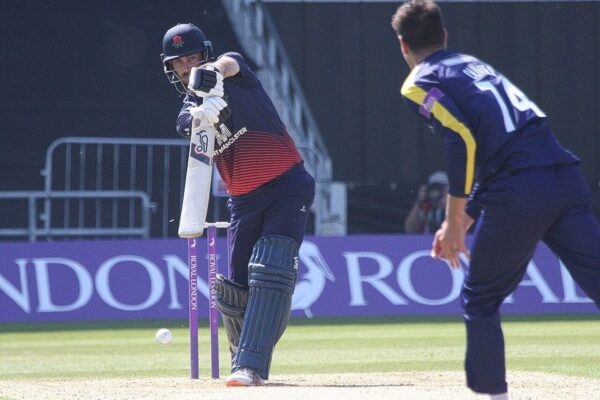
At the 2019 World Cup, Shakib Al Hasan scored 606 runs and took 11 wickets in eight matches. Bangladesh did not reach the semi-finals, but their all-rounder achieved something no player had managed before: 600 runs and 10 wickets in a single edition.
That tournament captured the demands of his career. Bangladesh needed his batting, his left-arm spin and, at various points, his captaincy. From village cricket in Magura to the top of the international all-rounder rankings, he built a game that rarely allowed him to remain on the margins.
From Magura to the Bangladesh team
Born on March 24, 1987, in Magura, Bangladesh, Shakib developed his game in local cricket, where teams recruited him to play for them. His left-handed batting attracted attention, but spin would give him a second route into representative sides.
Training at Bangladesh Krira Shikkha Protishtan, better known as BKSP, helped turn that early ability into a more structured cricket education. He represented Bangladesh Under-17 in 2003 and made his first-class debut for Khulna in May 2004. By 2005, he was playing international Under-19 cricket.
His promotion to the senior side came quickly. On August 6, 2006, he made his ODI debut against Zimbabwe in Harare. His first T20I followed against the same opponents on November 28, and his Test debut came against India in Chattogram on May 18, 2007.
He was still learning, but Bangladesh had found a player capable of contributing in both innings rather than waiting for one discipline to develop later.
Captaincy arrives early
In 2008, figures of 7 for 36 against New Zealand in Chattogram demonstrated that Shakib could lead a Test attack. His bowling was economical without being merely defensive: changes of pace, a repeatable action and subtle variation made batters work for their runs.
Leadership followed. During Bangladesh’s 2009 tour of the West Indies, captain Mashrafe Mortaza was injured in the opening Test. Shakib took over during that match and formally captained the second, helping complete Bangladesh’s first overseas Test series victory.
The opposition was weakened by a dispute between senior West Indies players and their board, an important qualification to the result. Even so, Bangladesh still had to win, and their young all-rounder supplied runs, wickets and direction.
His first captaincy period lasted until 2011. Further appointments would follow across all three formats, although leadership also brought scrutiny of his temperament and relationship with administrators.
County cricket, IPL titles and wider recognition
Worcestershire signed Shakib in 2010, giving him an extended examination in English conditions. He returned in 2011 and later played for Leicestershire in 2013.
The franchise circuit offered a different challenge: fewer overs, changing teammates and little time to settle. He joined Kolkata Knight Riders in 2011 and was part of their IPL championship teams in 2012 and 2014. He later represented Sunrisers Hyderabad in 2018 and 2019 before returning to Kolkata in 2021. Although signed again for 2023, he withdrew without playing that season.
At home, he became a recurring figure in the Bangladesh Premier League. His four Player of the Tournament awards came in 2012, 2013, 2017 and 2022-a record that reflected sustained influence rather than one exceptional campaign.
International recognition grew alongside those contracts. He was Player of the Tournament at the 2012 Asia Cup, where Bangladesh lost a close final to Pakistan. In January 2015, he became the first cricketer to hold the ICC’s No. 1 all-rounder ranking in Tests, ODIs and T20Is simultaneously.
His overseas career also took him to Australia, Pakistan and the Caribbean. With Barbados Tridents, he added a Caribbean Premier League title in 2019.
Milestones, then a remarkable World Cup
By the late 2010s, Shakib was setting benchmarks that extended beyond Bangladesh’s national records.
Against West Indies in November 2018, he became the first Bangladeshi to take 200 Test wickets. Reaching that mark in his 54th Test also made him the fastest player, by matches, to combine 3,000 runs with 200 wickets.
His ODI balance was similarly unusual. He reached the combination of 5,000 runs and 250 wickets in 199 appearances, another fastest-by-matches milestone.
Then came the 2019 World Cup in England and Wales. Batting at No. 3, he made centuries against England and West Indies and finished with 606 runs, third behind Rohit Sharma and David Warner.
Against Afghanistan, he paired 51 with figures of 5 for 29. Only Yuvraj Singh had previously scored a half-century and taken five wickets in the same men’s World Cup match.
There was little waste in that campaign. Shakib found gaps, judged chases and gave Bangladesh a reliable innings-builder near the top of the order. His 11 wickets made the batting haul part of a broader performance, not a separate achievement.
Discipline, suspension and the return
His career has also contained disciplinary episodes that cannot be separated from the playing record.
In 2014, an inappropriate televised gesture brought a three-match suspension. Later that year, the Bangladesh Cricket Board imposed a separate six-month ban over disciplinary breaches, subsequently reducing it.
The most consequential sanction arrived in October 2019. Shakib accepted three charges under the ICC Anti-Corruption Code for failing to report corrupt approaches relating to a 2018 international tri-series and that year’s IPL.
The penalty was two years, with one year suspended. The offence was failure to report approaches, not a finding that he had fixed matches. He became eligible to return in October 2020.
Another confrontation followed in a Dhaka domestic match in 2021, when he kicked and uprooted the stumps while protesting umpiring decisions. He received a three-match suspension and a fine.
Bangladesh nevertheless continued to entrust him with major roles. He returned to the Test captaincy in June 2022, was reappointed T20I captain that August, and took the ODI captaincy ahead of the 2023 Asia Cup and World Cup.
In March 2023, he became Bangladesh’s first bowler to reach 300 ODI wickets.
The international numbers, with their cut-offs
Through his September 2024 Test appearances, Shakib had played 71 Tests, scoring 4,609 runs at 37.77 and taking 246 wickets at 31.72. His batting record included five centuries and 31 fifties; his bowling return included 19 five-wicket hauls.
His ODI record through November 2023 stood at 247 matches, 7,570 runs and 317 wickets. He averaged 37.29 with the bat and 29.52 with the ball, with nine centuries, 56 fifties and four five-wicket hauls.
Through June 2024, his T20I figures were 129 matches, 2,551 runs and 149 wickets, including 13 half-centuries and two five-wicket hauls.
These are dated career snapshots, not claims about live totals.
A game built on small adjustments
Shakib’s batting is more about judgment than imposing technique. He can accumulate through the middle overs, use the sweep against spin and accelerate when the field or match situation offers an opening. Moving to No. 3 for the 2019 World Cup gave those skills more time to shape an innings.
With the ball, he combines a brisk approach to the crease with changes in angle, pace and trajectory. Not every delivery needs to turn sharply. The uncertainty often comes from how quickly the ball reaches the batter and whether it skids on or grips.
That combination explains his value: a quiet batting match need not mean a quiet match overall.
Family, business and public life
Away from cricket, Shakib married Ummey Ahmed Shishir in December 2012. The couple have three children. He also completed a Bachelor of Business Administration at American International University-Bangladesh, graduating in 2023.
His familiar shirt number, 75, has travelled into his commercial life. In March 2024, he launched footwear brand SAH 75 through a venture with Step Footwear. Other publicly reported interests have included the restaurant Shakib’s Dine and brokerage Monarch Holdings.
His foundation was established in 2020 and supported relief efforts during the coronavirus pandemic.
Politics brought a different kind of public responsibility. Elected as an Awami League candidate for Magura-1 in January 2024, he served in Bangladesh’s parliament until its dissolution that August.
Cricket, business and politics have all made him a highly visible public figure. The sporting record, however, rests on something more specific: years of being asked to supply both runs and wickets, often when Bangladesh had little room for either to fail.
FAQ
Where was Shakib Al Hasan born?
He was born in Magura, Bangladesh, on March 24, 1987.
Who is his wife?
He married Ummey Ahmed Shishir in December 2012. They have three children.
How many international centuries has he scored?
The dated records above include 14 international centuries: five in Tests and nine in ODIs. He had no T20I century.
Why did the ICC ban him in 2019?
He failed to report corrupt approaches. The two-year sanction included one suspended year; it was not a finding of match-fixing.
Which IPL titles did he win?
He was part of Kolkata Knight Riders’ title-winning squads in 2012 and 2014.
What made his 2019 World Cup performance significant?
He became the first player to score 600 runs and take 10 wickets in one World Cup edition, finishing with 606 runs and 11 wickets.
Photo: Nurunnaby Chowdhury (Hasive), CC BY-SA 4.0, via Wikimedia Commons