A cramping Glenn Maxwell, barely able to run, still found a way to make 201 not out in a World Cup chase. That one night against Afghanistan did not create his reputation, but it captured it perfectly: improvisation under pressure, risk taken on instinct, and a match bent in a direction that looked impossible a few overs earlier.
Glenn James Maxwell was born on October 14, 1988, in Kew, Victoria, and his career has never followed a neat line. He became one of Australia’s most distinctive white-ball cricketers not simply because he hit hard, but because he saw scoring areas others barely used. Add off-spin, sharp fielding and a willingness to take a game off script, and the result was a batting all-rounder who could change the pace and shape of a contest in a handful of overs.
From Kew to Victoria’s system
Before the reverse-sweeps and switch-hits became his trademark, Maxwell was a young cricketer learning to adapt. He began as a fast bowler and later shifted to off-spin, an early change that mattered. It gave him another route into teams and helped shape the all-round game that would define his career.
His rise through Victorian cricket came with flashes of the unusual. Playing for Victoria in domestic cricket, he announced himself as a player capable of doing damage quickly, including a 19-ball half-century in 2011 that stood among the fastest fifties in Australian domestic competition. It was not just the speed of the innings that caught attention. It was the method: inventive, fearless and slightly disruptive in the best sporting sense.
Maxwell made his first-class debut for Victoria during the 2010-11 season, and while he never became a conventional red-ball specialist, domestic cricket gave him the platform to build a broader reputation.
The domestic game and a life in franchise cricket
In the Big Bash League, Maxwell first played for the Melbourne Renegades before moving to the Melbourne Stars, the club most closely associated with him. With the Stars, he became both a marquee batter and, for a period, captain. His most famous BBL innings came against Hobart Hurricanes in January 2022, when he blasted 154 not out, still the highest individual score in BBL history.
That knock was pure Maxwell: acceleration without much warning, boundaries to unconventional pockets of the ground, and bowlers forced into plans they did not really want to use.
His IPL journey was more winding. He was with Delhi Daredevils in 2012, moved to Mumbai Indians in 2013, then produced a breakout season for Kings XI Punjab in 2014, winning the tournament’s Most Valuable Player award. He later had further spells with Punjab, then played for Royal Challengers Bengaluru, where he was an important middle-order presence. In county and franchise cricket beyond India, he also turned out for Hampshire, Surrey, Yorkshire, Lancashire, London Spirit and Warwickshire.
Some claims in the original version about later franchise stops and contract details were either unsupported or too time-sensitive to present as settled fact, so they are better left out here. Maxwell’s established record across Australia, the IPL, county cricket and other major T20 leagues is more than enough to show the scale of his travelling white-ball career.
Australia call-up and the early international years
Maxwell’s international career began in white-ball cricket. He made his ODI debut for Australia against Afghanistan in August 2012 and his T20I debut against Pakistan a few days later. His Test debut followed in March 2013 against India.
The Test career was brief rather than sustained. Maxwell played seven Tests, scoring 339 runs at an average of 26.07, with one century, and took eight wickets with his off-spin. Those numbers tell the story clearly enough: useful moments, one major innings, but not a permanent place in Australia’s long-form side.
White-ball cricket was where he became central.
The ODI career: risk, speed and a World Cup masterpiece
In One Day Internationals, Maxwell developed into one of Australia’s most dangerous middle-order players. He could finish an innings, rescue one, or turn a par score into something much larger. His ODI record closed at 149 matches, 3,990 runs, four centuries, 23 fifties and 77 wickets. He retired from ODI cricket in 2025.
The numbers are strong, but the biggest moments matter more with Maxwell because they explain why those numbers carry weight.
He was part of Australia’s World Cup-winning squads in 2015 and 2023. In the latter tournament, he produced two of the most remarkable innings of his career. Against the Netherlands, he smashed the fastest century in men’s Cricket World Cup history, reaching his hundred from 40 balls. Then came the Afghanistan match in Mumbai: 201 not out in a chase, scored while battling severe cramps and with Australia in deep trouble.
That innings set several marks at once. It was the first double century in a men’s ODI run chase, the first World Cup double hundred made batting second, and the highest individual score by an Australian in a men’s World Cup match. More than that, it felt like the purest version of Maxwell’s game: audacious, improvised and somehow still effective under extreme pressure.
T20I cricket and the format that suited him best
If ODI cricket gave him room to build innings and then explode, T20I cricket offered a stage built for his instincts. Maxwell became one of Australia’s defining players in the format, mixing boundary-hitting with off-spin and electric fielding.
He was part of the Australia side that won the ICC Men’s T20 World Cup in 2021, another major team honour in a career full of them. He also collected individual recognition, including Australian men’s T20I Player of the Year awards.
Among his standout T20I achievements is a place among the format’s leading century-makers. He has been level with Rohit Sharma on five T20I hundreds, and he also became the first player to score a century in his 100th T20I. That says plenty about his longevity in the format, but also about the way his game aged: still inventive, still dangerous, still capable of taking over a match in a hurry.
What made Glenn Maxwell different
Plenty of batters attack. Fewer make captains redraw the field.
Maxwell’s batting was built on access. He could reach areas behind square on both sides, disrupt a spinner’s length with movement and angle, and turn a good ball into a scoring option by changing his base or his hands. Against spin, in particular, he became one of the most inventive players of his era.
That made him more than a hitter. He was a problem-solver at high speed.
His off-break bowling added balance to white-ball sides, especially when match-ups mattered, and his fielding often saved runs or created chances in key moments. Put together, that is why the label batting all-rounder fits so well. The bat brought the headlines, but the full package made him so valuable.
Setbacks that interrupted the run
Maxwell’s career was not one uninterrupted surge. In 2019, he took a break from cricket to focus on his mental health. He later returned to the game, and that period remains one of the more important non-statistical moments in his story. It showed a player stepping away when he needed to, despite the public image of constant energy and bravado.
Another major setback came in late 2022, when he suffered a broken leg in an off-field accident. The injury disrupted his season and delayed his return, but he worked back into Australia’s plans and was soon producing some of the finest white-ball innings of his career.
Off the pitch: family, marriage and life beyond the middle
Away from cricket, Maxwell’s life has been more public than that of many players, though the broad facts are straightforward. He married Vini Raman in March 2022, and the couple’s wedding celebrations included both Western and Indian traditions. That detail drew attention not because it was unusual in celebrity culture, but because it reflected a personal side of Maxwell that fans had gradually come to know more clearly over the years.
The couple later welcomed a son.
Beyond that, it is better to be careful. Property details, net-worth estimates and similar claims often vary widely by source and can date quickly, so they are not especially useful unless firmly documented. What is clear is that Maxwell has remained closely associated with Victoria, the state where he was born and where his cricket journey began.
The records, and the pattern behind them
Some players collect records through volume. Maxwell’s came through impact.
He holds the highest individual score in BBL history with 154 not out. He owns the fastest hundred in men’s Cricket World Cup history. He made the first men’s ODI double century in a successful chase. He has scored centuries in all three international formats, becoming only the second Australian man to do so.
There is a common thread through all of it. These are not quiet records. They are the marks left by a cricketer who specialized in sudden change: changing tempo, changing angles, changing what looked possible in a match.
That is why Glenn Maxwell has remained such a compelling figure in modern cricket. Not because every innings worked, and not because his career was tidy, but because when it did work, it looked unlike almost anyone else.
FAQ
How old is Glenn Maxwell?
He was born on October 14, 1988.
What is Glenn Maxwell’s highest ODI score?
His highest ODI score is 201 not out against Afghanistan at the 2023 Cricket World Cup.
Has Glenn Maxwell won a World Cup?
Yes. He was part of Australia’s winning squads at the 2015 and 2023 Cricket World Cups, and the 2021 T20 World Cup.
What is Glenn Maxwell’s role in cricket?
He is a right-handed batting all-rounder who also bowls right-arm off-spin.
Did Glenn Maxwell play Test cricket?
Yes. He played seven Tests for Australia and scored one Test century.
Who is Glenn Maxwell married to?
He is married to Vini Raman.
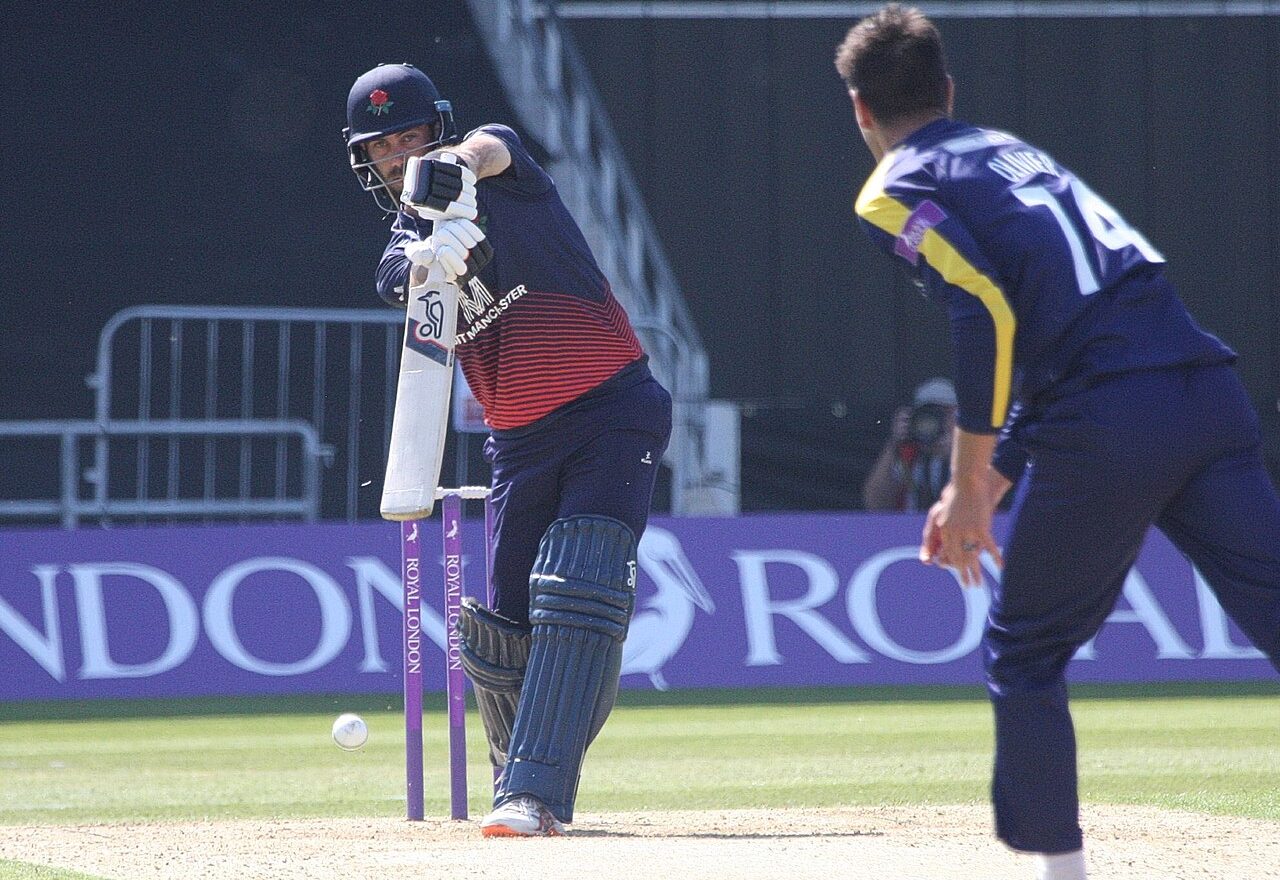
Photo: Dave Morton, Public domain, via Wikimedia Commons