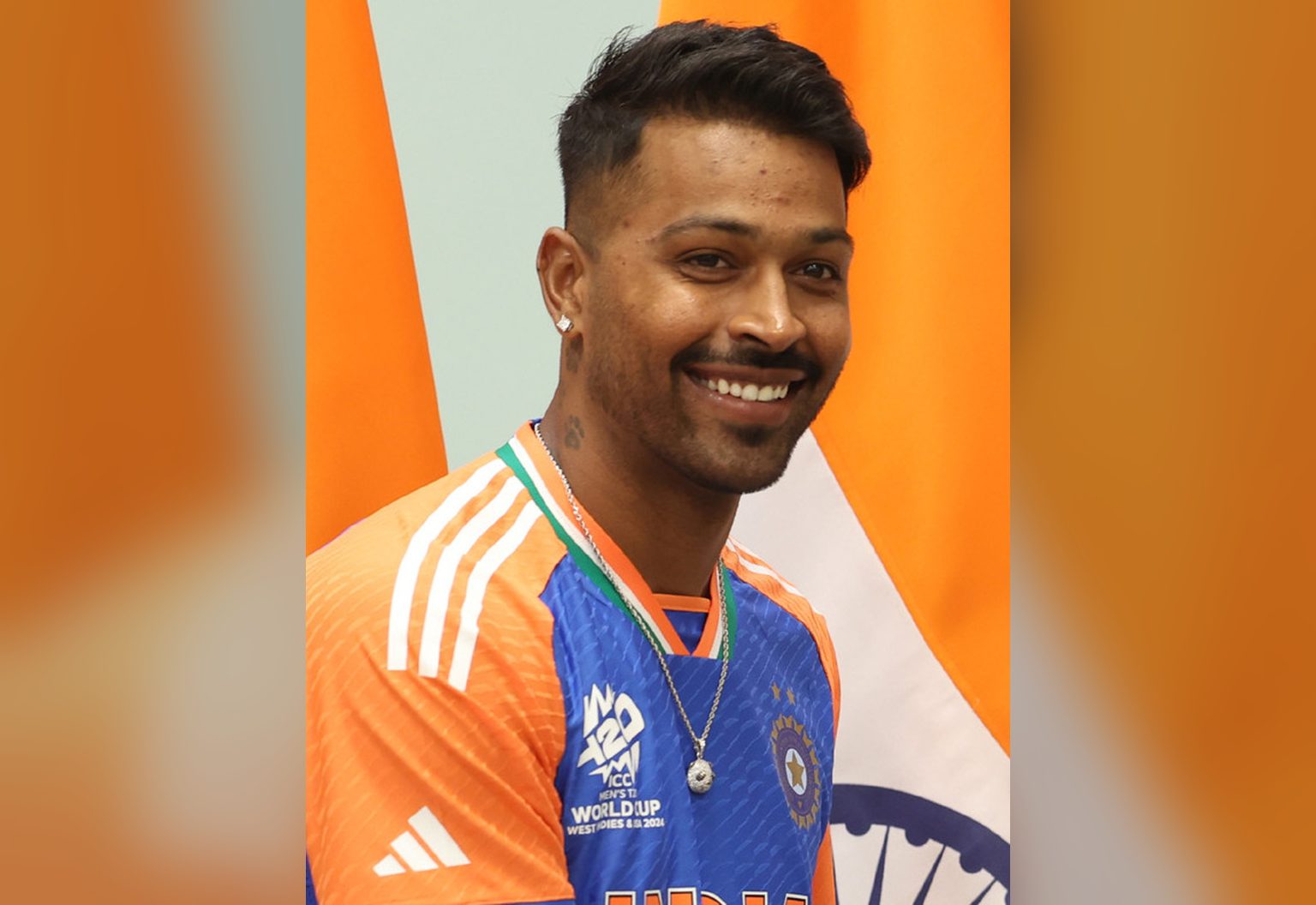
A 26-ball fifty in a Test in Sri Lanka. A title in Gujarat Titans’ first IPL season as captain. A white-ball career built on six-hitting and seam bowling, two skills India has not often found in the same player. Hardik Himanshu Pandya has spent much of his career filling that gap.
Born on October 11, 1993, in Choryasi near Surat, Gujarat, Pandya grew up in a family that reorganized itself around cricket. His father, Himanshu Pandya, closed his car-finance business and moved the family to Vadodara so Hardik and his older brother Krunal could train more seriously. It was a gamble, and not a comfortable one. The family lived in a rented apartment, traveled in a second-hand car, and built their routine around practice.
At the Kiran More academy in Vadodara, Hardik’s game began to take shape. He left MK High School after class 9 to focus on cricket, a decision that underlined how early the sport had become the center of his life. Another shift proved even more important later on: around the age of 18, he moved away from leg-spin and developed into a seam bowler. That change gave his cricket a different ceiling. India had plenty of stroke-makers; a right-handed middle-order batter who could also bowl fast-medium was much rarer.
Baroda and the first signs of a white-ball player
Pandya’s senior domestic career started with Baroda in the 2012-13 season. He made his first-class debut for the state side and quickly developed a reputation for impact rather than neatness. Even early on, his cricket had that slightly rough-edged quality that would remain part of his appeal: aggressive batting, brisk seam bowling, and the sense that a game could change quickly when he was involved.
Baroda won the Syed Mushtaq Ali Trophy in 2013-14, an early marker of his value in the shorter format. Red-ball cricket brought useful moments too. In first-class matches, he recorded three five-wicket hauls, with a best of 5 for 28. But the route to national recognition was always more likely to come through white-ball cricket, where his combination of power and pace stood out more sharply.
Mumbai Indians and a rapid rise
The IPL changed his profile. Mumbai Indians signed him in 2015, and he soon became part of a side that dominated the league across several seasons. During his first spell with the franchise, Mumbai won the title in 2015, 2017, 2019 and 2020.
He was not just a finisher who hit from ball one. At his best, Pandya gave Mumbai balance: late-order runs at high speed, overs of genuine seam, and sharp fielding. That made him more than a specialist. It made team selection easier around him.
His franchise story took a major turn when Gujarat Titans appointed him captain ahead of their debut season in 2022. The move was bold, but it worked immediately. Gujarat won the IPL title in their first year, with Pandya contributing heavily as both captain and all-rounder. He stayed with the Titans in 2023 before returning to Mumbai Indians ahead of the 2024 season.
His return came with heavy attention because he also replaced Rohit Sharma as Mumbai captain. Reports at the time suggested that leadership may have been part of the move, but that remained reported speculation rather than a confirmed condition of the transfer.
India debut and the move into all formats
Pandya made his T20I debut for India against Australia on January 26, 2016. His ODI debut followed against New Zealand on October 16, 2016, and he was named Player of the Match in that first game. Test cricket arrived in July 2017, when he debuted against Sri Lanka in Galle.
Although he has represented India in all three formats, white-ball cricket has been the center of his international career. In ODIs, he developed into a middle-order player who could counterattack, finish innings and provide a seam-bowling option that gave captains flexibility. In T20Is, that value became even clearer. He could bat in different gears, bowl with the new ball or through the middle, and field at a high level.
His Test career was shorter but still produced memorable moments. On the 2017 tour of Sri Lanka, he scored a century before lunch on the second day in Pallekele, becoming the first Indian batter to do so in a Test. In the same series, he brought up a half-century off 26 balls, then the fastest Test fifty by an Indian outside India.
Across formats, the numbers underline the shape of his career rather than simple volume. He has scored more than 2,000 T20I runs and taken more than 100 wickets in the format, becoming the first pace-bowling all-rounder in men’s T20Is to complete the 1,000-run, 100-wicket double. In ODIs, he has passed 1,900 runs and 90 wickets. In Tests, he scored 532 runs and took 17 wickets in 11 matches, with one century and a five-for.
Because cricket records move constantly, exact career totals change over time. The broad picture is stable: Hardik Pandya has been one of India’s most productive white-ball all-rounders of the modern era.
Tournament cricket and big-match moments
Some players collect numbers. Pandya’s career is easier to remember through moments.
He was part of India’s Asia Cup-winning squads in 2016, 2018 and 2023. In the 2017 Champions Trophy final, he made a counterattacking 76 against Pakistan in a lost cause, an innings that briefly gave India hope after a collapse. He also played a key role in India’s T20 World Cup triumph in 2024, serving as vice-captain in the campaign.
There are also a few statistical quirks that say plenty about his skill set. Against England in 2022, he became the first Indian player to score a fifty and take four wickets in the same ODI. Against England in a T20I in 2018, he became the first Indian to take four wickets and score more than 30 runs in the same match. Those are not decorative records; they point to a cricketer who can influence both innings of a game.
He has captained India in white-ball cricket as well, mostly in bilateral series, adding another layer to a career that has often carried more responsibility than his age group initially suggested.
What makes Hardik Pandya different
At his best, Pandya looks built for white-ball pressure. He is a right-handed batter who prefers to move the game forward rather than settle it down. He hits cleanly down the ground, is strong through the leg side, and can change the tempo of an innings in a handful of deliveries.
With the ball, he offers right-arm fast-medium and, when fully fit, enough pace to be a proper seam option rather than a part-timer. Injuries have affected how often he bowls and how long his spells can be, but the value remains obvious: if he is contributing in both disciplines, India can balance a side differently.
His fielding matters too. Pandya has long been an athletic presence, quick across the turf and comfortable in high-pressure catching positions. Put all of that together and the appeal is clear. A genuine seam-bowling all-rounder is one of the hardest roles to fill in cricket, and India has often leaned on him because of that.
Life away from cricket
Off the field, family has always been central to his story. His brother Krunal Pandya also became a professional cricketer, and the two careers are closely tied to the sacrifices their parents made in Vadodara. Their father, Himanshu Pandya, died in January 2021 after suffering a cardiac arrest. Their mother, Nalini Pandya, has remained a steady presence in the family story.
Pandya married actor and model Nataša Stanković in 2020. The couple later held a wedding celebration in Udaipur in 2023, and they have a son, Agastya, born in July 2020. In 2024, Pandya and Stanković announced their separation publicly, so any reference to them as a current couple would be outdated.
His public image has always been more visible than that of many cricketers: changing hairstyles, strong fashion choices, and a commercial profile that grew quickly with his on-field success. Reports on celebrity wealth, property values and endorsement income vary widely, so it is safer to say that he has been among the more marketable Indian cricketers of his generation, with deals across sportswear, grooming, tech and consumer brands.
Controversies, scrutiny and the cost of visibility
Pandya’s career has also included public setbacks. In early 2019, he faced major backlash after making sexist remarks on the television show Koffee With Karan. He and KL Rahul were suspended pending inquiry and sent back from India’s tour of Australia. The episode damaged his image and remains one of the most discussed controversies of his career.
Other incidents have drawn attention too, though not all should be treated in the same way. In 2021, customs officials at Mumbai airport briefly detained luxury watches in his possession; Pandya later said the declared value being reported was incorrect and that he had submitted the required documents. During IPL 2024, he was fined for a slow over-rate as Mumbai Indians captain, a routine disciplinary matter in the tournament.
Some viral social-media claims from IPL matches, including allegations about dressing-room tension or video clips said to show confrontations, were never clearly established by official evidence. Those are better described as online speculation than settled fact.
That distinction matters with a player as visible as Pandya. Few Indian cricketers generate more noise around them. The useful task is separating what happened on record from what merely circulated.
The shape of his career
Hardik Pandya’s story is not a neat one, and that is part of why it holds attention. He came from a family that took real risks to keep two sons in cricket. He rose through Baroda and Mumbai Indians as a white-ball disruptor. He became an India regular, an IPL-winning captain, and a rare all-rounder who could genuinely shift a side’s balance.
There have been injuries, fluctuations in form, leadership debates and off-field controversy. There have also been title runs, match-turning spells, and innings that changed the mood of a game in minutes. For India and in the IPL, that has been the central theme of his career: when Hardik Pandya is fit and fully involved, he gives a team options that very few players can.
FAQ
What is Hardik Pandya’s full name?
His full name is Hardik Himanshu Pandya.
When was Hardik Pandya born?
He was born on October 11, 1993, in Choryasi near Surat, Gujarat, India.
What is Hardik Pandya’s role?
He is an all-rounder: a right-handed middle-order batter and a right-arm fast-medium seam bowler.
Which IPL teams has Hardik Pandya played for?
He has played for Mumbai Indians and Gujarat Titans.
Is Hardik Pandya married?
He married Nataša Stanković in 2020. The pair later announced their separation in 2024.
Why is Hardik Pandya important to India in white-ball cricket?
Because he offers a rare combination of middle-order power hitting, seam bowling and athletic fielding.
Photo: Prime Minister's Office, GODL-India, via Wikimedia Commons