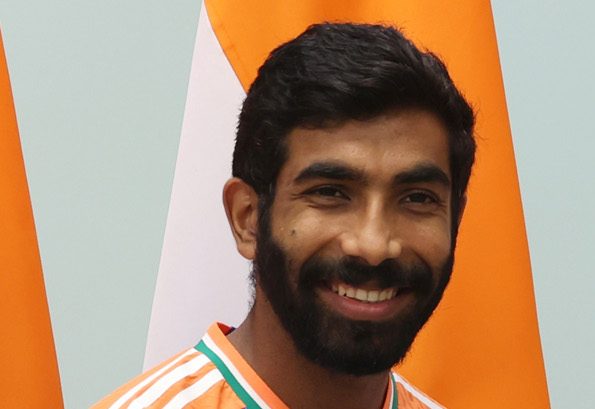
Three runs from the first over of his IPL debut, and one of the wickets was Virat Kohli. That was enough to make people look twice at Jasprit Bumrah, not just because of the result, but because of the action. Short run-up, braced front arm, whippy release, and a ball that seemed to hurry batters in a way they did not quite expect.
From Ahmedabad to Gujarat cricket
Jasprit Jasbirsingh Bumrah was born in Ahmedabad on December 6, 1993. His childhood was marked by an early loss: his father, Jasbir Singh, died when Bumrah was still very young. He was raised by his mother, Daljeet Bumrah, a school teacher who later became a vice principal. He also has a sister, Juhika.
Cricket began to take shape at school level in Ahmedabad and then at the Royal Cricket Academy, where he trained as a teenager. Even then, the feature everyone noticed was the one that would later define his career. His bowling action looked unusual enough to attract doubt. Some thought it should be changed. Coach Kishore Trivedi chose the opposite route and left it alone, trusting that the action’s awkwardness could become an advantage rather than a flaw.
That decision mattered. As a youngster, Bumrah was not always accepted smoothly through the system. He was initially left out of Gujarat’s main Under-19 side and kept as a reserve. When an opportunity came, he responded with wickets and pushed himself into contention. Stories from those years paint a picture of a shy boy, sometimes mocked for his action and even called a “chucker” by other children, but already stubborn enough to keep bowling his way.
Gujarat and the first steps in senior cricket
His senior domestic career was built with Gujarat. Bumrah made his first-class debut in the 2013-14 Ranji Trophy against Vidarbha in October 2013, and he made an immediate impression by taking seven wickets in the match. That start helped move the conversation away from how he bowled and toward what he was doing with the ball.
Before that first-class debut, he had already been part of Gujarat’s Syed Mushtaq Ali Trophy-winning side in 2012-13. He was also in the squad that won the Vijay Hazare Trophy in 2015-16. During that one-day season, his action again came under scrutiny when umpires reported him, but the matter did not develop into a lasting issue. It was another reminder that his method would keep drawing attention until performance settled the debate.
He has never been picked for his batting, but there is one lower-order note worth keeping. In December 2020, playing for India A against Australia A, he made 55 not out, his first half-century in first-class cricket.
Mumbai Indians spotted something early
The IPL gave Bumrah his first big stage. Mumbai Indians signed him ahead of the 2013 season, and he quickly became one of the smartest long-term investments the franchise ever made. His first match for them remains one of those neat origin stories: a young fast bowler, barely known outside domestic circles, dismissing Virat Kohli and showing the nerve to bowl at the toughest moments.
What followed was not a brief burst but a long partnership. Bumrah became central to Mumbai’s title-winning cycle, helping them lift the IPL in 2013, 2015, 2017, 2019 and 2020. Those teams had star power everywhere, but his role was specific and demanding: bowl when the innings needed controlling, return at the death, and hit yorkers under pressure.
That reliability is a large part of his IPL identity. Over the years, he developed into Mumbai Indians’ leading wicket-taker, a mark of both longevity and quality. More than the raw tally, though, it is the type of overs he bowls that explains his value. Captains trust him when the margin for error is smallest.
Australia, 2016: India debut and instant white-ball impact
His India career began on tour in Australia in January 2016. Bumrah made his ODI debut against Australia on January 23, then his T20I debut against the same opposition three days later on January 26.
The timing suited him. Limited-overs cricket was already rewarding bowlers who could defend at the death without losing control, and Bumrah arrived with exactly that skill set. He was quick enough to hurry batters, accurate enough to make yorkers repeatable, and awkward enough in release to deny clean sight of the ball.
His first year in T20 internationals was especially strong. In 2016, he took 28 wickets in T20Is, then a record for the most wickets in that format in a calendar year. He was also part of India’s Asia Cup-winning squad that year, beginning a long association with major tournament cricket.
Test cricket turned him into something larger
The white-ball specialist label did not last. Bumrah made his Test debut against South Africa in Cape Town in January 2018, and that year changed the scale of his career.
He was immediately effective in conditions that usually expose touring fast bowlers. During that debut Test year, he became the first Asian bowler to take five-wicket hauls in South Africa, England and Australia in the same calendar year. He finished 2018 with 48 Test wickets, the most by an Indian bowler in a debut year in Test cricket.
Then came the 2018-19 Border-Gavaskar Trophy in Australia, where he took 21 wickets and was one of the defining bowlers of the series. It was the kind of tour that settles arguments. By then, Bumrah was no longer the bowler with the odd action; he was India’s spearhead overseas.
In August 2019, he added another landmark by taking a Test hat-trick against West Indies, becoming only the third Indian to do so.
The numbers across formats
Bumrah’s record stands out because it travels across formats rather than sitting in one lane. In Tests, he developed into one of the quickest Indian fast bowlers to major milestones, reaching 150 wickets in 34 matches and 200 in 44. He also became the first Indian bowler to complete 100 wickets in Tests, ODIs and T20Is.
In one-day internationals, he has combined control with wicket-taking bursts. His best ODI figures, 6 for 19 against England in 2022, showed both sides of his game: discipline first, damage second. Earlier, in 2017, he took 15 wickets in a five-match ODI series against Sri Lanka, the most by a pace bowler in a five-match bilateral ODI series at the time.
In T20Is, his impact has often been felt as much in economy as in wickets. He is the kind of bowler who can change the shape of an innings without necessarily taking three wickets in three overs. Batters slow down against him, and that pressure tends to spread.
One ranking detail captures his range better than almost anything else: he became the first bowler to reach No. 1 in the ICC men’s rankings in Tests, ODIs and T20Is.
Big tournaments and the habit of showing up
World events have been a major part of Bumrah’s story. At the 2019 ODI World Cup, he took 18 wickets in nine matches and was named in the Team of the Tournament by the ICC and ESPNcricinfo. At the 2023 ODI World Cup, he took 20 wickets as India finished runners-up, and he was among the tournament’s most economical frontline bowlers.
His finest global tournament may have been the 2024 T20 World Cup. India won the title, Bumrah took 15 wickets, and he was named Player of the Tournament. It was not just a matter of tally. He bowled the hard overs, often against set batters, and still kept control of games that were threatening to swing.
He was also part of India’s Champions Trophy campaign in 2017, when the side finished runners-up, and featured in the World Test Championship cycle that ended with India as runners-up in the 2021 final.
Against Australia, the Border-Gavaskar Trophy repeatedly brought out his best. Whether with the new ball or as the enforcer later in the innings, he has been one of the central figures in India’s strongest overseas Test performances.
Injury, surgery and the return
Fast bowlers rarely move in a straight line, and Bumrah’s career has had a significant interruption. A back injury, followed by surgery, ruled him out of the 2022 Asia Cup, the 2022 T20 World Cup, the home series against Sri Lanka in early 2023, the 2023 IPL and the World Test Championship final that year.
For a bowler built on repeatable mechanics and precision, that was a serious break. It also sharpened the appreciation of what came next. His return was not tentative for long. He came back with pace, control and the same ability to decide spells in a handful of deliveries.
Leadership responsibilities also grew around this period. Bumrah captained India in Test cricket in 2022 and has led the side in T20Is as well. In late 2023, he was named India’s Test vice-captain.
Why his bowling works
Plenty of fast bowlers can hit 140 kph. That alone does not explain Bumrah. What makes him difficult is the combination: the unusual action, the late release, the skiddy pace, the steep bounce from a relatively short run-up, and the accuracy to repeat demanding lengths.
In white-ball cricket, that usually means yorkers, hard lengths and subtle changes of pace. At the death, he is one of the few bowlers who can attack and defend at the same time. In Tests, the same action helps him create awkward angles and extract movement that keeps top-order batters uncertain.
There is also the small matter of his batting cameo against Stuart Broad at Edgbaston in 2022, when he scored 35 runs in a single over, the most expensive over in Test cricket. It remains a statistical oddity in a career built almost entirely with the ball.
Off the pitch
Away from cricket, Bumrah has generally kept a low profile. He married sports presenter Sanjana Ganesan in March 2021. The couple welcomed their son, Angad, in September 2023.
That quieter public image fits the stories from his early years. He has often been described as reserved rather than showy, and his career has never needed much decoration. The personal thread that matters most is the one running from Ahmedabad to the international game: a boy raised by a working mother after an early family loss, carrying an action many people doubted, and turning that very action into his competitive edge.
It is a cleaner summary of Jasprit Bumrah than any slogan could offer. The thing that once made him look out of place became the reason he could dominate in any format.
Honors and recognition
Bumrah’s major individual honors include selection in the ICC’s Test and ODI teams of the year, and he was named one of the Wisden Cricketers of the Year for his performances in England. His 2024 season brought the biggest recognition of all, when he was named ICC Men’s Cricketer of the Year and ICC Men’s Test Cricketer of the Year.
Those awards matter, but they follow the cricket rather than define it. His standing rests on something more durable: he has been India’s most complete fast bowler across formats, and one of the few who can alter a match plan simply by taking the ball.
FAQ
How old is Jasprit Bumrah?
He was born on December 6, 1993.
What is Jasprit Bumrah’s bowling style?
He is a right-arm fast bowler known for his unusual action, late movement, steep bounce and yorkers.
Which IPL team does Jasprit Bumrah play for?
He has spent his IPL career with Mumbai Indians.
Has Jasprit Bumrah captained India?
Yes. He has captained India in Test cricket and has also led the side in T20 internationals.
Who is Jasprit Bumrah’s wife?
He is married to sports presenter Sanjana Ganesan.
Photo: Prime Minister's Office, GODL-India, via Wikimedia Commons