A cover drive through extra cover has long been one of Virat Kohli’s cleanest signatures, but the fuller story is about accumulation: innings built at speed, chases controlled under pressure, and a career that stretched from Delhi age-group cricket to the top tier of every format.
From West Delhi nets to Delhi cricket
Virat Kohli was born on November 5, 1988, in Delhi, into a Punjabi family that backed his cricket from the start. His father, Prem Nath Kohli, worked as a criminal lawyer, and his mother, Saroj Kohli, managed the home. He grew up with an elder brother, Vikas, and an elder sister, Bhawna.
One of the most repeated stories from his childhood is that he was asking for a bat and ball almost as soon as he could hold them. What is documented more clearly is the next step: in 1998, he joined the West Delhi Cricket Academy, where structured coaching began to shape the talent.
The rise through junior cricket was quick. He represented Delhi Under-15s in 2002 and moved into the Under-17 side in the following phase of his development. By then, the outlines of his batting were already visible: strong hands, sharp judgment of length, and an appetite for runs that coaches noticed early.
A defining moment came in December 2006. Kohli was playing for Delhi in a Ranji Trophy match against Karnataka when his father died overnight. He returned the next morning and made 90. The episode is often retold because it is documented, and because it revealed something central to his cricket very early: discipline under emotional strain.
Domestic cricket, Under-19 glory and the IPL link
Kohli made his first-class debut for Delhi in 2006, and domestic cricket gave him the platform from which everything else followed. He was not a late bloomer waiting for one lucky break; he was moving steadily through the system, scoring heavily enough to stay in view.
The first major title attached to his name came in 2008, when he captained India to the Under-19 World Cup in Malaysia. That tournament mattered for more than the trophy. It established him as a serious young batter and as a leader trusted with a national side.
The same year began his long association with Royal Challengers Bangalore, the franchise now known as Royal Challengers Bengaluru. Few player-team relationships in the IPL have lasted as long or remained as central to a team’s identity. Kohli has spent his entire IPL career with the same franchise and became the tournament’s leading run-scorer.
For anyone looking up Virat Kohli IPL numbers, the headline is not one freak season or one purple patch. It is sustained production over a very long period. His 2016 season remains the standout, with 973 runs, still the most in a single IPL edition. He also became the first player to score 8,000 IPL runs.
India debut and the making of a run machine
Kohli made his ODI debut for India against Sri Lanka in August 2008. His T20I debut followed in 2010, and his Test debut came in 2011 against West Indies.
The early international years were not a straight line upward. He had to move from promising young batter to reliable top-order presence, and then from reliable player to match-winner. That shift happened through volume and consistency. He made runs in bilateral series, then in chases, then in major tournaments, until the numbers became difficult to ignore.
In ODI cricket especially, he built one of the strongest records the format has seen. He went past Sachin Tendulkar’s mark for most ODI centuries and also became the fastest player to several major run milestones, including 8,000, 9,000, 10,000, 11,000, 12,000 and 13,000 runs. The speed of that accumulation is a big part of why his one-day record stands apart.
He was part of India’s 2011 ODI World Cup-winning squad and the team that won the 2013 ICC Champions Trophy. Those were the first senior ICC titles of his career, and they arrived while he was still moving into his peak.
Test cricket and the captaincy years
If ODI cricket made him a statistical giant, Test cricket gave him a different kind of weight. He took over India’s Test captaincy during the 2014-15 tour of Australia, first as stand-in and then full-time after MS Dhoni’s retirement from the format. Under Kohli, India became a more aggressive Test side, especially in terms of fast-bowling depth, fitness standards and the push for wins away from home.
He finished his Test career with 123 matches, 9,230 runs, an average of 46.85, 30 centuries and 31 fifties. Among Indian captains, he set the national record for most Test double hundreds as captain. His best years in the format combined heavy scoring with visible intensity; he wanted games moved forward, not merely managed.
India also rose to the top of the ICC Test rankings during his captaincy, and the side reached the final of the inaugural World Test Championship cycle. The major ICC Test trophy eluded him, but the shape and competitiveness of the team changed significantly in that period.
Kohli retired from Test cricket in May 2025. By then, his red-ball career had covered difficult tours, prolific home seasons and some of the most combative captaincy of his era.
White-ball dominance and tournament peaks
His strongest statistical case has always been in limited-overs cricket. In ODIs, Kohli became the benchmark chase batter of his generation, so often controlling pursuits with a mix of risk management and timely acceleration that the label “king of chases” followed him for years.
At the 2023 ODI World Cup, he produced one of the great single-tournament batting campaigns: 765 runs, the most by any player in one edition of the men’s ODI World Cup. He finished that event as Player of the Tournament.
In T20 internationals, his career had a slightly different shape. He was less about brute force than tempo, placement and nerve. He was named Player of the Tournament at the men’s T20 World Cup in 2014 and again in 2016, a rare sign of repeated influence in a format built on volatility.
The final act in that format came at the 2024 T20 World Cup, where India won the title and Kohli was Player of the Match in the final. Soon after, he announced his retirement from T20Is. It was a fitting end to that chapter: one last high-pressure innings on a world stage.
He remains one of the very few batters to have reached No. 1 in the ICC rankings in Tests, ODIs and T20Is.
How Virat Kohli bats
Kohli’s game has never depended on novelty. Its strength lies in repeatability. He sets up well, judges length early, and keeps the scoreboard moving so bowlers rarely settle. Dot-ball pressure, against him, tends to disappear quickly.
The off-drive is the stroke most associated with him, but it is only part of the package. He is just as strong whipping length balls through midwicket, punching on the rise, or taking singles that turn a quiet over into a productive one. His balance at the crease has been one of his biggest assets, allowing him to play late and still hit with authority.
Fitness also became part of his cricket identity. Over time, he helped shift the conversation around conditioning in Indian cricket, not by speeches alone but by making elite fitness look non-negotiable.
Awards, records and where he stands
The honors list is long because the output was long. Kohli won the ICC ODI Cricketer of the Year award multiple times, the Sir Garfield Sobers Trophy for ICC Cricketer of the Year, and the ICC Test Cricketer of the Year award. In 2018, he became the first player to win the three major ICC individual awards in the same year: Cricketer of the Year, Test Cricketer of the Year and ODI Cricketer of the Year.
He was also named ICC Men’s ODI Cricketer of the Decade and ICC Men’s Cricketer of the Decade for the 2011-2020 period. Wisden named him the Leading Cricketer in the World in successive years during his peak.
India’s civilian and sporting honors followed: the Arjuna Award, the Padma Shri and the Khel Ratna, now called the Major Dhyan Chand Khel Ratna.
Across international cricket, he moved past 80 centuries and sits second on the all-time list, behind only Sachin Tendulkar.
Life away from cricket
Away from the field, Kohli’s profile expanded far beyond cricket. He married actor Anushka Sharma in December 2017. The couple have a daughter, Vamika, born in January 2021, and a son, Akaay, born in February 2024.
His business interests have been widely reported and span fashion, food, sport and startups. Publicly reported ventures and investments have included Wrogn, One8, One8 Commune, FC Goa, Rage Coffee, Blue Tribe, Universal Sportsbiz, Hyperice, Agilitas Sports, Sports Convo and Mobile Premier League, among others. As with many celebrity investment portfolios, the exact size and current status of every stake can change, so older reports do not always reflect the latest position.
Public reports have also frequently discussed Virat Kohli net worth, but those figures vary widely and remain estimates rather than confirmed totals. Reported income streams have included his BCCI contract, match fees, IPL salary, endorsements and business investments.
His charitable work is better grounded. The Virat Kohli Foundation, launched in 2013, has supported work involving underprivileged children and young athletes, and has collaborated with organizations including Smile Foundation. During the COVID-19 crisis, Kohli and Anushka Sharma helped raise funds through the #InThisTogether campaign.
A few smaller details have also stayed with his public image. He has spoken against endorsing fairness cream products, saying such campaigns did not fit his values. Some reports, including claims cited by entertainment and sports websites, have said he privately supported scholarships for athletes and donated substantial sums without publicity, but those claims are best treated as reported accounts rather than verified public disclosures.
Edge, incidents and scrutiny
Kohli’s career has always carried visible emotion, and that has sometimes spilled into disciplinary trouble. In 2012 in Sydney, he was fined for making an obscene gesture toward the crowd. During the 2014 Adelaide Test, he exchanged words with Mitchell Johnson and Brad Haddin, then answered with twin centuries in the match.
In the 2017 Bengaluru Test against Australia, he accused the touring side of trying to seek outside help for a DRS call after Steve Smith looked toward the dressing room. The incident became one of the defining flashpoints of that series.
At Cape Town in early 2022, he was reprimanded after a stump-mic outburst aimed at broadcaster SuperSport during a DRS controversy. Later, in the 2024 Boxing Day Test at the MCG, he was sanctioned after shoulder contact with debutant Sam Konstas and received a fine and one demerit point.
One additional story circulated in parts of the media about an alleged confrontation involving his security staff and journalists during India’s tour of England. Because that account was reported as an allegation rather than established fact, it should be treated cautiously.
FAQ
How old is Virat Kohli?
He was born on November 5, 1988.
What is Virat Kohli’s nickname?
The most common nickname is Cheeku.
Has Virat Kohli retired from international cricket?
He retired from T20Is after the 2024 T20 World Cup and retired from Test cricket in May 2025. He has continued in ODI cricket.
Which IPL team does Virat Kohli play for?
He plays for Royal Challengers Bengaluru.
What are Virat Kohli’s biggest records?
He holds the record for the most ODI centuries, scored 765 runs at the 2023 ODI World Cup, and is the leading run-scorer in IPL history.
Who is Virat Kohli married to?
He is married to actor Anushka Sharma.
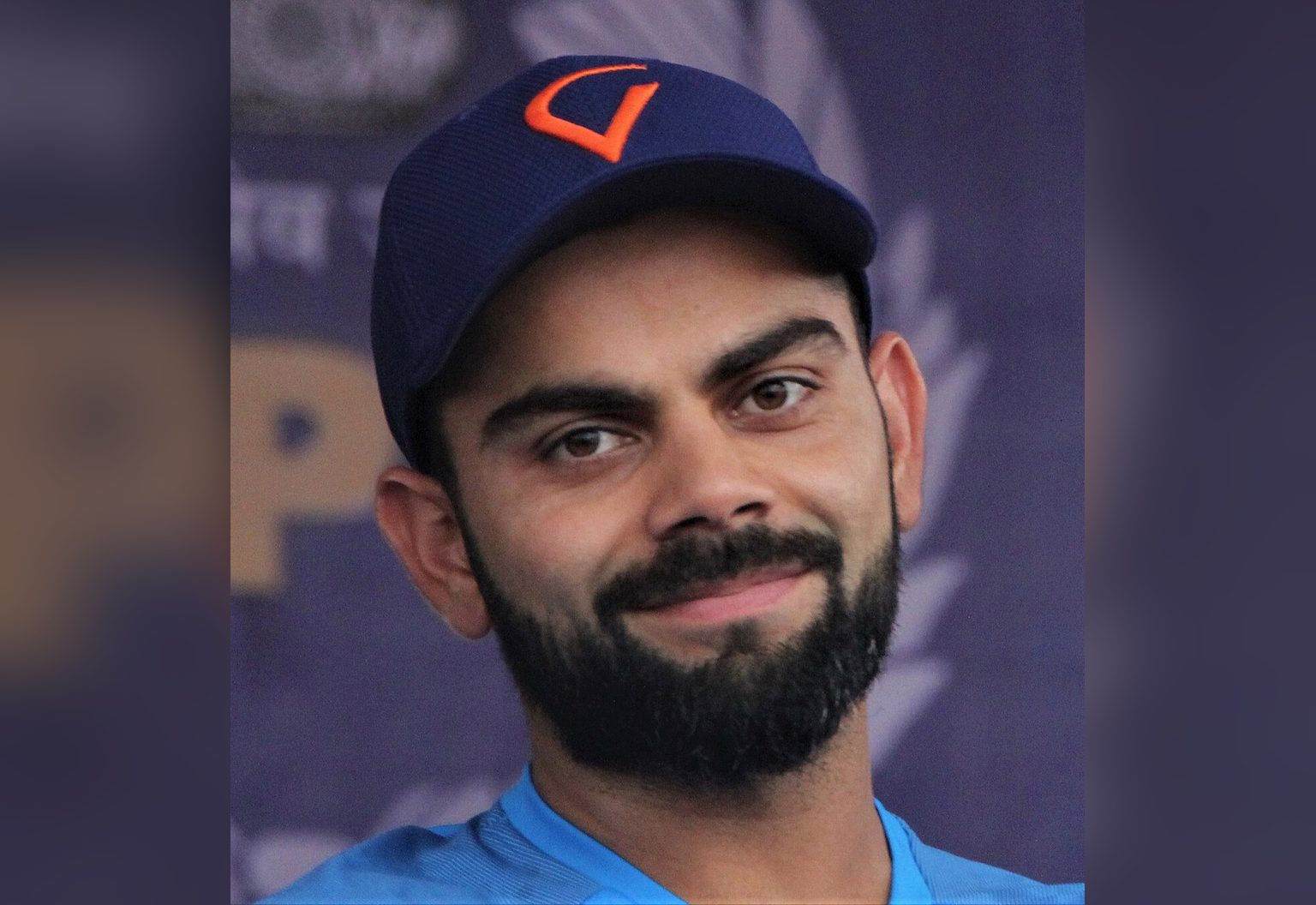
Photo: Anand Anil, CC BY-SA 4.0, via Wikimedia Commons