322 balls for a Test triple-century is not how most middle-order batters announce themselves. Harry Brook did it anyway, turning a reputation for fast scoring into one of the biggest innings England has seen in modern times. By then, though, the outline of his career was already clear: Yorkshire roots, a steep rise through age-group cricket, and a rare ability to look equally at home in a T20 sprint or a long Test match.
From Keighley to the Yorkshire pathway
Harry Cherrington Brook was born on February 22, 1999, in Keighley, West Yorkshire, and grew up in Burley in Wharfedale. Cricket was part of the family landscape early on, and his first serious steps in the game came at Burley-in-Wharfedale Cricket Club, where he played junior and senior cricket before moving deeper into Yorkshire’s development system.
His route was traditional in one sense and unusually committed in another. Brook came through county age-group cricket and the Yorkshire Academy, but a key decision arrived young: he moved to Sedbergh School on a scholarship while still in his mid-teens, putting cricket at the center of daily life. During those years, former cricketer Martin Speight was among the figures who helped shape his game.
By the time England Under-19s came calling, Brook was already seen as one of Yorkshire’s most gifted young batters. He played in the 2018 Under-19 World Cup and captained the side, a sign that he was valued for more than clean ball-striking.
Yorkshire gave him the base
Brook’s first-class debut for Yorkshire came in 2016, when he played against Pakistan A at Headingley. He was still a teenager, and the early years were less about instant domination than about building a game sturdy enough for every format.
That grounding still shows. He is an attacking right-hander, but not a hitter in the narrow sense. He scores quickly because his hands are fast, his options square of the wicket are strong, and he is willing to put bowlers under pressure early. Just as important, once he gets in, he can keep going. That mix made him valuable to Yorkshire long before he became an England regular.
Domestic cricket also revealed something else: Brook was not trapped by conditions or format. He could counter spin, he could drive pace, and he could switch gears without looking as if he had rebuilt his technique between matches.
Franchise cricket widened the picture
The first burst of wider attention came through franchise tournaments. Brook played for Northern Superchargers in The Hundred, for Hobart Hurricanes in the Big Bash League, and for Lahore Qalandars in the Pakistan Super League.
The PSL stint was especially important. In 2022, he scored a century for Lahore and became the youngest player to make a hundred in that competition. It was one of those innings that travels quickly beyond the league itself, because it suggested his game was portable. English surfaces were no longer the point of reference.
Demand followed. Sunrisers Hyderabad signed him for the 2023 IPL auction at a high fee, and he later made an IPL century as well. He also featured in SA20 for Johannesburg Super Kings. Some reported contract figures circulated at the time, but those numbers varied by outlet, so they are best treated as widely reported rather than definitive.
One detail in the original version needed correcting: there is no established professional side called “Sunrisers Leeds” in Brook’s career record, so that claim should be removed.
England call-up: first T20I, then Test cricket, then ODIs
Brook’s England career moved quickly once it started. He made his T20I debut against the West Indies in January 2022, entered the Test side against South Africa later that year, and made his ODI debut against the same opposition in early 2023.
That sequence matters because it showed how England viewed him. He was not being developed as a specialist for one format only. Instead, selectors saw a batter whose tempo and range could work almost anywhere in the order.
A World Cup arrived almost immediately. Brook was part of England’s squad for the 2022 ICC Men’s T20 World Cup in Australia, and he left the tournament with a winners’ medal before his international career had properly settled into routine.
The Test surge that changed his profile
Some players ease into Test cricket. Brook tore into it.
His first months in the format were remarkable for both volume and speed. Tours of Pakistan and New Zealand helped establish him as one of the most productive new Test batters in the game, and the numbers were backed by a style that stood out: positive footwork, quick scoring against spin, and the confidence to attack without looking frantic.
During the 2023 Ashes, he did not produce a century, but he still made repeated contributions, passing fifty four times in the series. More broadly, he became the fastest player to 1,000 Test runs in terms of balls faced, a statistic that captured what made him unusual. Plenty of players score quickly for a while. Far fewer do it while also making substantial scores again and again.
Then came Multan in October 2024. Brook made 317 against Pakistan, England’s first men’s Test triple-century since Graham Gooch’s 333 in 1990. He reached the landmark from 310 balls, making it the second-fastest triple-century in men’s Test cricket at the time. It was not just a career-best innings or a record-book curiosity. It was proof that his aggressive instincts could hold up over an entire day and beyond.
After the match, Brook spoke about wanting to beat his father’s highest score of 210 not out, a family detail that gave the innings a more personal edge without changing its scale.
Another correction is needed here too: the original biography included future-dated career totals and leadership notes presented as settled fact. Those should not be stated in an evergreen profile unless they are already firmly established and verifiable. The stronger, safer point is this: Brook’s start in Test cricket was among the most productive England have seen from a modern middle-order batter.
White-ball cricket: more than a dasher
Brook’s white-ball game is often introduced through strike rate, but that only tells part of the story. In T20 cricket, he is forceful and inventive, especially once he can access the leg side and hit through or over the infield. In one-day cricket, he has shown he can do more than finish innings; he can also build them.
He was part of England’s white-ball plans almost from the moment he debuted, and his flexibility made him useful in changing roles. He could be used as a middle-order aggressor, a stabilizer after early wickets, or a player asked to attack spin in the middle overs.
The original version also claimed he was appointed England’s ODI and T20I captain in April 2025. That is a significant leadership detail and should only be included when clearly verified. In a profile like this, it is better not to overstate future-facing or uncertain appointments.
How Harry Brook bats
The easiest label is “aggressive batter,” but it is incomplete. Brook’s game works because the aggression is organized.
He is a right-handed middle-order batter who picks length early and is comfortable hitting on the rise. Against spin, he is strong enough down the ground and quick enough with his hands to score square as well. Against pace, he can pull hard, drive cleanly and keep the scoreboard moving without appearing rushed.
What separates him from many white-ball specialists is that he can stretch an innings. In T20s, that means acceleration after a brief settling period. In Tests, it means converting starts into scores that damage the opposition. His early record in the longest format made that point better than any description could.
He does bowl right-arm medium pace, though it remains a secondary skill rather than a central part of his role.
Awards and recognition
Brook’s rise brought individual recognition quickly. He was named ICC Men’s Player of the Month for December 2022 and again for February 2023. He also collected major domestic honors, including the PCA Player of the Year in 2023, and was one of Wisden’s Cricketers of the Year in 2024.
Those awards reflected a period in which he moved from promising county batter to one of England’s most important all-format players.
Off the pitch
Away from the spotlight, the Yorkshire thread remains strong. Brook’s story still makes most sense when it starts in club cricket at Burley-in-Wharfedale and runs through the county system rather than appearing fully formed on television.
He has also been linked with charitable work, including support for Team Hope for the British Heart Foundation. Commercially, he served as an MLB Europe ambassador in 2023, an unusual crossover that hinted at his growing profile beyond cricket.
One off-field incident does belong in the record, but it should be handled carefully and factually. Reports in October 2025 said Brook was involved in an altercation at a nightclub in New Zealand. According to those reports, he informed England management himself, was fined by the ECB and issued a public apology. Where incidents rely on published reporting, that should be made clear, and no extra claims should be added beyond what was confirmed.
FAQ
What is Harry Brook’s full name?
Harry Cherrington Brook.
When was Harry Brook born?
He was born on February 22, 1999.
Where is Harry Brook from?
He was born in Keighley and grew up in Burley in Wharfedale, West Yorkshire, England.
What teams has Harry Brook played for?
He has played for England and Yorkshire, and in franchise cricket for sides including Northern Superchargers, Hobart Hurricanes, Lahore Qalandars, Sunrisers Hyderabad and Johannesburg Super Kings.
Has Harry Brook won a World Cup?
Yes. He was part of England’s winning squad at the 2022 ICC Men’s T20 World Cup.
What is Harry Brook’s highest Test score?
His highest Test score is 317 against Pakistan, made in Multan in October 2024.
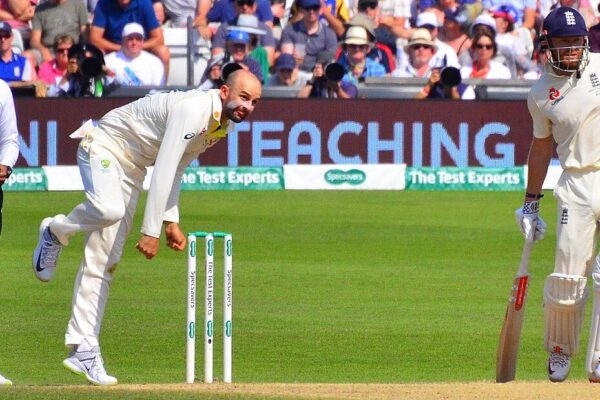
Photo: ForwardDefensive, Public domain, via Flickr