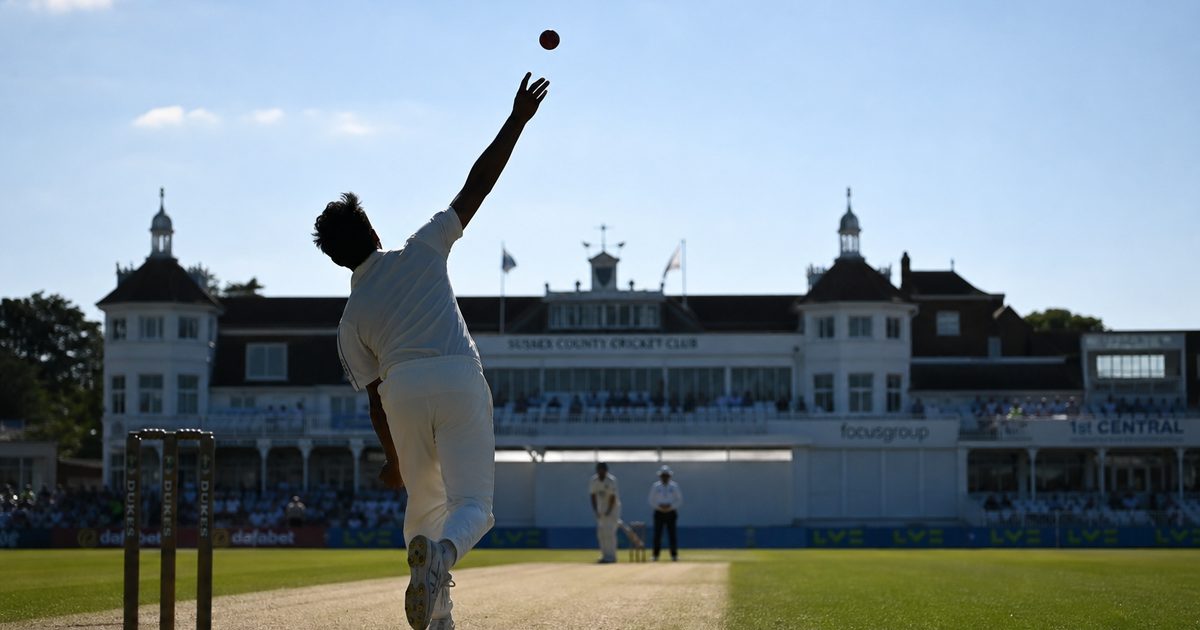
95 mph from a short run-up is one thing; doing it in a World Cup final Super Over is another. That is the image most people carry of Jofra Archer: calm face, fast arm, and the ball in hand when the pressure is at its highest.
From Bridgetown to the county game
Jofra Chioke Archer was born on April 1, 1995, in Bridgetown, Barbados. His father, Frank Archer, is English, and his mother, Joelle Waithe, is Barbadian, a family background that later shaped his route into international cricket. He was educated at Christ Church Foundation School and played youth cricket in Barbados before the professional game pulled him elsewhere.
His early development came through the West Indies system rather than England’s. Archer featured for the West Indies Under-19 side, and for a while his path looked set to remain Caribbean. It changed when he moved to England in 2015, with Sussex giving him the platform to build a career. Chris Jordan, another Barbados-born quick who had made the same journey, is widely credited with helping point him toward the county.
At first, England selection was not immediately available to him because of residency rules. When those rules changed, the timeline shifted dramatically. A player who had learned his cricket in Barbados suddenly became one of the most talked-about fast-bowling options in England.
Sussex gave him a base, T20 gave him a stage
Archer made his first-class debut for Sussex in July 2016 against Pakistan. County cricket quickly showed that he was not just a white-ball curiosity. The pace was obvious, but so was the control. He could hit a hard length, hurry batters from a compact approach to the crease, and contribute runs down the order too.
That blend made him valuable almost everywhere. He played for Khulna Titans in the Bangladesh Premier League, for Hobart Hurricanes in the Big Bash, and for Quetta Gladiators in the Pakistan Super League. Franchise cricket suited him: difficult overs, attacking fields, and a premium on nerve.
The Indian Premier League pushed him into an even brighter spotlight. Jos Buttler was one of his teammates at Rajasthan Royals, where Archer made an immediate impression. By 2020, even with Rajasthan finishing at the bottom of the table, Archer’s individual impact was so strong that he was named the IPL’s Most Valuable Player.
He later joined Mumbai Indians, though injury meant he did not appear in the 2022 IPL season, and he also represented MI Cape Town in SA20. A return to Rajasthan followed, another sign of how highly his skills were valued when fit. In England’s Hundred, he has also been part of Southern Brave.
England came quickly, then the World Cup came quicker
International careers are usually eased in. Archer’s was not.
He made his ODI debut for England against Ireland in May 2019 and his T20I debut against Pakistan two days later. Within weeks, he was in England’s squad for the home World Cup. It was a rapid rise, but not a speculative one. England knew exactly what they were picking: pace, hostility, and a bowler who did not shrink at the end of an innings.
The tournament turned him from a highly rated fast bowler into a central figure in English cricket. England won the 2019 Cricket World Cup, and Archer was trusted with the decisive Super Over in the final against New Zealand after the match had finished tied. It remains one of the defining moments of his career.
That trust was not accidental. Throughout the competition he offered what captains prize most in white-ball cricket: wickets and composure. He was also named the ICC’s Rising Star for England’s campaign, a fitting note at the end of a tournament that changed his standing in the game.
Test cricket, and an Ashes spell that announced him properly
A few months later came another step up. Archer made his Test debut against Australia at Lord’s in August 2019, and the Ashes immediately gave him the stage his bowling seemed built for.
The spell most closely attached to his red-ball career came at Headingley, where he took 6 for 45 in the third Test. It was fast, hostile and sharp enough to shift the feel of the series. Even in a format that asks for patience as much as menace, he looked capable of changing a match in a burst.
His Test record has been shaped by both impact and interruption. In 22 Tests, he has taken 79 wickets at an average of 28.25, with four five-wicket hauls. With the bat, he has scored 332 runs, including one fifty. Those are not the numbers of a long-established workhorse; they are the numbers of a bowler who has often made a mark when available, then had his rhythm broken by injury.
What makes Jofra Archer so difficult to face
The obvious answer is speed. Archer has been clocked at around 153 km/h, or 95 mph, and he generates it without a long, dramatic run-up. That matters. Batters do not get the same visual warning they do with some other express quicks, and the ball can feel on them very quickly.
But pace alone does not explain his record. His value lies in how he uses it. He can bowl hard lengths, dig in the bouncer, swing the new ball, and still return at the death with enough control to hit yorkers or force mistakes. In one-day cricket and T20s, that makes him especially useful in the overs captains worry about most.
His international white-ball numbers reflect that role. In ODIs, he has taken 70 wickets in 39 matches at 25.07, with one five-wicket haul. In T20Is, he has 64 wickets in 49 matches at 23.54. He has never been picked for containment alone. The expectation is that he will break partnerships or close an innings under pressure.
There have been flashes of that skill outside the international arena too, including a T20 Blast hat-trick for Sussex in 2018.
The injuries that kept interrupting the story
No profile of Archer makes sense without the missing stretches.
Back and elbow problems have repeatedly interrupted his career, especially in red-ball cricket. He underwent elbow surgery twice in 2021, first in May and again in December, and those setbacks kept him out of action for long periods. For a fast bowler whose game depends on snap, rhythm and repeatable pace, those absences were significant.
That is why his career can feel split into bursts: a major entrance, a sharp run of performances, then rehabilitation and waiting. The talent has never really been in doubt. Availability has been the harder part.
Even so, he has remained an important figure for England and in franchise cricket whenever fit enough to play. That continuing demand says plenty about how teams view him. There are quicker bowlers for a spell here and there, and there are more durable ones across long stretches, but very few combine pace and late-innings composure in quite the same way.
Life away from the spotlight
Off the field, Archer’s story still carries the shape of that Barbados-to-England journey. He grew up in Bridgetown, built his game in the Caribbean, and then made his name in county cricket before becoming an England international. It is a less conventional route than many of his teammates took, and it remains one of the more interesting parts of his profile.
He has supported Bat For a Chance, a cricket charity focused on widening access to the game. He is also known to be a Manchester United supporter.
Then there is the internet footnote that seems to follow him everywhere: old social media posts that resurface whenever they appear oddly predictive. It has become part of his public image, not because it tells you much about his cricket, but because it fits the slightly unusual way his career has unfolded.
As for endorsements and finances, Archer has been linked in published reports with brands including Adidas, New Balance, DSC and Oakley. Reported net-worth figures vary widely across outlets and should be treated as estimates, not confirmed totals.
His private life is best handled carefully. Public reports have described him as unmarried. There have also been rumor-based claims about relationships, including reports from entertainment and cricket websites linking him with Druanna Butler and, previously, Hayley Matthews. Those reports remain unconfirmed and should be treated as rumor rather than established fact.
The shape of his career
Archer’s career has never been a simple accumulation of matches. It has been sharper than that, and more stop-start. He arrived quickly, made an immediate mark, bowled one of the most famous overs in England’s white-ball history, and showed in the Ashes that he could trouble top Test batters too.
What keeps him relevant is not just the memory of those moments. It is the specific quality of his bowling: fast, controlled, and trusted when the game tightens.
FAQ
What is Jofra Archer’s nationality?
He is Barbadian-born and represents England internationally through his English father and eligibility under England’s rules.
When did Jofra Archer make his England debut?
He made his ODI debut against Ireland in May 2019, his T20I debut against Pakistan two days later, and his Test debut against Australia in August 2019.
What happened in the 2019 World Cup final?
Archer bowled England’s decisive Super Over against New Zealand after the final ended in a tie.
What is Jofra Archer’s bowling style?
He is a right-arm fast bowler known for high pace, steep bounce, and strong death bowling in white-ball cricket.
Has Jofra Archer played county cricket?
Yes. Sussex has been the base of his county career since his first-class debut in 2016.
Is Jofra Archer married?
Publicly available reports have described him as unmarried. Other relationship claims in circulation are unconfirmed rumors.