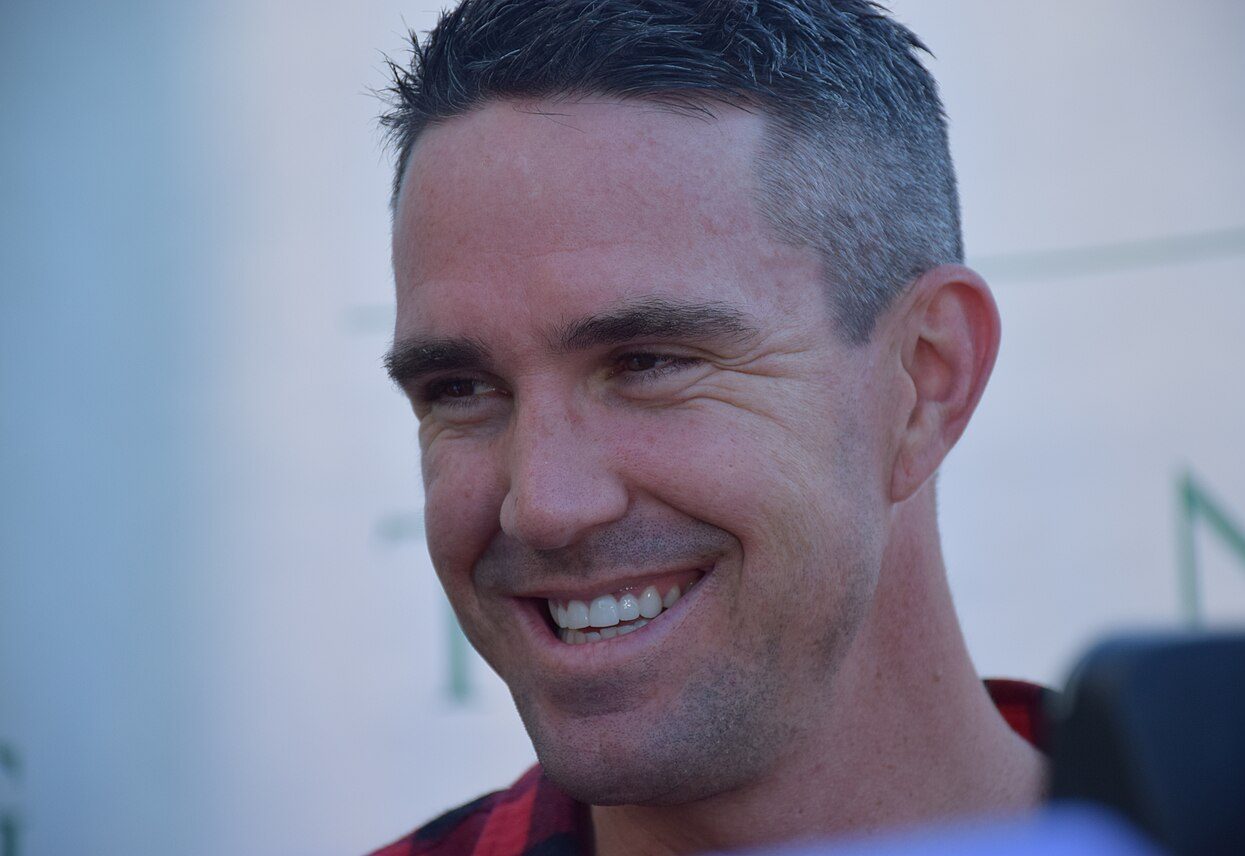
At The Oval in September 2005, Kevin Pietersen made 158 with the Ashes still in the balance. His blond-streaked hair was unmistakable; so was his willingness to attack Australia’s bowlers when England needed to survive. The innings helped secure a draw and England’s first Ashes series victory since 1987.
He had played his first Test less than two months earlier. By the end of that summer, the South African-born batter was one of the most recognisable figures in English sport.
What followed brought 8,181 Test runs, a world title, a short captaincy and a breakdown with England’s management that ended his international career while he still had runs to offer.
From Pietermaritzburg to Nottinghamshire
Kevin Peter Pietersen was born on 27 June 1980 in Pietermaritzburg, South Africa, and grew up with three brothers. His mother, Penny, was English, a connection that would later give him a route into a different national side.
His first-class career began with Natal in 1997. Initially valued as an off-spinner who could bat, he gradually developed into something quite different: a tall, assertive batter with the reach to unsettle bowlers and the confidence to take risks.
Pietersen moved to England in 2000. He has attributed that decision to frustration with South African cricket’s racial quota policies and his prospects within the system. It was his account of a contentious selection environment, rather than a simple story of an established international changing teams.
Former South Africa captain Clive Rice brought him to Nottinghamshire, where he began playing county cricket in 2001. Runs quickly made his case. He scored more than 1,200 first-class runs in his first county season, and his batting, rather than his bowling, became the reason selectors watched him.
Four seasons at Trent Bridge established his credentials. By the time he moved to Hampshire in 2005, England had already called.
An England arrival nobody could miss
Pietersen made his ODI debut against Zimbabwe on 28 November 2004, having completed the qualification period to represent England.
The stronger statement came on the tour of South Africa early in 2005. Facing hostile crowds in the country of his birth, he scored three ODI centuries. His unbeaten 116 at Centurion helped England tie a match that had appeared beyond reach.
Those innings revealed characteristics that would define his international batting: an appetite for confrontation, unusual scoring options and little inclination to retreat when the atmosphere turned against him. He won both the ICC ODI Player of the Year and Emerging Player of the Year awards in 2005.
His T20I debut came against Australia on 13 June that year. On 21 July, he made his Test debut at Lord’s against the same opponents, preferred to the experienced Graham Thorpe.
England lost, but Pietersen top-scored in both innings with 57 and 64. He finished the Ashes with 473 runs, the highest aggregate on either side. The decisive 158 at The Oval included seven sixes: England’s newest batter had helped finish a contest that had gripped the country.
He was appointed MBE following the series victory.
Big innings and a brief captaincy
Over the next few seasons, Pietersen became central to England’s batting. He could absorb pressure, but rarely looked comfortable allowing a bowler to dictate an entire session.
His 158 against Australia at Adelaide in 2006 came during a disastrous tour for England. A year later, he made 226 against West Indies at Headingley, demonstrating that his attacking game could sustain a long Test innings.
In August 2008, England appointed him Test and ODI captain. His first Test in charge brought victory over South Africa at The Oval, but the appointment did not resolve tensions within the team’s leadership.
A dispute with coach Peter Moores became public, and in January 2009 Pietersen resigned the captaincy. Moores was dismissed at the same time. The episode lasted only a few months, yet it became an enduring part of his England story.
His batting remained essential. Although an Achilles injury curtailed his involvement in the 2009 Ashes, he played in the opening two Tests of another series England won.
A world title, then victories overseas
The 2010 ICC World Twenty20 gave Pietersen a different stage. In the Caribbean, he scored 248 runs at an average of 62 and was named Player of the Tournament as England won their first men’s ICC global trophy.
He briefly left the competition to attend the birth of his son before returning for the closing stages. In the final against Australia, his 47 helped England complete a seven-wicket victory.
That winter brought another defining innings: 227 at Adelaide, his highest Test score. England won the 2010-11 Ashes 3-1, their first Test series victory in Australia for 24 years. Pietersen finished with 360 runs at an average of 60.
The summer of 2012 was more turbulent. He announced his retirement from ODI cricket, a decision that also made him unavailable for England’s T20 side under the selection policy then in place. He later reversed course.
During the home series against South Africa, text messages he sent to members of the opposition became the centre of a public dispute. He acknowledged sending provocative messages and apologised, although aspects of their reported content were disputed. England dropped him before eventually agreeing a return.
That return produced one of his finest innings. His 186 at Mumbai in November 2012 helped England win on a turning pitch and level the series. They went on to secure their first Test series victory in India since 1984-85.
The end of his England career
Pietersen played in another Ashes-winning side in 2013, but the return series in Australia ended in a 5-0 defeat.
In February 2014, the ECB announced that he would no longer be selected. Its public explanation referred to the need for trust and a shared team ethos. Pietersen challenged the decision and later offered his own account of the dressing-room relationships in his autobiography.
His final Test had been at Sydney in January 2014. There was no farewell appearance.
Across 104 Tests, he scored 8,181 runs at 47.28, with 23 centuries and 35 fifties. His occasional off-spin brought 10 wickets.
In 136 ODIs, he made 4,440 runs at 40.73, including nine centuries. His 37 T20Is yielded 1,176 runs at 37.93, with seven fifties.
County runs and the franchise circuit
Alongside his England career, Pietersen had become an early high-profile signing in franchise cricket. Royal Challengers Bangalore bought him for US$1.55 million in 2009, and he captained the side for the opening part of that IPL season.
He later played for Delhi Daredevils, captaining them in 2014, and Rising Pune Supergiants in 2016.
After England, his calendar increasingly followed the T20 circuit: Melbourne Stars in Australia, St Lucia Zouks in the Caribbean, Quetta Gladiators in Pakistan’s league and the Dolphins in South Africa.
There was still a striking county innings to come. Playing for Surrey in May 2015, he made an unbeaten 355 against Leicestershire, his highest first-class score. It did not bring an England recall.
He announced his retirement from professional cricket in March 2018.
A batting style built to disrupt
At 6ft 4in, Pietersen could reach deliveries that other batters had to play from the crease. He used that advantage to drive, sweep and work spinners into unfamiliar fields.
His switch-hit became his signature invention: changing stance and grip to attack as a left-hander. It was not simply a flourish. It forced captains to reconsider where they could safely place fielders.
The risks sometimes cost him his wicket. They also helped produce innings that changed matches, particularly when conventional batting was proving insufficient.
Family, broadcasting and rhino conservation
Pietersen married Jessica Taylor, a singer with the pop group Liberty X, in 2007. They have two children, Dylan and Rosie. Family photographs and updates form part of his public social-media presence, alongside cricket and wildlife.
Broadcasting kept him close to the game after retirement, with commentary and analysis offering another outlet for his forthright opinions.
Conservation became a substantial focus too. His SORAI initiative-Save Our Rhinos Africa and India-supports efforts to protect endangered wildlife. Through public campaigning and projects including the documentary Save This Rhino, he has drawn attention to poaching and the work of conservation teams.
It is a different setting from a packed Test ground, but one where he has continued to use the visibility cricket gave him.
FAQ
Where was Kevin Pietersen born?
He was born in Pietermaritzburg, South Africa, on 27 June 1980. He moved to England in 2000.
Why did he play for England?
His English mother provided an eligibility route, and he completed the required qualification period before his international debut in 2004.
What was his highest Test score?
He scored 227 against Australia at Adelaide in December 2010.
Did he win the Ashes?
Yes. He played in England’s successful Ashes campaigns in 2005, 2009, 2010-11 and 2013.
When did he retire?
His last England appearance was in January 2014. He retired from professional cricket in March 2018.
Who is his wife?
He is married to Liberty X singer Jessica Taylor. They married in 2007 and have two children.
Photo: Tourism Victoria from Australia, CC BY 2.0, via Wikimedia Commons