At 17, Josh Hazlewood was handed a rookie contract by New South Wales before he had even played Sydney grade cricket. That detail says plenty about how highly he was rated, but it also hints at what set him apart early: not raw chaos, not endless noise, but control rare for a teenage fast bowler.
Born in Tamworth, New South Wales, on January 8, 1991, Josh Reginald Hazlewood grew into one of Australia’s most dependable seamers. Tall, repeatable and relentlessly precise, he became a central figure in an era shaped by Australia’s pace trio of Hazlewood, Pat Cummins and Mitchell Starc. Across Tests, ODIs and T20Is, his career has been built on the same foundation: hit the seam, ask questions, and keep asking them.
From Tamworth to New South Wales
Hazlewood’s cricket education began in country New South Wales, far from the bigger-city pathways that often dominate Australian sport. He looked up to Glenn McGrath, and the comparison would follow him for years. It was easy to see why. Even as a young quick, Hazlewood preferred discipline over drama, working around off stump and trusting that patience would bring mistakes.
His rise was swift. He represented Australia at the 2008 Under-19 World Cup and, in the same period, secured that rookie state deal while still in Year 12. In November 2008, he made his first-class debut for New South Wales against New Zealand. He was still only 17 and became the youngest fast bowler to represent the state.
That early stage of his career established the pattern. Coaches did not need to guess what he might become. The shape of the bowler was already there: high release, steep bounce, seam movement and the kind of accuracy captains lean on.
Building a domestic base
New South Wales remained his domestic home, and Hazlewood developed in a system that has produced many of Australia’s leading quicks. Yet his profile was a little different from the classic fast-bowling prodigy. He was not sold as a wild pace merchant. He was the bowler who could land six balls in the same area, then do it again next over.
That reliability made him valuable in every format. For the Sydney Sixers, he featured across several Big Bash seasons and sharpened his white-ball craft. Later came the IPL, where he played for Chennai Super Kings and then Royal Challengers Bengaluru. His stint with Chennai included the 2021 title-winning campaign, another sign that he had become far more than a red-ball specialist.
The shorter formats demanded adaptation. Hazlewood added slower balls, changed his pace more subtly and learned to use hard lengths in ways that worked at the death as well as with the new ball. The result was a more rounded bowler than the early labels suggested. In 2021, he became the first player to rank inside the ICC top 10 for bowling in all three international formats at the same time, a neat summary of his all-format value.
An international start that came early
His Australia debut arrived in ODI cricket, against England in June 2010. He was still a teenager, and the selection underlined how strongly he was viewed inside Australian cricket. Not long after, though, came a reminder of the risks attached to young fast bowlers: a back stress injury ruled him out of a planned Test tour of India later that year.
Hazlewood’s progress was managed carefully after that. He made his T20I debut against the West Indies in February 2013, then his Test debut against India in Brisbane in December 2014. Once he settled into the side, he quickly looked like he belonged there.
Tests were the most natural fit at first. At 1.96m, he could extract bounce from a length that felt uncomfortable even on good batting surfaces. He did not need extravagant movement to be dangerous. A ball that starts on a probing line and climbs awkwardly is enough to create edges, indecision and long spells of pressure.
Becoming a mainstay in Australia’s attack
For much of his Test career, Hazlewood worked alongside Mitchell Starc and, later, Pat Cummins in an attack with contrasting strengths. Starc brought left-arm pace and swing. Cummins offered hostility and relentless quality. Hazlewood’s role was often the one that made the whole thing hold together: control, discipline and the ability to keep an end under pressure.
That does not mean he was merely a support act. He produced plenty of match-shaping spells of his own and steadily climbed Australia’s all-time wicket lists. He passed 300 Test wickets during the 2025 series in the West Indies, becoming the 10th Australian man to reach that mark in Test cricket. By that point, he had also collected 13 five-wicket hauls in the format.
In one-day cricket, he became just as important. Hazlewood was part of Australia’s squad for the 2015 Cricket World Cup on home soil, giving him his first major global title. He later added the 2021 T20 World Cup and the 2023 Cricket World Cup, a rare spread of tournament success across formats.
Those trophies matter, but so does the role he played in winning them. In white-ball cricket, he was trusted with new-ball overs, middle-overs control and, increasingly, difficult moments at the back end of an innings. That trust came from the same qualities visible when he was a teenager in New South Wales: repeatable action, clear plans and very few loose deliveries.
He was also part of Australia’s World Test Championship-winning side, adding another major team honour to a career already rich in them.
The numbers, in context
Hazlewood’s career statistics move over time, but the broad picture is clear. In Test cricket, he has passed 300 wickets and maintained an average in the mid-20s, placing him among the most effective fast bowlers of his era. In ODIs, he has moved beyond 100 wickets and been a regular strike option for Australia in major tournaments. In T20 internationals, he has developed into a high-class operator despite beginning his career with a reputation built mainly on red-ball control.
The key point is not just volume. It is consistency across formats. Few fast bowlers manage to remain elite in Tests while also becoming trusted in T20 cricket, where margin for error is tiny. Hazlewood did.
Vice-captaincy and standing within the team
Some careers collect leadership titles through noise. Hazlewood’s came more quietly. After the 2018 ball-tampering scandal, he was appointed Australia’s Test vice-captain, a role that reflected the regard in which he was held inside the dressing room. In 2022, he also stood in as Australia’s ODI captain.
That kind of responsibility usually goes to players seen as stable, respected and tactically sound. It fit his public image and his on-field style. Hazlewood has rarely been a showman. His authority tends to come through execution.
Why the McGrath comparison never really disappeared
The Glenn McGrath comparison followed Hazlewood from his youth, and in some cases it was overused. Few bowlers benefit from being measured too closely against an all-time great. Still, the link was never baseless.
Like McGrath, Hazlewood’s game has been built on top-of-off-stump precision, subtle seam movement and awkward bounce generated from height rather than theatrical effort. Batters often speak about bowlers who make them feel squeezed. Hazlewood does that. He narrows options. He turns patience into pressure.
Over time, though, he added his own layer to the template. His white-ball evolution, especially in T20 cricket, gave him a broader skill set than the early “red-ball specialist” tag suggested. Hard lengths, cutters, pace changes and tactical flexibility became a bigger part of the package.
Off the pitch: low-key, country roots, few frills
Hazlewood’s off-field image has long matched his cricket: understated and uncomplicated. The nickname “Hoff” is the common dressing-room shorthand, while “Bendemeer Bullet” adds a more local flavour from his New South Wales background.
He has generally kept his private life private, which means there is less gossip around him than around many modern sports stars. That makes accuracy important. Publicly documented details about his life away from cricket are limited, and there is no need to dress that up with speculation. Commercially, he has appeared in campaigns linked to Cricket Australia sponsors, including brands such as Woolworths and Domain.
What stands out more than endorsements is the shape of his journey. A country kid from Tamworth, fast-tracked into state cricket, then refined into one of Australia’s most trusted bowlers across every format. It is a career with major trophies, serious numbers and a style instantly recognisable even without theatrics.
FAQ
How old is Josh Hazlewood?
He was born on January 8, 1991.
What is Josh Hazlewood’s bowling style?
He is a right-arm fast-medium bowler. He bats left-handed.
When did Josh Hazlewood make his Test debut?
He made his Test debut for Australia against India in December 2014 at Brisbane.
Has Josh Hazlewood won a World Cup?
Yes. He was part of Australia’s winning squads at the 2015 ODI World Cup, the 2021 T20 World Cup and the 2023 ODI World Cup.
Which IPL teams has Josh Hazlewood played for?
He has played in the IPL for Chennai Super Kings and Royal Challengers Bengaluru.
What is Josh Hazlewood’s nickname?
He is commonly known as “Hoff,” and he has also been called the “Bendemeer Bullet.”
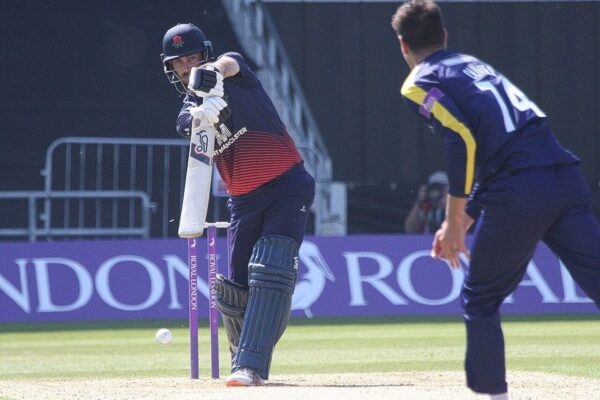
Photo: NAPARAZZI, CC BY-SA 2.0, via Wikimedia Commons