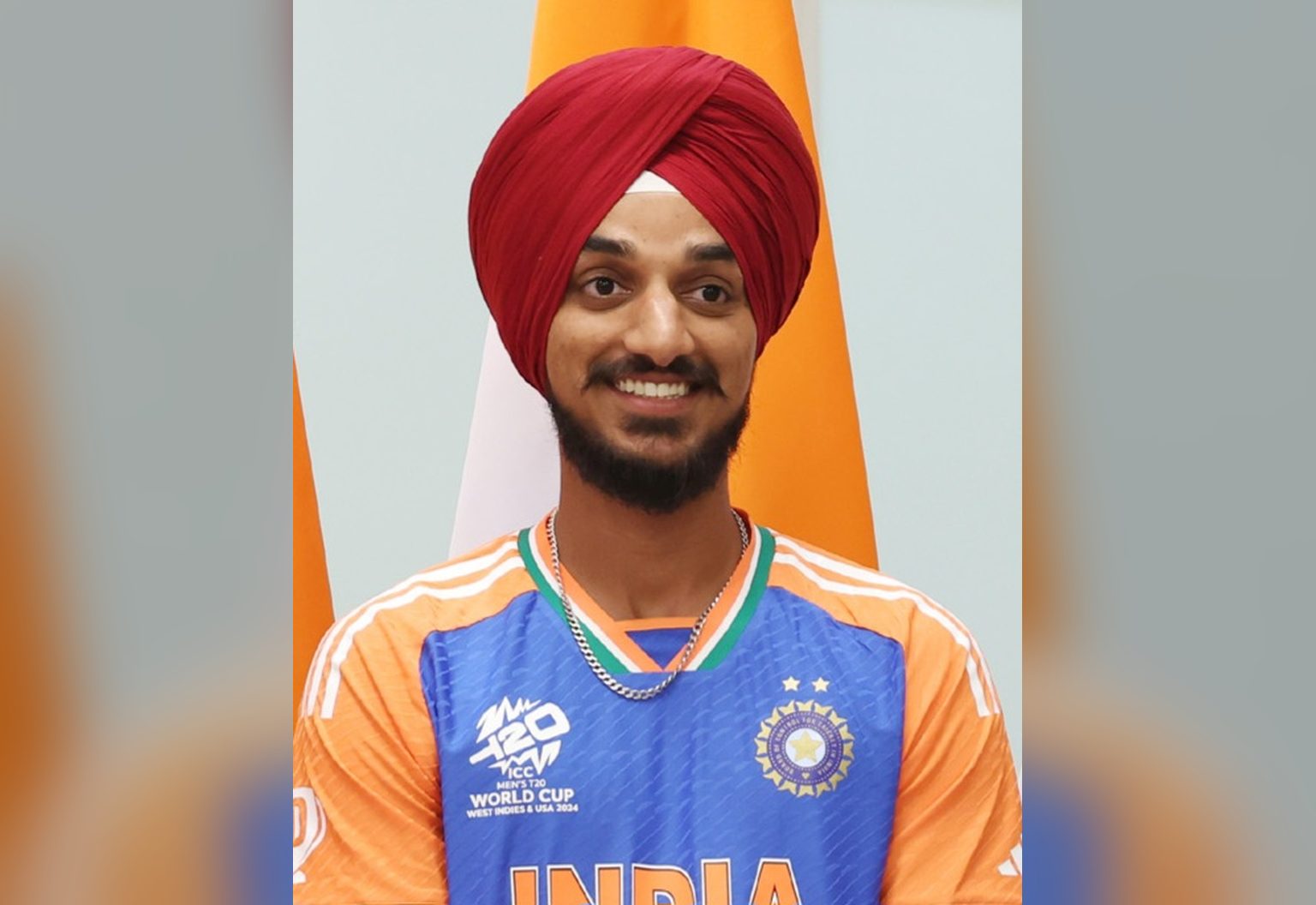
A maiden over on T20I debut is one way to announce yourself. Arshdeep Singh did exactly that against England in July 2022, and it captured the two qualities that have shaped his rise: control with the new ball and calm when the game tightens.
The left-arm seamer from India had already been building a reputation in Punjab cricket and in the IPL, but international cricket gave that skill set a bigger stage. Since then, he has become a regular in India’s T20I plans, a long-serving bowler for Punjab Kings, and part of several major tournament-winning squads.
From Guna to Punjab’s cricket system
Arshdeep Singh was born on February 5, 1999, in Guna, Madhya Pradesh. His cricket story, though, is tied far more closely to Punjab. His family later moved to Kharar, and he came through the cricketing structure in and around Chandigarh and Punjab, where his game began to take proper shape.
A key step came with training at Jaswant Rai’s academy. By then, the outline of his bowling was already visible: left-arm angle, movement with the new ball, and a feel for awkward lengths. What academy cricket gave him was repetition and structure. For a young fast bowler, that matters as much as raw talent.
Family support played a part too. Publicly available profiles have often mentioned his father, Darshan Singh, who worked with the CISF, and his mother, Baljit Kaur. He also has a brother, Akashdeep Singh, and a sister, Gurleen Kaur. One widely repeated detail is that he reportedly once considered going to Canada for studies before committing fully to cricket, though that belongs in the category of reported background rather than a defining public fact.
By the time he was moving through age-group cricket, the progress was no longer local. He featured for India Under-19 and was part of the squad that won the 2018 Under-19 World Cup. He did not dominate the headlines from that campaign, but being inside a title-winning youth side mattered. It placed him on a pathway that soon led into senior domestic and franchise cricket.
Domestic cricket and the Punjab Kings connection
Punjab became his domestic base, and his senior appearances followed in quick order. He made his List A debut in the Vijay Hazare Trophy in 2018, then his first-class debut for Punjab against Vidarbha in January 2019. Red-ball cricket has never been the main public lens through which he is viewed, but it has still been part of his development. In first-class cricket, he has taken two five-wicket hauls, with best figures of 6 for 40. In List A matches, he has also produced multiple strong spells, including a best of 5 for 34.
The wider audience met him through the IPL. Punjab signed him in 2019, when the franchise was still called Kings XI Punjab, for ₹20 lakh. In a league built on constant turnover, his stay with the same team became notable. Even as the name changed to Punjab Kings, his role kept growing.
That growth was not instant in a flashy sense. It was steadier than that. He became the bowler captains trusted in the difficult overs: the first over with the new ball, the final over with runs to defend, the over after a partnership had started to settle. Those jobs are where reputations are made in T20 cricket.
His value rose accordingly. He was retained for larger sums in later cycles, and his IPL earnings reflected how central he had become to Punjab’s plans. He also entered the franchise record books by becoming the first bowler to reach 100 wickets for Punjab Kings. His best IPL figures stand at 5 for 32, his lone five-wicket haul in the tournament.
There was also a short county stint with Kent in 2023, a useful addition for a bowler whose career has largely been shaped by white-ball cricket in India. County cricket can test rhythm, patience and adaptability, especially for seamers, and the move suggested a willingness to broaden his experience rather than stay inside one system.
India call-up and a fast start in T20Is
His international debut came in the format that suited him best. Arshdeep Singh played his first T20I for India against England on July 7, 2022, and opened with a maiden over. It was an eye-catching beginning, but more importantly, it fit the bowler he already was.
That same year brought a major test of temperament: the T20 World Cup in Australia. Arshdeep finished as India’s leading wicket-taker in the tournament with 10 wickets. One moment stood out immediately. Against Pakistan, he dismissed Babar Azam with the first ball of the match, a golden duck that showed how dangerous his early swing could be against top-order batters.
His ODI debut followed later that year, against New Zealand on November 25, 2022. The 50-over format has not defined his career in the same way as T20Is, but he has still made useful contributions there, including a five-wicket haul with best figures of 5 for 37.
T20I cricket, though, is where his case has been strongest. He developed from a promising option into one of India’s frontline bowlers in the format, trusted both in the powerplay and at the death. He was also named Player of the Series in a T20I contest against West Indies in 2022, an early sign that his impact was not limited to isolated spells.
Tournament years and major honors
The medal list grew quickly. Arshdeep was part of India’s gold medal-winning squad at the Asian Games in Hangzhou, and he later featured in India teams that won major white-ball titles, including the ICC Men’s T20 World Cup and the ICC Champions Trophy.
His strongest individual tournament showing came at the 2024 T20 World Cup, where he finished with 17 wickets and ended as the joint-highest wicket-taker. For a bowler whose role often involves the hardest overs of an innings, that return underlined both skill and resilience. It also brought individual recognition: he was named ICC Men’s T20I Cricketer of the Year for 2024 and was selected in the ICC Men’s T20I Team of the Year.
Another milestone followed when he became the first Indian bowler to reach 100 wickets in T20 Internationals. It was a significant marker not just because of the number, but because it reflected how quickly he had become a regular and how consistently he had delivered in a format where one bad over can distort a bowler’s record.
As for Test cricket, that cap had not arrived at the time of the latest verified career updates. His international identity remained firmly tied to white-ball cricket.
What makes Arshdeep Singh effective
At around 6ft 3in, Arshdeep Singh creates a useful angle simply by being left-arm and tall. He generally operates in the mid-130s to low-140s km/h range, but pace is only part of the package.
His real value lies in how he uses the ball. Early in the innings, he can shape it both ways and attack the stumps. That makes him especially dangerous against right-handers who are trying to settle. Later on, he shifts gears: yorkers, changes of pace, hard lengths into the pitch when needed. Death bowling is often described loosely, but in his case it is a genuine specialty.
That combination is rare enough to matter. Many bowlers can swing the new ball. Others can survive at the death. Fewer can do both regularly. Arshdeep’s career has been built on that overlap.
He is also a left-handed batter, though his profile is overwhelmingly that of a specialist bowler rather than an all-rounder.
Life away from the game
Off the field, he has mostly kept things private. Public information about his personal life is limited, and that is worth respecting rather than filling with speculation. Reports have linked him with model and actor Samreen Kaur, including coverage by myKhel, but that remains a reported link, not an established public relationship.
What is clearer than any rumor is the tone of his public image. He has often come across as relaxed and good-humored, which contrasts with the old stereotype of the permanently snarling fast bowler. That lighter personality sits interestingly alongside his work in pressure overs, where composure is essential.
He has also been associated publicly with Chandigarh University, and has referred to it in affectionate terms. Small details like that help place him in the network of institutions and cities that shaped his rise.
Not all attention has been welcome. During the 2022 Asia Cup, after he dropped a catch against Pakistan, he was subjected to online abuse. His Wikipedia page was also vandalized with false political claims. The episode said less about the player than about the uglier side of social media around high-profile cricket matches.
FAQ
How old is Arshdeep Singh?
He was born on February 5, 1999.
What is Arshdeep Singh’s bowling speed?
He usually bowls in roughly the 135 to 145 km/h range.
Which IPL team does Arshdeep Singh play for?
He has played for the Punjab franchise in the IPL, first as Kings XI Punjab and later as Punjab Kings.
Has Arshdeep Singh played Test cricket?
No verified Test debut is recorded in the latest career updates used for this profile.
What are Arshdeep Singh’s main strengths?
New-ball swing, left-arm angle, and death-over control are the biggest ones.
Did Arshdeep Singh win an ICC individual award?
Yes. He was named ICC Men’s T20I Cricketer of the Year for 2024.
Photo: Prime Minister's Office, GODL-India, via Wikimedia Commons