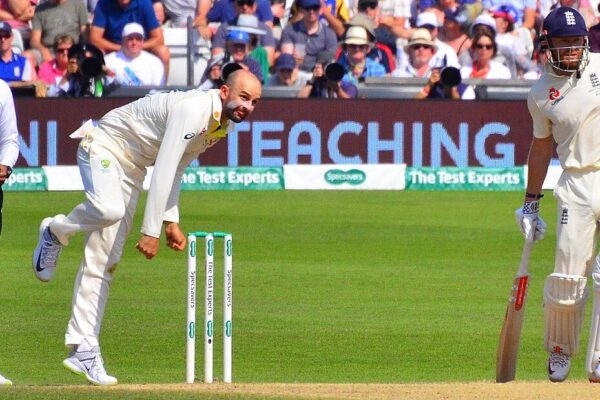
At full tilt, Mark Wood made the ball hurry in a way few England seamers could match. The speed gun often climbed past 90 mph, batters were rushed onto the back foot, and matches could change in the space of a short spell. That was the thread running through his career: pace, aggression and the constant effort to keep his body in one piece long enough to use both.
From Ashington to Durham
Mark Andrew Wood was born on January 11, 1990, in Ashington, Northumberland, a town with a strong sporting identity and a habit of producing hard-edged competitors. Before cricket became his profession, football had a serious pull. He has long been associated with Newcastle United, and that athletic, all-action streak showed up later in the way he bowled.
Cricket, though, was close at hand. Wood came through Northumberland age-group cricket and then moved into the Durham pathway, a route that gave his game shape. He also spent time with Durham MCCU and England Lions, both important steps for a fast bowler trying to move from promise to senior cricket.
His first-class debut for Durham came in 2011. From there, the outline of his domestic career became clear. Durham was home base, the county where he developed, returned after injuries and kept rebuilding. Even early on, he offered something selectors notice quickly: genuine pace rather than the promise of pace.
A fast bowler with a stop-start road
Wood’s rise was never smooth. Injuries interrupted him repeatedly, especially as the physical demands of bowling at high speed began to add up. Yet that was also what made him valuable. England do not produce many bowlers who can regularly operate above 145 km/h, and Wood could do it with a skiddy, whippy action that made the ball feel even quicker to the batter.
Height was never the whole story with him. Different sources have listed him anywhere from 6ft to 6ft 3in, but his threat came less from towering bounce than from the way he hit the pitch hard and got the ball through at awkward pace. He was the sort of seamer captains turned to when a game needed jolting.
Around 2018, he altered his run-up in an effort to reduce the strain on his body. That adjustment said plenty about his career. Wood was not simply trying to bowl fast; he was trying to stay available long enough for that pace to matter.
England debut and a rapid breakthrough
His international breakthrough arrived in 2015, and it came quickly across all three formats. Wood made his ODI debut against Ireland in Dublin in May 2015. Later that month, he won his first Test cap against New Zealand at Lord’s. His T20I debut followed in June, also against New Zealand.
That summer mattered. England were reshaping parts of their attack, and Wood’s speed gave them something different. He was picked in the 2015 Ashes and played four Tests in a series England won 3-2. For a newcomer, it was a significant vote of confidence. He was not there to hold an end quietly; he was there to attack.
The pattern of his England career was set early. When fit, he was too unusual to ignore.
Test cricket: bursts of pace, wickets and interruptions
In Test cricket, Wood became one of England’s most dangerous impact bowlers, even if injuries limited how often he could be used. He finished with 119 wickets in 38 Tests at an average of 30.79. He also scored 811 runs at 15.59, with one half-century and a highest score of 52.
Those numbers tell part of the story, but not all of it. His value often came in spells rather than in long, unbroken runs through a season. He could bowl a hostile burst that changed the mood of a session, especially on flatter pitches where extra pace was precious.
He took five five-wicket hauls in Tests, a useful marker of how damaging he could be when conditions, rhythm and fitness aligned. In the 2021-22 Ashes, he claimed 17 wickets, and in the 2023 Ashes he took 14 wickets in the final three matches after coming into the series. That latter run was a reminder of what he brought: urgency, speed and a willingness to attack from the first over.
White-ball cricket and the World Cup years
If Test cricket showed Wood at his most explosive, white-ball cricket showed how valuable that pace could be in tournament play.
He played 70 ODIs and took 80 wickets at an average of 40.82. With the bat, he made 168 runs at 12.92. He did not record an ODI five-for, but his role was rarely about tidy statistical symmetry. It was about breaking stands and unsettling top orders.
The 2019 Cricket World Cup was one of the central chapters of his career. England won the tournament on home soil, and Wood took 18 wickets across the campaign. Jofra Archer drew much of the late-tournament spotlight, but Wood’s contribution was substantial. He gave England another genuine pace option and helped drive the attack through a long competition.
In T20 internationals, he played 38 matches and took 54 wickets at an average of 20.24. He scored 27 runs. The format suited him. Short spells, hard lengths and speed through the deck made him a serious weapon.
That was clear again at the 2022 T20 World Cup, where England won the title and Wood took nine wickets in four matches before injury cut his tournament short. He was also among the quickest bowlers at that event, which was no surprise by then. His pace had become his calling card.
At the 2024 Men’s T20 World Cup, he was part of England’s squad and played five matches, taking three wickets.
The Mark Wood IPL chapter and franchise cricket
The Mark Wood IPL story was selective rather than extensive, but his skill set always made him attractive to franchises. Chennai Super Kings signed him for the 2018 season, though injuries limited what that move could become. Later, Lucknow Super Giants brought him in for the 2022 and 2023 IPL seasons, backing the idea that pure pace still changes games in T20 cricket.
He also featured in The Hundred for London Spirit, adding another major short-format competition to his schedule. For franchise teams, the appeal was obvious. Bowlers who can push beyond 145 km/h and still hit heavy lengths are rare, and Wood belonged in that category.
What made him different
Wood batted right-handed and bowled right-arm fast, but his identity rested almost entirely on what he could do with the ball. He was not a classical swing bowler building pressure over long spells. He was a disruptor.
The action looked loose and whippy rather than rigid. That gave his bowling a slightly unusual visual rhythm, but the effect was simple enough: the ball arrived quickly, climbed sharply enough, and forced mistakes. Even when batters knew pace was coming, dealing with it was another matter.
His fastest recorded delivery was 95.9 mph, or 154.4 km/h. More important than the single headline figure was the consistency of his speed. For long stretches of his career, he was one of England’s quickest bowlers, and often the quickest on the field.
Injuries and the end of his England career
There was always a price attached to that method. Wood’s career was repeatedly interrupted by injuries, and the struggle to manage them became part of his professional story. Fast bowling gave him his edge, but it also placed constant stress on his body.
He retired from international cricket in September 2026 because of a recurring knee injury. By that point, the decision felt like the end of a long balancing act between impact and availability. He left England with two World Cup winners’ medals, the 2019 ODI World Cup and the 2022 T20 World Cup, and with a reputation as one of the fastest bowlers his country produced in that era.
Off the pitch
Away from the game, Wood has usually come across as grounded and closely tied to the North East. He married Sarah Lonsdale in December 2018, and the couple have children. During the 2023 IPL, he returned to England for the birth of his daughter, a small detail that said something about how family life sat alongside the demands of franchise cricket.
His support for Newcastle United has long been part of his public profile, and boxing is another sport he has been reported to enjoy following.
As for finances and endorsements, figures published by different outlets have varied widely. Reported estimates of salary, net worth and career earnings should be treated with caution unless confirmed by the player, his representatives or official contracts. It is fair to say that England central deals, match fees and franchise cricket formed the backbone of his earnings, but precise totals are often speculative.
FAQ
Is Mark Wood still playing cricket?
He retired from international cricket in September 2026. Reports at the time indicated he hoped to continue playing T20 cricket in domestic and franchise competitions.
How fast does Mark Wood bowl?
He regularly bowled above 145 km/h, and his fastest recorded delivery was 95.9 mph, or 154.4 km/h.
Has Mark Wood won a World Cup?
Yes. He was part of England’s winning squads at the 2019 Cricket World Cup and the 2022 T20 World Cup.
Who is Mark Wood’s wife?
Mark Wood is married to Sarah Lonsdale.
Which county did Mark Wood play for?
Durham was his county side and the central team in his domestic career.
Where is Mark Wood from?
He is from Ashington, Northumberland, England.
Photo: 35winds, CC BY-SA 4.0, via Wikimedia Commons