Two balls into his one-day international career, KL Rahul looked as if he had been there for years. By the end of that debut innings in Harare, he was unbeaten on 100 and had become the first Indian man to score an ODI hundred on debut. It was a neat summary of the cricketer he would become: calm, technically sound, and capable of changing formats and roles without losing shape.
From Bangalore schools to Karnataka’s system
Kannaur Lokesh Rahul was born on April 18, 1992, in Bangalore, Karnataka. Sport was part of everyday life early on. He played cricket seriously, but he was not limited to one game as a child, also turning out in school for football, hockey and volleyball. Reports have long circulated that he was a strong runner too, competing in sprint events at school level.
The family background is well known. His father, K. N. Lokesh, worked in academia and served as a professor and director at NITK Surathkal, while his mother Rajeshwari was a professor at Mangalore University. He has a sister, Bhavna.
One story has followed him for years: according to widely repeated interviews, his father had intended to name him after Sunil Gavaskar’s son, but a mix-up led to Rahul instead. It is the kind of detail that has stuck because it sounds almost too tidy. What mattered more was the cricket. As a teenager, he moved deeper into Karnataka’s competitive structure and was part of India’s squad for the 2010 Under-19 World Cup.
That period gave him a proper base. He was not rushed into the spotlight as a prodigy; he came through a system that tends to reward volume of runs and sound method.
Karnataka made him
Rahul made his first-class debut for Karnataka in the 2010-11 season. The early years were less about instant fame than about learning how to build long innings. Karnataka, one of India’s strongest domestic sides, has rarely handed out places on reputation alone, and Rahul’s game had to harden there.
His rise gathered force in the middle of the decade. Karnataka won the Ranji Trophy in 2013-14, and Rahul was part of a side that also claimed major domestic silverware across formats in that period. In the 2014-15 Duleep Trophy final, he was named Man of the Match, another sign that he was moving from promising batter to established performer.
Then came one of the biggest innings of his domestic career. Playing for Karnataka in the 2014-15 season, he made 337 against Uttar Pradesh in the Ranji Trophy, becoming the first Karnataka batter to score a triple century in first-class cricket. The number mattered, but so did the manner of it. Rahul had already been tagged as a stylish player; that innings underlined his appetite for time at the crease.
By then, the outline of his batting was clear: strong alignment, a still head, late contact, and a preference for timing over force. He could drive cleanly through the off side, but he was not just a stroke-maker. He could also leave, defend and wait.
Test debut, then a rapid white-ball arrival
His India Test debut came against Australia at Melbourne on December 26, 2014. The start was modest, but the breakthrough was not far away. On the next tour stop in Sydney, he made his maiden Test hundred, scoring 110 in January 2015. It was an important innings because it came in hard conditions and against a strong attack, confirming that his domestic game could travel.
White-ball cricket arrived quickly after that. Rahul made his ODI debut against Zimbabwe on June 11, 2016, and marked it with that unbeaten century. A week later, on June 18, he made his T20I debut, also against Zimbabwe.
Those first years with India were full of role changes. He opened, batted in the middle order, filled in where needed and, later, took on wicketkeeping duties in white-ball cricket. For some players, that kind of shifting brief can blur an identity. For Rahul, it became the identity. He was the batter teams used when they wanted balance without sacrificing quality.
He went on to score international hundreds in all three formats, a marker of range rather than volume alone. In Tests he produced major innings in Australia, England and South Africa; in ODIs he became a dependable top-order and middle-order option; in T20Is he combined orthodox batting with a strong scoring rate.
Some of his records stand out because they are unusual rather than decorative. He was the first Indian man to score an ODI century on debut. In T20 internationals, his 110 not out against West Indies in 2016 remains notable because he made it from No. 4, rare territory for a century in that format. He also became one of the quickest players to complete centuries in all three international formats.
The innings that shaped his reputation
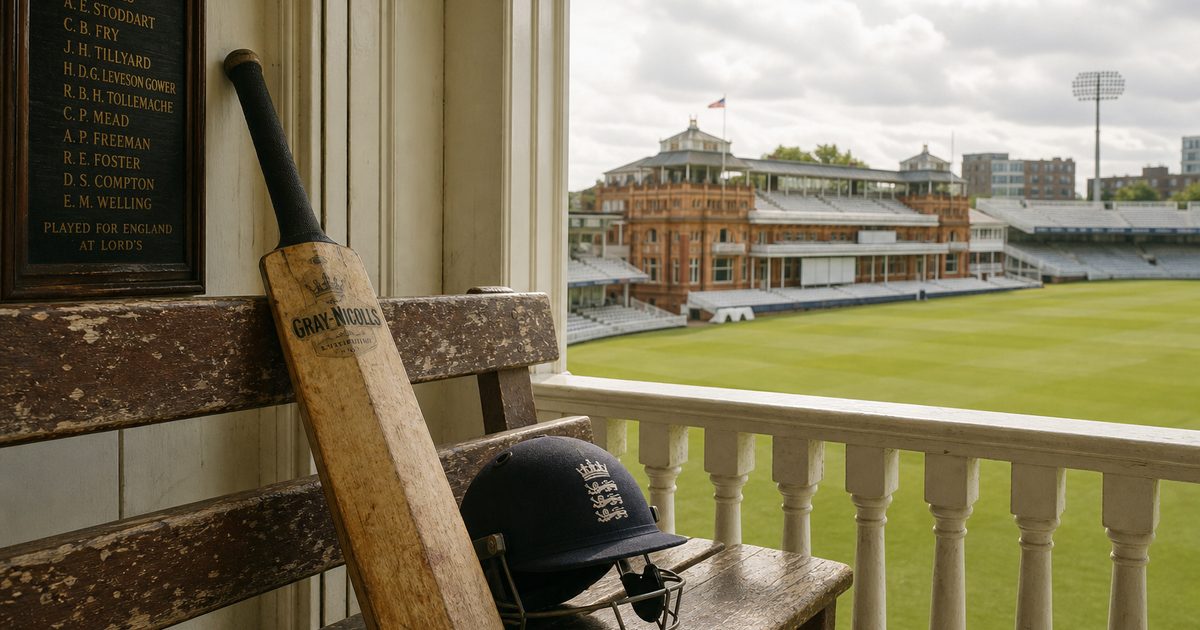
There have been flashier players in Indian cricket, but Rahul’s best innings tend to be remembered for control. His Test hundred at Lord’s in 2021, made in seaming conditions against England, was one of the clearest examples. He left well, trusted his defence and scored 129, an innings that earned him a place on the Lord’s honours board.
Later that year, in Centurion, he made 123 against South Africa and was named Player of the Match in India’s win. It was the sort of performance that kept returning in discussions about him: when conditions demanded discipline first and strokeplay second, Rahul often looked at his most convincing.
In white-ball cricket, his value was slightly different. He could start carefully and finish quickly, or come in later and keep an innings together. That flexibility helped India in multi-team tournaments, including the Asia Cup-winning squads of 2018 and 2023. He was also part of India’s squad for the 2023 Cricket World Cup.
Any broader claims about later tournament titles or current leadership roles need careful handling unless tied to a fixed, verified date. What is firmly established is that Rahul has captained India across formats when senior players were absent and has served as a senior figure in the side without ever being easy to pin to one permanent slot.
IPL: from prospect to centerpiece
The IPL gave Rahul a different stage and, eventually, a different kind of fame. He first appeared for Royal Challengers Bangalore in 2013, then moved to Sunrisers Hyderabad for the 2014 and 2015 seasons before returning to RCB in 2016.
That 2016 season was a turning point. Batting in a strong Bangalore side, he scored 397 runs in 14 matches and looked more assured than in his first spell in the league. But his biggest IPL phase began after he joined Punjab for the 2018 season.
In his first game for the franchise, he raced to a half-century in 14 balls against Delhi, setting the record for the fastest fifty in IPL history. It was an astonishing burst from a batter more often praised for shape than violence. The innings broadened the public picture of him. Rahul was not only adaptable; he could be explosive from the first over.
His run with Punjab, later Punjab Kings, lasted from 2018 to 2021. He became the side’s captain and one of the league’s most reliable run-scorers. In 2020, he won the Orange Cap with 670 runs.
From there he moved to Lucknow Super Giants in 2022 as captain. The role suited parts of his game, especially his ability to manage tempo, though it also brought heavier scrutiny. In the IPL, captains are judged not just by runs but by strike rate, field settings and playoff finishes. Rahul’s record in the competition has often been discussed through that lens.
Claims about exact franchise fees, total career earnings and current team status can change with auctions and contract cycles, so they are best treated cautiously unless tied to a specific season. What is beyond dispute is that he has spent years as a high-value IPL player and a central batting figure for multiple franchises.
Why his game works in every format
Rahul is a right-handed batter whose technique has always been his anchor. He tends to play the ball late, keeps his movements compact and is especially strong square of the wicket and through extra cover. Against pace, that stillness helps. Against spin, he is good enough off the back foot to avoid getting pinned into one method.
The wicketkeeping dimension added another layer. He was never introduced to international cricket as a specialist keeper, but the role increased his usefulness in ODIs and T20Is, allowing India to fit an extra batter or bowler into the side. In modern cricket, that kind of flexibility can decide selection.
He has opened in Tests and T20Is, batted in the middle order in ODIs, and shifted according to team balance. Few Indian batters of his generation have moved around as often while still producing hundreds across formats.
Life away from cricket
Away from the field, Rahul has built a public profile that stretches into fashion, endorsements and business. He has been associated with the streetwear label Gully and launched the athleisure brand 1DER in partnership with Puma. He has also been linked with investments in consumer and sports-related businesses, though the exact portfolio and valuations depend on company announcements and financial reporting at the time.
His endorsement list has included major brands across apparel, tech and lifestyle. Net-worth estimates, however, vary widely between publications, so they should be treated as media estimates rather than settled fact.
His personal life is more firmly documented in one respect: Rahul married actor Athiya Shetty in 2023. She is the daughter of actor Suniel Shetty. Reports in entertainment and business media have linked the couple with properties in Mumbai, Bangalore, Goa and Khandala, but those details are best described as reported rather than confirmed unless publicly documented by the family.
He is also known for his tattoos, including designs connected to family and personal mottos. Claims that he holds a formal post such as Assistant Manager in the Reserve Bank of India appear in some profiles, but such details are inconsistently reported and should be treated with caution unless directly verified.
The 2019 controversy
The main off-field controversy attached to Rahul’s career came in 2019, when he and Hardik Pandya were suspended by the BCCI following controversial remarks on the television show Koffee with Karan. The episode became a significant public setback, and Rahul later returned to international cricket under intense attention. It remains one of the few major disciplinary incidents on his public record.
FAQ
What is KL Rahul’s full name?
His full name is Kannaur Lokesh Rahul.
When was KL Rahul born?
He was born on April 18, 1992.
What is KL Rahul’s role in cricket?
He is a right-handed wicket-keeper-batter.
Has KL Rahul scored centuries in all formats?
Yes. He has made international hundreds in Tests, ODIs and T20Is.
Who is KL Rahul’s wife?
KL Rahul is married to actor Athiya Shetty. They married in 2023.
What is KL Rahul’s most famous IPL record?
He holds the record for the fastest fifty in IPL history, reaching the mark in 14 balls.