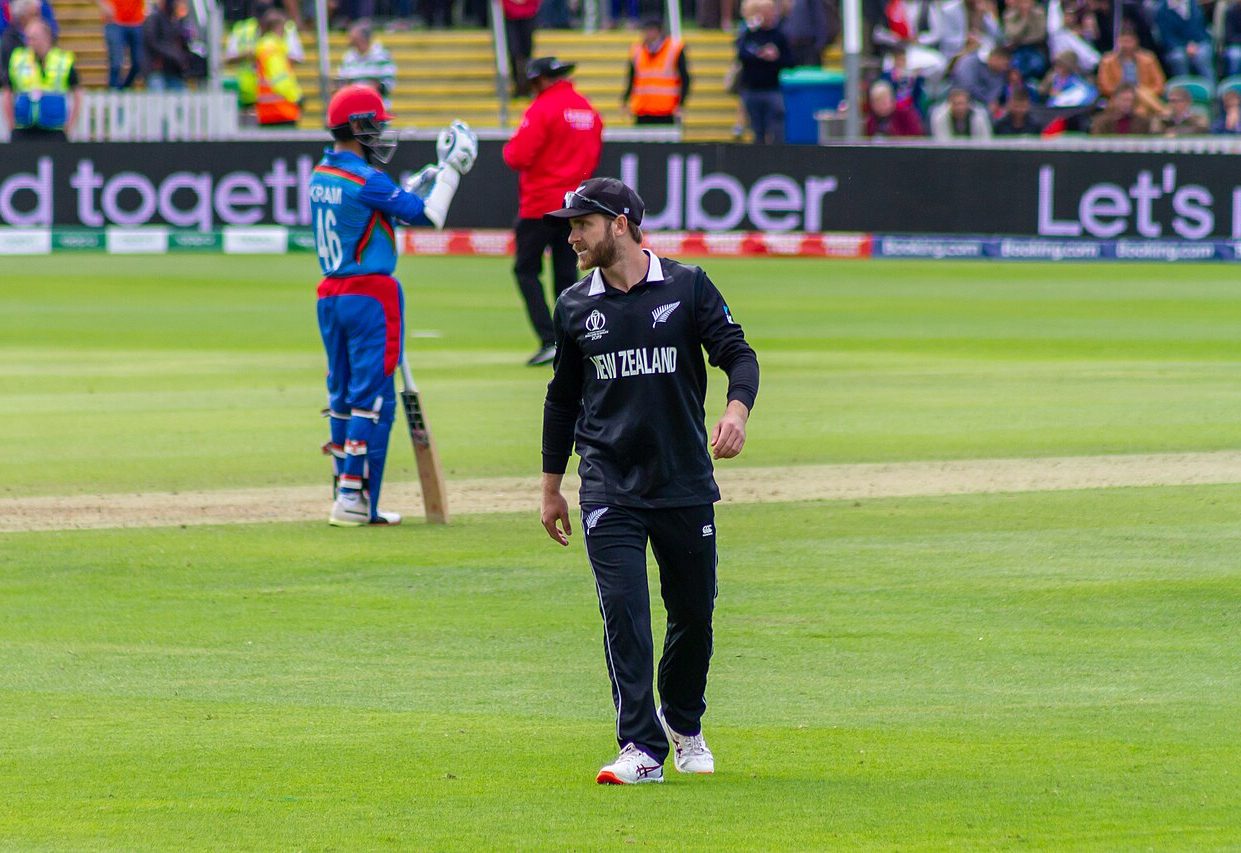
A hundred on Test debut usually announces a player with a bang. Kane Williamson did it with a nudge, a leave, a straight bat and the kind of composure that would come to define his career. Long before he became New Zealand’s leading Test run-scorer and the captain who lifted the ICC World Test Championship mace, he looked like a batter who preferred control to theatre.
From Tauranga schoolboy to New Zealand prospect
Kane Stuart Williamson was born on 8 August 1990 in Tauranga. Cricket sat alongside plenty of other sport in his early years. He played rugby and basketball too, and one small detail followed him into adulthood: he bats and bowls right-handed, but writes left-handed.
Family remained a constant. He grew up with parents Brett and Sandra, his twin brother Logan, and older sisters Anna, Kylie and Sophie. The setting mattered. Williamson’s public image later became one of calm and restraint, and those who knew him early often described the same qualities in the schoolboy version.
At Tauranga Boys’ College, the runs piled up quickly. He is widely credited with scoring 40 centuries during his school years, an extraordinary return that made him one of the country’s most closely watched young batters. Coach Pacey Depina once spoke of Williamson’s drive in memorable terms, describing a “thirst to be phenomenal, but not at anyone else’s expense.”
By the time the Under-19 World Cup arrived in 2008, he was already leading New Zealand’s junior side. That tournament did not make him famous on its own, but it confirmed two things that would shape the rest of his story: he could bat for long periods, and people trusted him with responsibility.
Northern Districts and the steady build
Williamson’s first-class debut for Northern Districts came in December 2007, before his school career had even fully faded into the background. Northern Districts became the domestic base of his cricket life, and that continuity says something about him. He was never the kind of player who seemed restless.
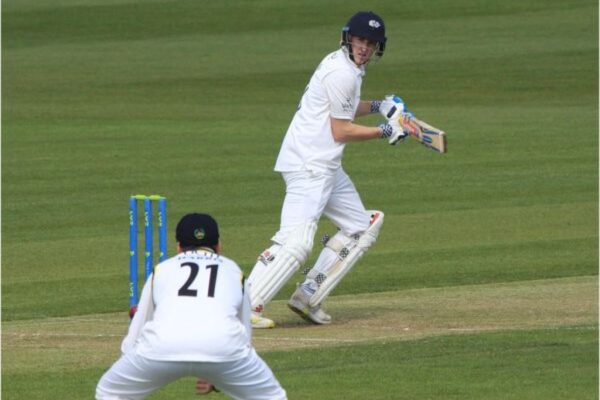
As his reputation grew, county cricket in England became part of his education. He played for Gloucestershire and later for Yorkshire, experiences that sharpened a game already built on balance, judgment and patience. English conditions have a way of exposing technical flaws; Williamson’s time there instead reinforced the strengths that would carry him through international cricket.
Franchise cricket arrived more gradually. In the IPL, he represented Sunrisers Hyderabad and became one of the side’s most reliable batters. His standout season came in 2018, when he captained the team for much of the campaign and won the Orange Cap after scoring 735 runs. It was a useful reminder that his white-ball game, sometimes overshadowed by his Test record, could be both measured and highly productive.
He also featured in other leagues, including the Caribbean Premier League. Those stints never overwhelmed the central shape of his career. For most of his playing life, the main story remained New Zealand.
A rapid international arrival
The step up happened fast. Williamson made his ODI debut against India in Dambulla in August 2010. He was dismissed for a duck, which now looks like a brief false start in a career full of runs.
Two months later, again against India, he scored his first ODI hundred. At that point he was the youngest New Zealander to make an ODI century. Then came the innings that still sits near the top of any Kane Williamson biography: 131 on Test debut at Ahmedabad in November 2010. He became the eighth New Zealand player to score a century in his first Test.
His T20I debut followed against Zimbabwe in October 2011. By then, the pattern was clear. New Zealand had not simply found a gifted batter; they had found a player around whom an era could be built.
The making of New Zealand’s leading Test batter
Williamson’s Test career grew through accumulation rather than spectacle. He was rarely hurried, rarely loose for long, and rarely out of place in difficult conditions. The method was compact, but the output became historic.
He moved past Stephen Fleming to become New Zealand’s leading Test run-scorer in 2023. He also set the national mark for Test centuries, finishing with 33 hundreds in the format. Six of those were double-centuries, another sign of his appetite for long innings once he was set.
His final Test tally stands at 9,276 runs in 105 matches at an average above 54, with a highest score of 251. Those numbers place him not only at the top of New Zealand’s list, but among the most productive Test batters of his generation.
There was substance in the milestones too. He scored runs in Asia, in England, at home on greener surfaces, and against the strongest attacks of his time. In 2018 he became the first New Zealander to pass 900 points in the ICC Test batting rankings, a statistical marker of just how complete his game had become.
ODI class, T20 value and tournament weight
If Test cricket best captured Williamson’s patience and precision, ODI cricket showed his pacing. He could begin quietly, absorb pressure and then gather an innings without obvious risk. Over time, that turned into another major body of work.
He finished his ODI career with 7,125 runs in 165 matches at an average above 47, including 13 centuries. For long stretches he was the hinge of New Zealand’s batting: the player who could settle a chase, rebuild after early wickets or give shape to an innings that threatened to drift.
At World Cups, his value became even clearer. In 2015, New Zealand reached the final on home soil and across the Tasman. In 2019, they made the final again, and Williamson was named Player of the Tournament after scoring 578 runs in a campaign defined by control under pressure. The final at Lord’s, decided by boundary count after a tie and a Super Over, remains one of the strangest and hardest-fought matches the format has seen.
His T20I career was less about headline numbers than influence. Williamson scored 2,575 runs in 93 T20 internationals, with 18 fifties and a highest score of 95. He never made a T20I hundred, but he gave New Zealand shape at the top of the order and calm in the middle overs. In a format that often rewards chaos, he brought order.
Captaincy, near-misses and the World Test Championship
Leadership became inseparable from Williamson’s career. He captained New Zealand across formats and did so in a style that matched his batting: measured, understated and usually clear-headed.
There were painful near-misses. New Zealand finished runners-up at the 2015 Cricket World Cup, the 2019 Cricket World Cup and the 2021 T20 World Cup. Those campaigns added to his stature without needing embellishment. His teams were disciplined, competitive and difficult to shake.
The defining triumph came in June 2021, when New Zealand beat India in the final of the inaugural ICC World Test Championship at Southampton. Williamson made an unbeaten 52 in the chase and, more importantly, stood at the centre of the team’s biggest red-ball achievement. It was New Zealand’s first world title in men’s cricket since the ICC KnockOut in 2000.
That result gave his captaincy a landmark trophy, but it also suited the broader arc of his career. Test cricket, with its demand for patience and exactness, was always the format that best reflected him.
How Kane Williamson played
Williamson was a right-handed top-order batter whose game rested on balance, late decision-making and unusually soft hands. He was strong square of the wicket, neat through the covers and especially good at turning good balls into harmless ones. Bowlers often had to work longer than they wanted for a chance.
He also bowled occasional off-spin. It was never the main feature of his cricket, but it gave captains another option and brought him a modest collection of international wickets.
The phrase “Fab Four” followed him for much of his career, grouping him with Virat Kohli, Steve Smith and Joe Root. Labels like that can flatten differences, but in Williamson’s case it captured something real: he belonged in the company of the era’s leading batters, even if he went about it more quietly than most.
Life away from the game
Away from cricket, Williamson kept a notably private profile. That means some personal details often repeated online need careful handling.
He has been in a long-term relationship with Sarah Raheem, a nurse. The pair have children together, including a daughter whose birth was publicly reported in 2020. Some reports and profiles describe Sarah Raheem as Kane Williamson’s wife, but he has generally kept his family life private, so it is safer to say they are partners unless he has publicly confirmed otherwise.
He has long been associated with Tauranga and Mount Maunganui, and surfing is often mentioned among his interests away from cricket. That detail rings true with the broader picture: even at the height of his career, he rarely seemed drawn to unnecessary noise.
There were commercial partnerships too, as is common for a player of his standing. Estimates of Kane Williamson net worth vary widely across media reports, and such figures are rarely verified publicly, so they should be treated as speculative rather than factual. The same caution applies to claims about exact annual endorsement income.
One off-field episode did become a matter of record. In 2014, Williamson was reported for a suspect bowling action. He modified the action and was cleared later that year. It was a brief interruption rather than a defining controversy.
Another detail that stood out came after the Peshawar school massacre in 2014, when he donated match fees from an ODI series to victims. It was not a gesture he turned into a public performance, which in its own way was characteristic.
The shape of a career
Williamson’s career does not need exaggeration to feel substantial. He arrived early, scored heavily almost everywhere, carried New Zealand through major tournaments, and left with the country’s most significant Test batting records in his name. The style was never loud. The record is.
FAQ
When did Kane Williamson make his Test debut?
He made his Test debut against India in Ahmedabad in November 2010 and scored 131.
How many Test centuries did Kane Williamson score?
He scored 33 Test centuries, the most by a New Zealand batter.
Did Kane Williamson captain New Zealand to an ICC title?
Yes. He captained New Zealand to the ICC World Test Championship title in 2021.
What is Kane Williamson’s highest Test score?
His highest Test score is 251.
Is Kane Williamson married?
He has kept his private life largely out of the spotlight. He is in a long-term relationship with Sarah Raheem, but some marital-status claims in media reports are not consistently confirmed by Williamson himself.
Why is Kane Williamson so important to New Zealand cricket?
He became New Zealand’s leading Test run-scorer, set the national record for Test hundreds, and led the side to the World Test Championship title.
Photo: Mark Lockett, CC BY-SA 2.0, via Wikimedia Commons