At Edgbaston in 1994, the scoreboard climbed past 400 and still did not stop. Brian Lara, batting for Warwickshire against Durham, finished on 501 not out, the highest individual score in first-class cricket, and still one of the game’s most untouchable records. It was the kind of innings that explained the scale of his talent, but only partly. The numbers around Lara are enormous. The feel of watching him bat was something else again.
For West Indies, the left-hander made 11,953 runs in 131 Tests and 10,405 in 299 ODIs. He set the Test record with 375, lost it, then took it back with 400 not out. He was graceful without being passive, compact without being limited, and capable of turning a good innings into a marathon. That blend of style and appetite is why Brian Lara remains one of cricket’s defining batters.
Early years in Trinidad
Brian Charles Lara was born on May 2, 1969, in Santa Cruz, Trinidad and Tobago, though some accounts also mention Cantaro in Trinidad. He was one of 11 children born to Bunty and Pearl Lara, and cricket arrived early.
At six, he attended the Harvard Coaching Clinic, a sign that his ability had been spotted young. One of the enduring stories from his childhood is simple enough to sound almost too neat: practice on the porch with a broom handle and a marble. Whether repeated because it is vivid or because it captures something real, it fits the player he became, quick hands, close control, and unusual concentration.
He was not only a cricketer as a boy. Lara also played football and table tennis at junior level and represented Trinidad and Tobago in youth sport. By 14, he was in the Trinidad Under-16 side. At 15, he had reached West Indies Under-19 level. In 1986, he captained a West Indies youth team, and his progress through Trinidad cricket was rapid.
First-class cricket and the making of a giant scorer
Lara made his first-class debut for Trinidad and Tobago against the Leeward Islands in January 1988. Domestic cricket quickly became the stage on which his appetite for long innings showed itself. He played for Trinidad and Tobago across a long span, and his game also travelled well.
In the early 1990s, he had a stint with Northern Transvaal in South Africa. Then came Warwickshire, where his career took on a different kind of fame. The 1994 English season remains one of the most remarkable by any batter: 501 not out against Durham in first-class cricket, and, not long before that, 375 in a Test match. The run-making was relentless, but it was not mechanical. Lara scored with a high backlift, fast hands and a range square of the wicket that could dismantle bowlers once he settled.
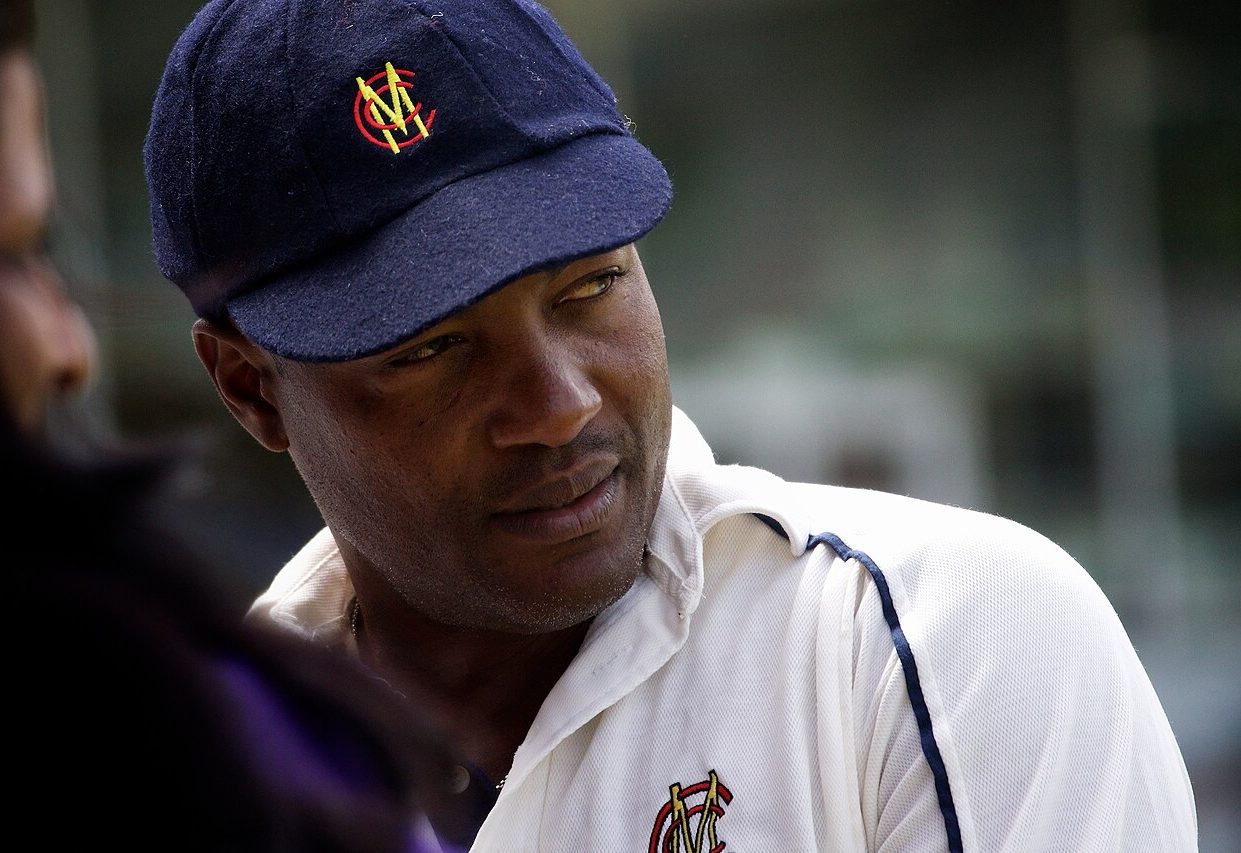
He later appeared for Southern Rocks in Zimbabwe and also played for MCC. He never played a T20 international, that format arrived too late in his international career, but he did feature in domestic Twenty20 cricket late on.
West Indies debut and a swift rise
His international career began in Pakistan. Lara made his ODI debut for West Indies against Pakistan in Karachi on November 9, 1990, and his Test debut followed against the same opposition in Lahore on December 6, 1990.
The start was not instantly record-breaking, but the shape of the career soon became clear. He was a left-handed top-order batter who could dominate attacks in different ways: by tempo, by placement, or by sheer duration. In Test cricket, he finished with 34 centuries and 48 fifties at an average of 52.88. In ODIs, he made 19 hundreds and 63 fifties at 40.48.
Those totals alone would place him among the leading batters of his era. What pushed him beyond that was the size of his peaks.
The record years: 375, 400 and 501
In 1994, Lara made 375 against England in Antigua, then the highest individual score in Test cricket. It was not just a record innings; it was a statement about the kind of batter he was becoming. He did not merely compile. He occupied a match until it bent around him.
That same year, playing county cricket for Warwickshire, he made 501 not out against Durham. No one has gone higher in first-class cricket. The feat still stands apart, not only because of the number itself but because so few players have ever looked capable of reaching it.
A decade later, after Matthew Hayden had taken the Test record, Lara reclaimed it in the most emphatic way possible. Against England in St John’s in 2004, he made 400 not out. He remains the only man to score 400 in a Test innings, and the only player to have broken the world record for the highest individual Test score twice.
There were other landmarks too. Against South Africa in Johannesburg in 2003, he took 28 runs from a Robin Peterson over in a Test match, equalling the most runs scored in a single over in Test cricket at the time.
The innings that said most
Not every defining knock needs a world record attached. Lara’s 153 not out against Australia in Bridgetown in 1999 is often the innings that fellow players and historians return to first. Chasing 308 on a difficult pitch against a formidable attack, West Indies won by one wicket. Wisden later rated it the second-best Test batting performance of all time.
That innings helps explain why the phrase “Brian Lara stats” never tells the whole story. Yes, the totals are vast. But some of his reputation rests on context: pressure, opposition, and the sense that he could seize a match from a position that looked gone.
Captaincy, conflict and a title
Lara captained West Indies in separate spells rather than one long reign. He led the side from 1998 to 1999, returned in 2003, and then again from 2006 into the end of his international career. The periods were not smooth throughout. West Indies cricket in those years was often turbulent, and Lara’s own relationship with management was not always easy.
During the 1991 tour of England, he had a dispute with team management and did not play in the Test series. In 2005, a disagreement over personal sponsorship terms led to him missing international matches. Those episodes formed part of a career that was brilliant but not friction-free.
The major team success under his captaincy came in the 2004 ICC Champions Trophy, when West Indies beat England in the final at The Oval. For a side searching for a modern limited-overs high point, that title mattered.
His final international appearance came at the 2007 Cricket World Cup. After West Indies lost to England on April 21, 2007, Lara confirmed his retirement from international cricket. His final line to the crowd, “Did I entertain?”, was theatrical, but it was also revealing. He understood what people had come to see.
Claims that he retired one ODI short of 300 because of bitter disputes with administrators have circulated in media reports, including reporting cited by CA Sports, but that should be treated as reported speculation rather than established fact.
After West Indies: leagues, coaching and public life
After retiring from international cricket, Lara joined the Indian Cricket League in 2007 and played for Mumbai Champs, also serving as captain. An arm fracture in early 2008 disrupted that phase of his playing career.
He did not have an IPL playing career, but he remained visible in the professional game after retirement. Lara later worked in coaching roles, including as batting coach for Sunrisers Hyderabad and then as the franchise’s head coach for a period. He has also been associated with commercial and ambassadorial work around cricket, including with CA Sports.
How Brian Lara batted
The essentials were easy to spot: left-handed stance, high backlift, balance at the crease, and a gift for scoring square of the wicket. But the mechanics only tell part of it. Lara had a rare ability to make long innings feel fluid. He could score quickly without looking hurried, and he seemed to grow more dangerous once he had passed fifty.
Bowlers often spoke about the difficulty of containing him once rhythm took over. Muttiah Muralitharan, among the finest bowlers the game has produced, described Lara as his toughest opponent. That judgment carries weight because it reflects not only elegance, but problem-solving. Lara could counter spin, pace, pressure and fatigue over the course of the same innings.
Life off the pitch
Away from cricket, Lara has long attracted public interest, though not every detail belongs in the same category of certainty. He has been publicly linked to model Leasel Rovedas in media coverage, but such relationship reports should be treated as reported private-life claims rather than hard cricket fact.
He is the father of two daughters, Sydney and Tyla. Family is also part of his charitable footprint. The Pearl and Bunty Lara Foundation, named after his parents, has supported health and social-care causes in Trinidad and Tobago.
That off-field picture matters because Lara’s public identity was always larger than scorecards. He was a Trinidadian star, a West Indies standard-bearer, and a cricketer whose name travelled well beyond the Caribbean.
Honors and recognition
Recognition followed him through his playing days and beyond. He was named Wisden’s Leading Cricketer in the World in 1994 and 1995, received the BBC Overseas Sports Personality of the Year award in 1994, and was one of Wisden’s Cricketers of the Year in 1995.
His national honors included the Humming Bird Medal (Silver) in 1992 and the Trinity Cross in 1994 from Trinidad and Tobago. Later came honorary recognition from abroad and from cricket institutions: Honorary Member of the Order of Australia in 2009, an honorary doctorate from the University of the West Indies in 2011, induction into the ICC Hall of Fame in 2012, and Honorary Life Membership of MCC in 2013.
FAQ
What is Brian Lara’s highest score in Test cricket?
400 not out, made against England in Antigua in 2004.
What is Brian Lara’s highest first-class score?
501 not out for Warwickshire against Durham in 1994.
How many runs did Brian Lara score for West Indies?
He made 11,953 runs in Tests and 10,405 in ODIs.
Did Brian Lara captain West Indies?
Yes. He captained the side in multiple spells and led West Indies to the 2004 ICC Champions Trophy.
When did Brian Lara retire from international cricket?
He retired after West Indies’ World Cup match against England on April 21, 2007.
Is Brian Lara in the ICC Hall of Fame?
Yes. He was inducted in 2012.
Photo: p a h, CC BY 2.0, via Wikimedia Commons