Abraham Benjamin de Villiers was born on February 17, 1984, in Warmbad, now Bela-Bela, in South Africa’s Limpopo province. He grew up in a sporty household and, long before he became one of South Africa’s defining batters, he had a reputation for being good at almost everything. At school he played and competed across a remarkable range of sports, including rugby, tennis, hockey, swimming, athletics and golf.
That broad athletic base mattered later. It showed up in his balance at the crease, in the speed of his hands, and in the way he could switch between roles without looking uncomfortable. He was not only a right-handed batter; he was also an excellent fielder, a capable wicketkeeper and, when needed, a useful right-arm medium-pace option.
His pathway through cricket was quick rather than dramatic. He represented South Africa at Under-19 level in 2002, then moved into senior domestic cricket soon after.
Domestic cricket: the foundation at Northerns and Titans
De Villiers made his first-class debut in the 2003/04 season for Northerns and was also part of the Titans setup, where much of his early senior cricket was shaped. Those years did not simply introduce him to professional cricket; they established the flexibility that would define his career.
He could bat near the top, hold the middle order together, or accelerate late. He could keep wicket if the balance of the side required it. Coaches and selectors tend to value players who solve problems, and de Villiers kept giving teams options.
That domestic grounding carried him into the national side at speed.
England first, then the world stage
His Test debut came against England at Port Elizabeth in December 2004. The ODI debut followed against the same opposition in February 2005, and his first T20 international arrived against Australia in February 2006.
The early Test years are worth remembering because they complicate the simplified version of his story. De Villiers is often introduced through white-ball invention, but he first had to learn international cricket in the hardest format. He opened in Tests at times, batted in the middle order at others, and built a reputation for patience as well as flair.
By the time he finished, his international record was substantial across formats:
- Tests: 114 matches, 8,765 runs at 50.66, 22 hundreds and 46 fifties
- ODIs: 228 matches, 9,577 runs at 53.50, 25 hundreds and 53 fifties
- T20Is: 78 matches, 1,672 runs at 26.12, 10 fifties
A batting average above 50 in both Tests and ODIs is rare company. Doing that while also carrying the label of an attacking, unconventional shot-maker is rarer still.
Test cricket: patience, range and a long run without failure
For all the attention on his white-ball range, AB de Villiers was a serious Test batter. His highest score, 278 not out against Pakistan in Abu Dhabi in 2010, remains one of the biggest Test innings by a South African. It was not a cameo dressed up as greatness; it was a long, controlled, technically demanding innings.
He also set a notable mark for consistency by going 78 consecutive Test innings without a duck, a record in the format. That stat says something important about him. The spectacular shots drew the eye, but his base game was strong enough to survive good bowling, awkward conditions and long series.
Another unusual entry on his Test résumé came against Pakistan in Johannesburg in 2013, when he became the first wicketkeeper to score a century and complete 10 dismissals in the same Test.
There were stretches when South Africa relied on him not just for runs but for calm. He captained the Test side from 2016 into 2017, though leadership often arrived in a period when injuries and workload were becoming part of the conversation around his career.
ODI cricket and the full force of Mr. 360
If Tests showed his depth, one-day internationals made him one of the format’s defining batters. He finished with 9,577 ODI runs at 53.50, numbers that combine volume, speed and consistency in a way few players manage.
The most famous burst came against West Indies at Johannesburg in January 2015. In one astonishing innings, de Villiers raced to the fastest ODI fifty off 16 balls, the fastest ODI hundred off 31 balls and, within the same knock, the fastest ODI 150 off 64 balls. Records can sometimes feel abstract; this one never has. It remains one of the clearest examples of a batter taking complete control of a 50-over game.
That innings helped define the public image of AB de Villiers, but it did not create it from nothing. He had already become known for scoring into angles that field settings were supposed to protect. The “Mr. 360” tag worked because it described a real tactical skill: he could access almost every part of the ground without looking like he was guessing.
He was also among the quicker players to major ODI milestones, reaching 9,000 runs in just 205 innings.
World Cups and captaincy
World Cups gave him another stage, though not quite the trophy his South Africa side wanted. He played in the 2007 tournament, then in 2011, where he scored two centuries. In 2015 he was at his most influential, making 482 runs at an average of 96.40 and a strike rate above 144 as South Africa reached the semi-finals.
That campaign captured much of what made him such a difficult player to define neatly. He was destructive, but not reckless. He could dominate attacks, yet still leave a tournament with an average that belonged to a classical accumulator.
De Villiers captained South Africa in ODIs from 2011 to 2017 and also led the T20I side for periods. The captaincy record was mixed, as it often is in international cricket, but his batting output under responsibility remained high.
Franchise cricket and the IPL years
The franchise chapter stretched his influence beyond South Africa. He played for Delhi Daredevils in the IPL from 2008 to 2010, then moved to Royal Challengers Bangalore in 2011. That switch proved significant for both player and team.
At RCB, de Villiers became one of the league’s central figures. Batting alongside Virat Kohli and, at times, Chris Gayle, he produced some of the IPL’s most memorable rescue acts and finishing knocks. He could enter early after a collapse or arrive late and still change the match in a handful of overs.
He retired from the IPL after the 2021 season. By then, he had scored 5,162 runs in 184 IPL matches at an average above 39 and a strike rate above 150, with three centuries. For a long stretch he was also among the league leaders in Player of the Match awards, which fits the broader picture: he was often the man who turned a game that seemed to be slipping.
Outside the IPL, he also appeared in other franchise competitions, including stints with Barbados Tridents, Tshwane Spartans, Rangpur Riders, Lahore Qalandars, Middlesex and Brisbane Heat.
Awards, recognition and place in South African cricket
The honors followed naturally from the record. De Villiers was named ICC ODI Player of the Year three times, in 2010, 2014 and 2015. He was selected in major ICC teams of the decade and remained a fixture in discussions about the most complete white-ball batters of his era.
In South Africa’s all-time lists, he sits among the country’s leading run-scorers in both Tests and ODIs. That matters because his career was not built on one format alone. He was elite in red-ball cricket, inventive in one-day internationals and highly influential in T20s.
He was inducted into the ICC Hall of Fame in 2024, formal recognition of a career that had already been secure in cricket memory for years.
Playing style: invention built on technique
The easiest way to describe his batting is to talk about range, but that only tells half the story. Plenty of players try unusual shots. De Villiers made them work because his fundamentals were so strong. He read length early, stayed balanced and adjusted late.
That is why he could thrive in very different jobs. He could bat time in a Test, rebuild in an ODI, or finish a T20 innings at full speed. He was not simply a power hitter with a highlight reel. He was a problem-solver with exceptional hands and unusual imagination.
His fielding added another layer. In the ring, on the boundary or behind the stumps, he brought the same athletic sharpness that had marked him out as a schoolboy multi-sport talent.
Off the pitch: family, music and public scrutiny
Away from cricket, de Villiers has long projected a settled family image. He married Danielle Swart in 2013 after proposing at the Taj Mahal the previous year, a detail widely reported at the time. The couple have three children.
He has also shown a creative side that sits a little outside the standard cricketer profile. In 2010, he released a bilingual music album, Maak Jou Drome Waar, with Ampie du Preez. Later came a book, AB de Villiers, The Autobiography, published in 2016.
His Christian faith has been discussed openly in interviews and profiles, and he has spoken about its importance in his life.
Some off-field discussion around the latter part of his career centered on workload, retirement decisions and whether franchise cricket had begun to take priority over South Africa. That was media criticism rather than any disciplinary matter. There was also periodic comeback speculation after his international retirement, but that remained speculation unless confirmed by de Villiers or Cricket South Africa.
Retirement and what remains
AB de Villiers retired from international cricket in May 2018. In November 2021, he announced his retirement from all cricket.
What remains is a career that resists a simple label. He was a South African wicket-keeper-batter, yes, but also a high-level Test player, a one-day record holder, a franchise match-winner and one of the rare modern players whose style changed how batting looked. The numbers explain a lot. The memory of how he made those runs explains the rest.
FAQ
What is AB de Villiers’ full name?
Abraham Benjamin de Villiers.
When did AB de Villiers retire from international cricket?
He retired from international cricket on May 23, 2018.
What is AB de Villiers’ highest Test score?
His highest score in Test cricket is 278 not out.
Which IPL teams did AB de Villiers play for?
He played for Delhi Daredevils and Royal Challengers Bangalore.
Why is AB de Villiers called Mr. 360?
The nickname refers to his ability to score all around the wicket with a wide range of attacking shots.
How many children does AB de Villiers have?
He has three children.
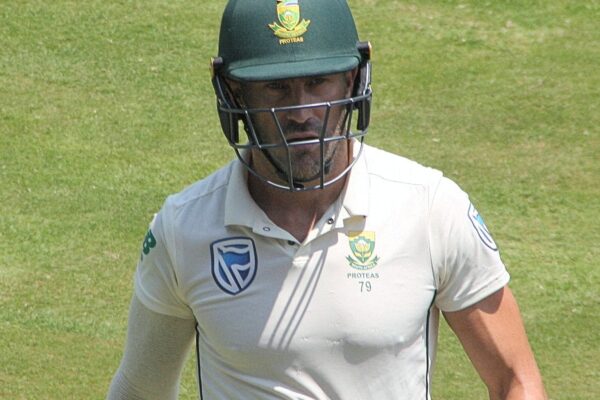
Photo: paddynapper, CC BY-SA 2.0, via Wikimedia Commons