Three first-class triple centuries sit on Ravindra Jadeja’s record, an almost improbable detail for a cricketer first sold to the wider public as a left-arm spinner and livewire fielder. That contrast has followed him through his career. He arrived as a utility player, stayed as an all-format all-rounder, and built a body of work that made him indispensable to India for long stretches.
From Navagam Ghed to India Under-19
Ravindrasinh Anirudhsinh Jadeja was born on December 6, 1988, in Navagam Ghed in Gujarat, and grew up in Jamnagar. Cricket was not the only path imagined for him. His father, Anirudhsinh, a former serviceman who later worked as a watchman, reportedly wanted his son to join the Army. His mother, Lata, was a nurse, as is his sister Naina.
The game took over early. Jadeja joined the Nawanagar Cricket Academy as a boy and quickly moved through age-group cricket in Saurashtra. A major personal loss came in 2005, when his mother died in an accident. Jadeja has spoken about how deeply that affected him, and by several accounts he briefly considered giving up cricket.
Instead, he pushed on and became a regular in India’s Under-19 setup. He was part of the side that finished runner-up at the 2006 Under-19 World Cup, then served as vice-captain when India won the tournament in 2008 under Virat Kohli. That campaign gave him national visibility, but it did not fully explain the player he would become. The batting, in particular, still had room to surprise people.
The domestic years that shaped him
Before he became a fixture for India, Jadeja had already built a serious first-class record with Saurashtra. He made his first-class debut in the 2006-07 Duleep Trophy for West Zone and soon became one of the most productive cricketers on the domestic circuit.
This is where the outline of his game really sharpened. He was not simply a spinner who could bat a bit. He made heavy runs, often in long innings, while also bowling left-arm orthodox spin with the kind of control captains trust for hours at a time.
His three first-class triple centuries remain one of the most unusual entries on any Indian all-rounder’s résumé. He scored 314 against Odisha in 2011-12, 303 not out against Gujarat in 2012-13, and 331 against Railways later in the same season. That made him the first Indian to score three triple hundreds in first-class cricket. The feat said something important about his batting: patience, concentration and the ability to dominate attacks far beyond cameo contributions down the order.
IPL beginnings, ban, and the long Chennai chapter
The IPL caught him young. Jadeja was part of Rajasthan Royals in the league’s inaugural season in 2008 and was in the squad that won the title under Shane Warne. He stayed with Rajasthan in 2009, when his athletic fielding and useful middle-order batting made him one of the more promising Indian all-rounders in the tournament.
Then came an early setback. Jadeja was banned for the 2010 IPL season after the league found him guilty of negotiating with other franchises while still contracted, a breach of IPL rules. It was a significant disciplinary mark, but it did not stall his career for long.
He turned out for Kochi Tuskers Kerala in 2011. The next move was the one that defined his franchise career: Chennai Super Kings signed him at the 2012 auction for a high fee, and he became a central figure in their side. When CSK were suspended from the IPL, he spent 2016 and 2017 with Gujarat Lions before returning to Chennai.
With CSK, Jadeja developed from a talented support player into one of the league’s most reliable all-round cricketers. He was part of title-winning Chennai squads in 2018, 2021 and 2023, adding those trophies to the 2008 title he won with Rajasthan. He also briefly captained CSK in 2022 before the role went back to MS Dhoni during the season.
Because franchise moves and auction details change over time, it is safer to avoid treating future-team claims as settled fact unless officially confirmed by the league and the player’s franchise.
India debut and the slow build into a mainstay
Jadeja’s India career began in white-ball cricket. He made his ODI debut against Sri Lanka on February 8, 2009, and his T20I debut against the same opposition two days later. The Test cap came later, against England in Nagpur in December 2012.
The delay before his Test debut mattered. By then he was a more complete cricketer than the one who had first appeared for India. He had more control with the ball, a sturdier batting game, and the confidence that came from dominating domestic cricket.
His early international years were not smooth all the way through. There were lean patches with the bat, and his place was often debated, especially in limited-overs cricket. But selectors and captains kept returning to the same point: he offered balance. A left-arm spinner who could bat in the middle order and save runs in the field gave India flexibility in team selection that few others could.
Test cricket turned him into something more
If one format changed the public reading of Jadeja, it was Test cricket. On turning surfaces in India and on harder tours abroad, he became much more than a containing spinner. He was accurate, quick through the air, difficult to line up, and relentless over long spells.
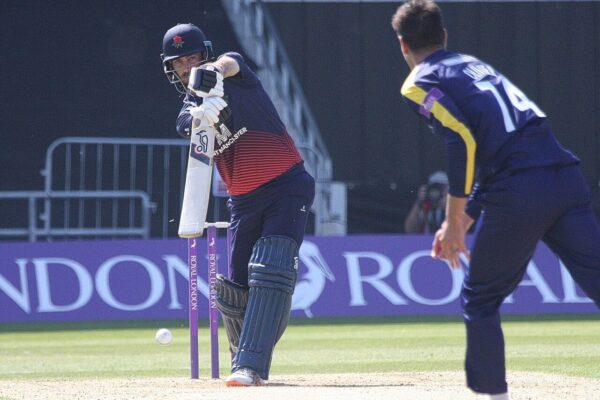
Then the batting rose to meet the bowling. He developed into a dependable lower-middle-order Test batter, capable of rescue jobs, partnerships with the tail, and the occasional innings that changed the shape of a match. His unbeaten 175 against Sri Lanka at Mohali in 2022 was the highest Test score by an Indian batting at No. 7 or lower.
He also moved into rare all-round territory statistically. Jadeja became one of the quickest players in Test history to complete the double of 3,000 runs and 300 wickets. He spent long periods near the top of the ICC Test rankings for bowlers and all-rounders, and in 2017 he rose to No. 1 among Test bowlers.
By the middle phase of his career, he was no longer being picked because he could do a bit of everything. He was being picked because in Test cricket he did several things at a very high level.
ODI tournaments and the big-match record
His ODI career had a different rhythm. There were phases when he looked essential and others when his role narrowed, but tournament cricket repeatedly brought him back into focus.
One of his most important performances came in the 2013 Champions Trophy. Jadeja finished as the tournament’s leading wicket-taker and was named Player of the Match in the rain-hit final against England, where his unbeaten 33 and two wickets were decisive in India’s win. Later that year, he became the first Indian bowler since Anil Kumble to reach No. 1 in the ICC ODI bowling rankings.
He was also part of India sides that reached the knockout stages deep into major events: the 2015 and 2019 ODI World Cups, the 2023 ODI World Cup final, and multiple Asia Cup-winning campaigns. In the 2023 World Cup, his wicket-taking and control through the middle overs were again central to India’s run.
T20Is, retirement from the format, and the final medal
Jadeja’s T20 international career was often shaped by role rather than volume. He was not always the headline act, but he remained useful because he could cover several jobs in one selection slot: left-arm spin, lower-order batting, and elite fielding.
He was part of India’s runners-up side at the 2014 T20 World Cup and later the squad that won the 2024 T20 World Cup. After that title, he announced his retirement from T20 internationals. It was a fitting closing point in the format: a long career, plenty of tactical value, and one major trophy at the end of it.
Why Ravindra Jadeja has been so hard to replace
Some cricketers are easy to describe and hard to substitute. Jadeja belongs in that category.
With the ball, he is not a mystery spinner. His threat comes from pace through the air, accuracy, subtle variation, and pressure that builds ball after ball. Batters often feel they should be able to score off him more freely than they actually can.
With the bat, he grew from a lower-order hitter into a proper middle-order option in many situations, especially in Test cricket. He can counterattack, but he can also absorb pressure and bat time.
And then there is the fielding. For years, Jadeja has been one of the quickest movers in the ring, with a powerful and accurate throw that has produced direct hits from angles most players do not even attempt. That part of his game is not decoration. It changes matches.
Off the pitch: horses, the sword celebration, and family life
Away from cricket, Jadeja has kept strong ties to Gujarat and is closely associated with Jamnagar. He married Rivaba Solanki on April 17, 2016, and the couple have a daughter, Nidhyana, born in 2017.
His best-known personal trademark is the sword celebration, the bat swish that often follows a fifty or hundred. It is theatrical without being complicated, and it has become one of the most recognizable celebrations in Indian cricket.
He is also known for his interest in horses and horse riding, something he has shared publicly on social media and in interviews.
A few off-field incidents have drawn attention over the years. During his wedding procession in 2016, celebratory gunfire reportedly led to a police inquiry. Earlier, the IPL suspension in 2010 was a formal disciplinary matter, not gossip. As for personal or business claims beyond what Jadeja has publicly confirmed, they should be treated cautiously unless backed by reliable reporting.
Career numbers in context
Across formats, Jadeja’s record places him among India’s most productive all-rounders. His exact totals naturally change as a playing career continues, but the broad shape is clear: substantial Test runs, a large haul of international wickets, major ICC tournament medals, and a fielding reputation that stands on its own.
That is why the Ravindra Jadeja profile has always been slightly unusual. He has never fit neatly into one label. Spinner, batter, fielder, lower-order fighter, middle-overs controller, crisis man, title-winning squad member, all of them are true, and none of them is quite enough on its own.
FAQ
What is Ravindra Jadeja’s role in cricket?
He is an all-rounder: a left-handed batter, left-arm orthodox spinner, and outstanding fielder.
How did Ravindra Jadeja get the nickname “Sir”?
The nickname became popular after MS Dhoni used it jokingly in social media posts in 2013, and it stuck.
Has Ravindra Jadeja won a World Cup?
Yes. He was part of India’s Under-19 World Cup-winning squad in 2008 and the senior team that won the 2024 T20 World Cup.
Which IPL teams has Ravindra Jadeja played for?
He has played for Rajasthan Royals, Kochi Tuskers Kerala, Chennai Super Kings, and Gujarat Lions.
What is Ravindra Jadeja’s famous celebration?
He is widely known for his sword celebration after reaching a milestone score.
What makes Ravindra Jadeja such a valuable cricketer?
His value comes from three skills in one player: accurate spin bowling, useful batting, and top-class fielding.
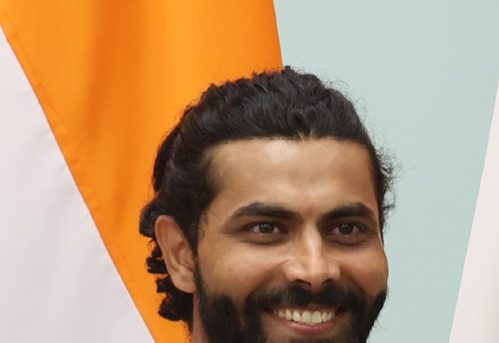
Photo: Prime Minister's Office, GODL-India, via Wikimedia Commons