On 21 May 1997, Saeed Anwar scored 194 against India in Chennai, falling six runs short of a double-century that no man had yet made in a one-day international. He faced 146 balls, struck 22 fours and five sixes, and left Pakistan with a record that would stand for more than two decades.
That innings became his calling card, but it can obscure the rest of the career: the difficult start in Test cricket, the hundreds in England, the unbeaten 188 in Kolkata and three World Cups in which he led Pakistan’s run-scoring. His game had more range than one extraordinary afternoon suggests.
From Karachi classrooms to the opening slot
Born in Karachi on 6 September 1968, Anwar spent part of his childhood in Iran before his family returned to Pakistan. Biographical accounts describe a cricket-playing household: his father played at club level, while his brother also played age-group cricket.
Anwar’s route into the professional game was not straightforward. He studied at Government Degree Science College in Malir Cantt and later graduated from Karachi’s NED University of Engineering and Technology. Profiles of his early life describe plans for postgraduate study in the United States before cricket became his occupation.
The engineering graduate entered a domestic system in which players moved between regional and departmental sides. His teams included Karachi, United Bank, National Bank of Pakistan and Zarai Taraqiati Bank Limited. Those competitions gave him the grounding to challenge for an international opening position.
Pakistan first selected him for an ODI against West Indies in Perth on 1 January 1989. During the following Australian season, he made his first international hundred: 126 from 99 balls against Sri Lanka in the 1989-90 World Series Cup.
It was an early demonstration of his appeal. A left-handed opener could attack the new ball without appearing to force the pace.
A false start in Tests, then a run of hundreds
Test cricket offered a harsher introduction. On debut against West Indies at Faisalabad, beginning on 23 November 1990, Anwar was dismissed for a duck in both innings. Establishing himself in the longer format took considerably more time than earning his first cap.
In one-day cricket, however, his ability to turn a start into a substantial score was becoming clear. At Sharjah in 1993, he made hundreds in three successive ODI innings, against Sri Lanka, West Indies and Sri Lanka again.
The sequence mattered beyond its novelty. Opening against a new ball brings the risk of an early dismissal; Anwar was showing that he could survive that phase and then dictate an innings.
His Test career gathered momentum during the mid-1990s. On Pakistan’s 1996 tour of England, he scored 362 runs in three Tests, including 176 at The Oval. Pakistan won the series 2-0, and his contribution helped earn him selection as one of Wisden’s five Cricketers of the Year in 1997.
Earlier in 1996, he had also finished as Pakistan’s leading scorer at the World Cup, with 329 runs. The team’s campaign ended against India in the quarter-final, but Anwar had become an established presence at the top of the order.
Chennai: 194, and a record that lasted
The innings most closely associated with his name came in the Independence Cup in Chennai.
Against an Indian attack led by Venkatesh Prasad, Anwar moved beyond a century and kept finding boundaries. He used a runner during the innings, but remained capable of clearing the field, particularly when he attacked Anil Kumble’s leg-spin.
His 194 surpassed Viv Richards’ 189 not out as the highest individual score in men’s ODIs. Pakistan won the match by 35 runs.
The distinction between men’s and women’s cricket matters here: Australia’s Belinda Clark made 229 not out in a women’s ODI later in 1997. Anwar’s men’s record was equalled by Zimbabwe’s Charles Coventry in 2009, then surpassed when Sachin Tendulkar made 200 not out against South Africa in February 2010.
For Pakistan, the mark lasted until Fakhar Zaman’s unbeaten 210 against Zimbabwe in July 2018.
The record was exceptional, but it also grew out of familiar strengths: quick recognition of length, clean contact and the ability to score through gaps before a captain could close them.
Kolkata and a second World Cup campaign
Two years later, Anwar produced an innings of a different kind against India.
In the February 1999 Asian Test Championship match in Kolkata, he made 188 not out in Pakistan’s second innings. He carried his bat through a completed total of 316, becoming the third Pakistani to achieve that feat in Tests.
Where Chennai had been about sustained acceleration, Kolkata demanded concentration as wickets fell around him. Pakistan won by 46 runs, and his contribution was central to the result.
That summer, he scored 368 runs at the World Cup in England, again finishing as Pakistan’s leading scorer. His hundreds against Zimbabwe and New Zealand helped the side reach the final.
The campaign ended abruptly at Lord’s, where Australia dismissed Pakistan for 132 and won by eight wickets. Anwar’s tournament nevertheless reinforced his importance to a side whose performances could swing sharply from one match to the next.
He also had spells in charge of the national team, captaining Pakistan in seven Tests and 11 ODIs. Leadership was part of his career, though opening the batting remained his defining responsibility.
Bereavement, a final World Cup and retirement
Public accounts of Anwar’s family life record that he married Lubna, a doctor, in March 1996. In 2001, their daughter Bismah died at the age of three.
Reporting on his life has frequently linked that bereavement with his increasing religious commitment. It was a profound personal loss, not simply an explanation for changes in his cricket, and deserves to be treated separately from his performances.
He returned to the World Cup in 2003 and scored 101 against India at Centurion. Pakistan lost the match and failed to progress beyond the group stage, but he finished with 218 runs, the team’s highest tally. He had therefore led Pakistan’s scoring at all three World Cups he played: 1996, 1999 and 2003.
His international retirement followed in August 2003.
Across 247 ODIs, he scored 8,824 runs at an average of 39.21, with 20 centuries and 43 half-centuries. Those 20 hundreds were Pakistan’s national ODI record when he retired.
His Test figures were equally substantial: 4,052 runs in 55 matches at 45.52, including 11 hundreds and 25 half-centuries.
Timing rather than brute force
Anwar could score quickly without making every stroke look violent. His strongest work often came through the off side, where he used the ball’s pace and opened the face of the bat to find space.
Width invited the cut or square drive. A fuller delivery could disappear through cover. His timing made those strokes look economical, but they placed considerable pressure on bowlers: a small error in line could become a boundary.
He was not merely a stylist who occasionally made a large score. His Test average, repeated ODI hundreds and performances across three World Cups show how effectively that method worked.
Occasional slow left-arm orthodox bowling added another entry to the scorecard, but batting was his trade.
Life beyond the boundary
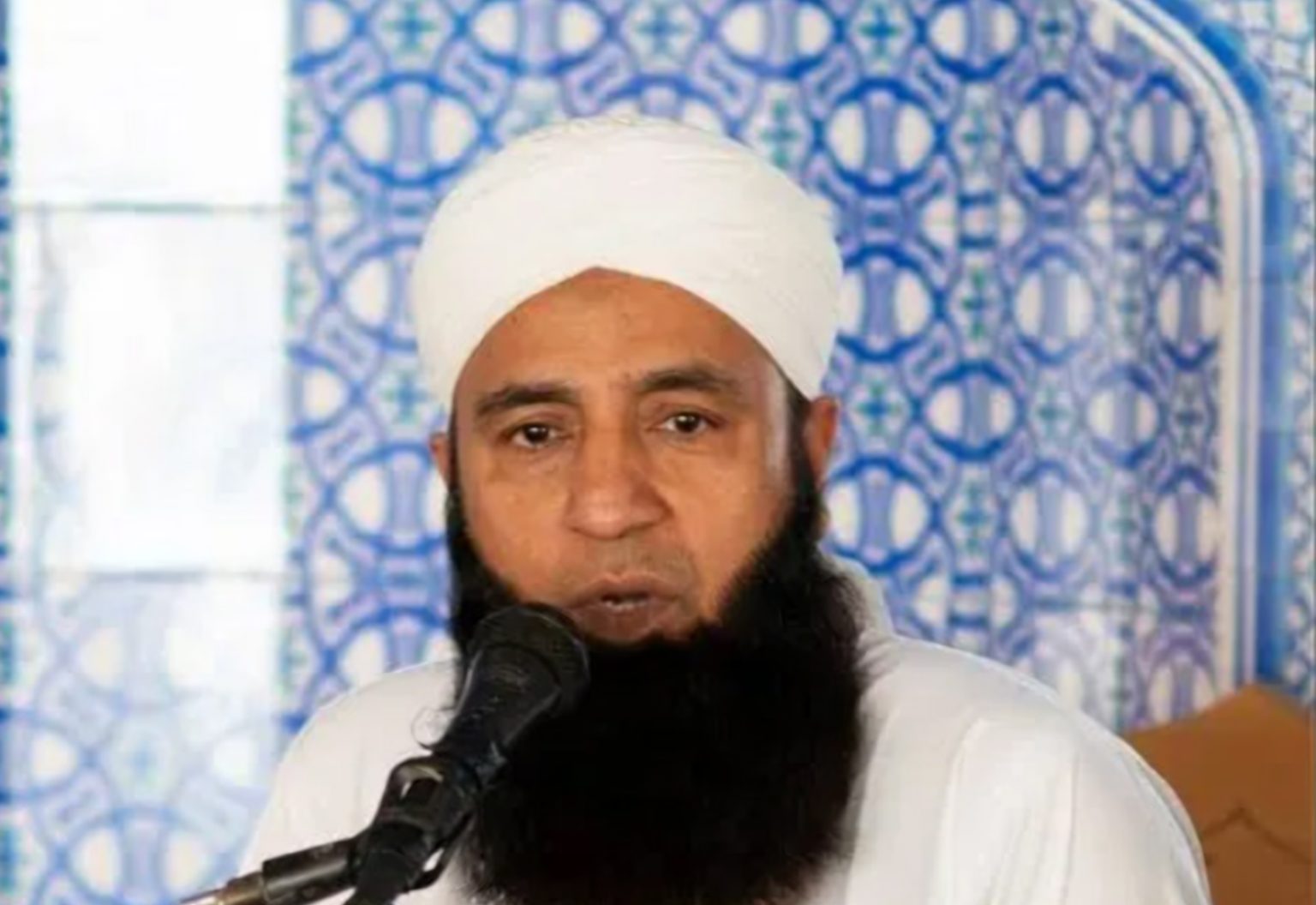
After his playing career, Anwar became publicly associated with religious preaching through Tablighi Jamaat. Much of his public profile shifted away from cricket and towards religious gatherings and talks.
That work has also brought scrutiny. In May 2024, media outlets reported on a circulating video in which he linked women’s employment with marital breakdown. The remarks drew criticism. They were his expressed views, not an established explanation for divorce trends.
For cricket followers, the enduring images remain more specific: the left-hander finding room through cover, the long innings in Kolkata, and the scoreboard in Chennai stopping at 194.
FAQ
How many international centuries did Saeed Anwar score?
He scored 31 international centuries: 20 in ODIs and 11 in Tests.
What was his highest ODI score?
He made 194 against India in Chennai on 21 May 1997, setting the men’s ODI world record at the time.
What was his highest Test score?
His highest Test score was 188 not out against India in Kolkata in February 1999. He carried his bat through Pakistan’s second innings.
Did he captain Pakistan?
Yes. He captained Pakistan in seven Tests and 11 ODIs.
When did he retire from international cricket?
He announced his retirement in August 2003, having played 55 Tests and 247 ODIs.
What did he do after retirement?
He became closely associated with Islamic preaching and Tablighi Jamaat.
Photo: HK 360, CC BY 3.0, via Wikimedia Commons