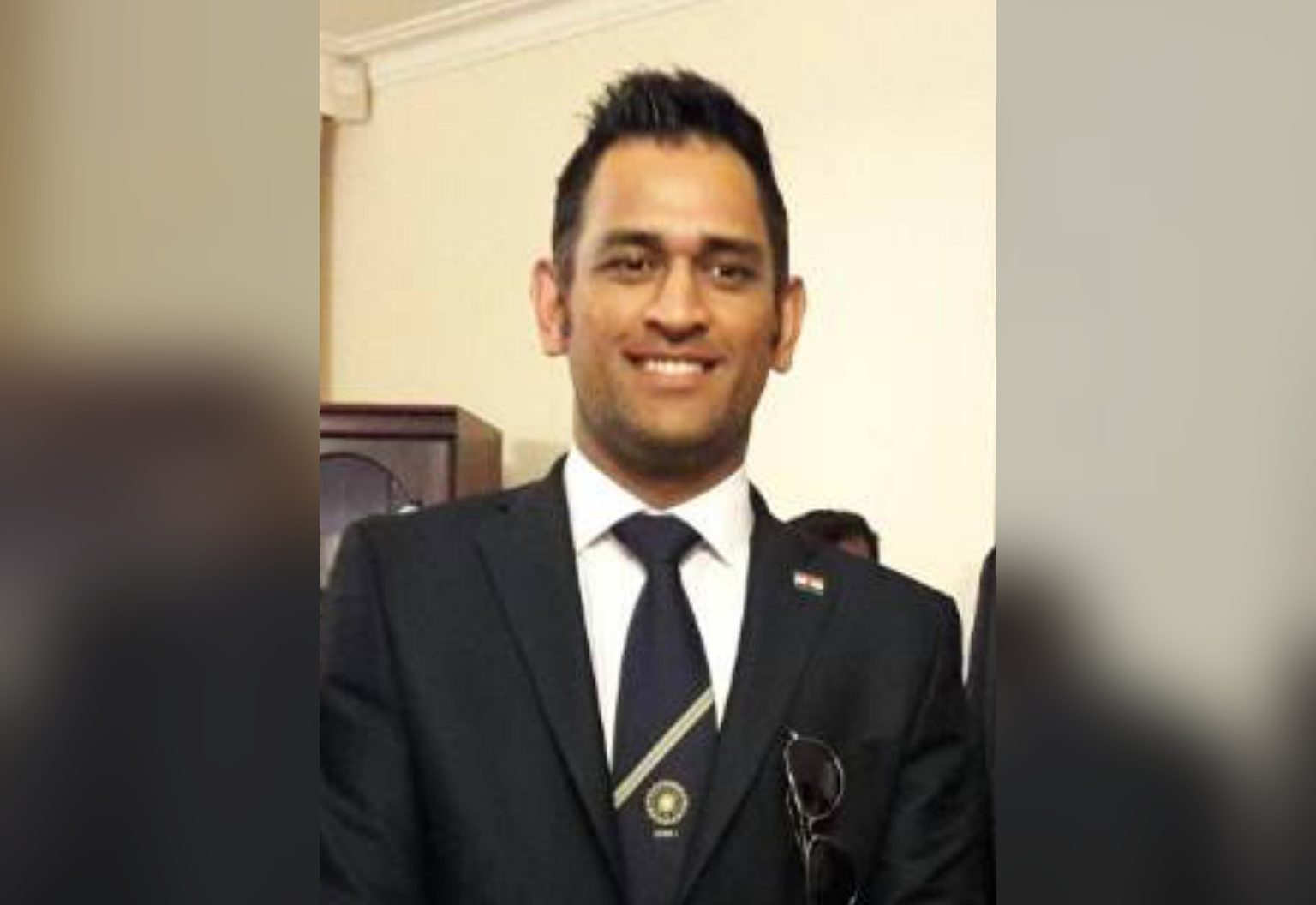
The image that endures is from Mumbai in 2011: Mahendra Singh Dhoni stepping down the pitch, swinging through the line, and sending the World Cup final into the night sky. It was a shot that fit the player perfectly, decisive, uncluttered, and delivered when the pressure was at its highest.
That moment did not come out of nowhere. Dhoni’s career was built in layers: a schoolboy goalkeeper in Ranchi, a hard-hitting domestic cricketer for Bihar and Jharkhand, an unconventional wicketkeeper-batsman who changed India’s one-day middle order, and then a captain who collected every major ICC white-ball trophy. Even after retiring from international cricket in August 2020, his bond with Chennai Super Kings kept him central to the game’s biggest franchise stage.
From Ranchi school grounds to the domestic circuit
Dhoni was born on July 7, 1981, in Ranchi, then in Bihar and now in Jharkhand. Before cricket became his profession, he played football and badminton at district and club level. The football link matters. He was a goalkeeper first, and it was a coach’s suggestion, try wicketkeeping for the cricket team, that redirected his sporting life.
He grew up in a close family with his parents, Pan Singh and Devaki Devi, his sister Jayanti, and his brother Narendra. Ranchi remained a constant in his story even after fame arrived; unlike many Indian stars, he never lost that strong association with his hometown.
His first-class debut came for Bihar in the 1999-00 Ranji Trophy season. He later represented Jharkhand after the state reorganization, and those domestic years gave early signs of the cricketer he would become: powerful through the leg side, willing to attack from the start, and never especially interested in looking textbook if effectiveness would do.
There was also a working life running alongside the cricket one. From 2001 to 2003, he was employed as a Travelling Ticket Examiner with the railways at Kharagpur. That period has become part of Dhoni folklore, not least because it shows how ordinary his route looked before it became extraordinary.
One often-repeated cricket detail from those years concerns the helicopter shot. It is widely credited to practice sessions with his friend and former Jharkhand cricketer Santosh Lal, who is often described as having helped shape the stroke that later became Dhoni’s signature.
The India breakthrough came fast
International cricket did not begin smoothly. Dhoni made his ODI debut against Bangladesh in December 2004 and was run out for a duck. What followed, though, was one of the quickest rises in Indian limited-overs cricket.
In April 2005, he blasted 148 against Pakistan at Visakhapatnam, an innings that announced him as far more than a wicketkeeper filling a batting slot. Months later came 183 not out against Sri Lanka in Jaipur, still the highest individual ODI score by a wicketkeeper. India had seen aggressive batters before, but not many who could combine lower-order power, chase control, and wicketkeeping in quite this way.
His Test debut followed against Sri Lanka in December 2005. He entered T20 internationals in 2006, just as the shortest format was beginning to reshape the sport. By then, Dhoni had already become one of the most discussed players in the Indian side, not because he looked classical, but because he kept producing runs that mattered.
Captaincy turned him into something bigger
A year can change a career. In 2007, after India’s disappointing 50-over World Cup campaign, Dhoni was handed the captaincy for the inaugural ICC World Twenty20 in South Africa. The squad was young, the format still new, and expectations were uncertain. India won the tournament.
That title changed his standing immediately. He was no longer only a destructive wicketkeeper-batsman; he was now the captain of a side that looked freer and sharper than many expected. Around that time, Sachin Tendulkar is widely reported to have backed Dhoni’s leadership credentials, and the support mattered at a key moment in Indian cricket.
The major trophies followed in sequence. Under Dhoni, India won the 2007 ICC World Twenty20, the 2011 ICC Cricket World Cup, and the 2013 ICC Champions Trophy. No other captain has won all three major ICC white-ball titles.
The 2011 World Cup remains the centerpiece. Dhoni promoted himself ahead of Yuvraj Singh in the final against Sri Lanka, a decision that carried risk and ended in triumph. He finished unbeaten on 91, and the six that sealed the match became one of the defining images in Indian sport.
His captaincy extended well beyond tournament wins. Dhoni led India in ODIs from 2007 to early 2017, in T20Is across the same broad period, and in Tests from 2008 until his retirement from the format in December 2014. India also reached the top of the ICC Test rankings under him, and he led the side to memorable home success in the longest format.
The numbers behind the reputation
Dhoni’s record holds up without embellishment.
In Test cricket, he played 90 matches, scoring 4,876 runs at an average of 38.09, with 6 centuries and 33 fifties. For a player whose strongest public identity was tied to white-ball cricket, that is a substantial Test return, especially given the dual demands of wicketkeeping and captaincy.
In ODIs, his body of work is even stronger: 350 matches, 10,773 runs, an average of 50.57, 10 centuries, and 73 fifties. He also finished with 84 not outs, the most in men’s ODI cricket, which says plenty about his role in chases and late-innings management.
His T20I career brought 98 matches and 1,617 runs. The batting numbers there are more modest, but T20 internationals captured another side of him: tactical control, field awareness, and the ability to squeeze games through decisions as much as through strokeplay.
Behind the stumps, he was just as influential. Dhoni recorded 123 stumpings in international cricket, including 107 in ODIs, the most in that format. His glovework was rarely flashy for its own sake; it was quick, economical, and often decisive, especially against spinners.
He was also the first player to win the ICC ODI Player of the Year award twice, taking it in 2008 and 2009. Those were the years when his batting peak and his leadership rise overlapped.
Why his style worked
Dhoni’s game was unusual enough to be instantly recognizable. He batted right-handed, often with a strong bottom hand, and generated power without needing a long flourish. He could hit straight, whip length balls into the leg side, and stay deep enough in an innings to finish it himself.
The famous helicopter shot became shorthand for his method, but it was only one part of the package. More important was his sense of tempo. He was willing to leave a chase looking slightly behind if he believed he could recover it later. That made him look calm to the public, though it was really a form of control.
As a wicketkeeper, he stood up well to spin, gathered cleanly, and completed stumpings with remarkable speed. As a captain, he preferred practical solutions over grand gestures. That combination is why nicknames such as Mahi and Captain Cool stuck so firmly.
He did bowl occasionally, but only rarely. In ODI cricket, he sent down just 36 deliveries.
Chennai Super Kings and the long IPL chapter
Some player-franchise relationships feel temporary. Dhoni and Chennai Super Kings never did.
He was signed by CSK in the inaugural IPL auction in 2008 for US$1.5 million, then the highest bid of that auction. From the start, he was their captain and public face. Under him, Chennai won the IPL in 2010, 2011, 2018, 2021, and 2023, and also lifted the Champions League T20 in 2010 and 2014.
When CSK were suspended for the 2016 and 2017 seasons, Dhoni moved to Rising Pune Supergiant. He captained Pune in 2016, before Steve Smith took over in 2017. That detail matters because it is often misstated. Dhoni then returned to Chennai when CSK came back, and the reunion quickly produced another title in 2018.
His IPL story is not only about trophies. It is also about longevity, game management, and the way a player can shape a team’s identity over more than a decade. Even after stepping away from international cricket, he remained the central figure around whom CSK’s seasons were discussed.
Awards, honors and recognition
Dhoni’s cricket career brought major national recognition. He received the Rajiv Gandhi Khel Ratna in 2007, the Padma Shri in 2009, and the Padma Bhushan in 2018. In 2011, he was awarded the honorary rank of Lieutenant Colonel in the Territorial Army.
He was also named in ICC teams of the year across formats and was selected as captain of the ICC World Test XI multiple times. Those honors reflected more than popularity; they marked a period in which he was one of the most influential cricketers in the world.
Some sources and drafts also mention ICC Hall of Fame induction, but that is inaccurate. Dhoni has not been inducted into the ICC Hall of Fame.
Life away from cricket
Away from the field, Dhoni’s public image has always mixed privacy with visibility. He married Sakshi Singh Rawat in 2010, and they have a daughter, Ziva.
Ranchi remains central to his life. His farmhouse there, often referred to as Kailashpati, is frequently mentioned in reports about his off-season routine, vehicles, pets, and interest in a quieter life away from the tournament circuit.
Business has become a large part of his post-peak public profile. He has had ownership or investment links with ventures in fitness, sport, lifestyle, technology, and consumer brands. Some of the better-known associations include Chennaiyin FC in football and SportsFit in the fitness space. Because these holdings and endorsements can change over time, exact counts of companies, gyms, or brand deals vary by source and are often best treated cautiously unless tied to a specific public filing or company statement.
The same caution applies to wealth estimates. Published reports have placed his net worth at different levels, but such figures are estimates, not verified disclosures.
Dhoni has also been linked with charitable work through the MS Dhoni Charitable Foundation and other initiatives supporting sport and education. Public reporting has credited him with contributions to causes involving young athletes and members of the armed forces.
Controversies, scrutiny and rumor
A career this visible was never going to be free of scrutiny.
In 2013, Dhoni faced questions over an alleged conflict of interest connected to Rhiti Sports, which managed him. The matter was discussed publicly, but allegations about ownership stakes were denied, and claims beyond that should not be stated as established fact.
That same year, the IPL spot-fixing scandal brought intense attention to Chennai Super Kings and team official Gurunath Meiyappan. Dhoni was questioned in related proceedings, but it is important to distinguish scrutiny from wrongdoing; he was not found guilty of spot-fixing.
There were also on-field disciplinary moments. In 2015, he was fined 75 percent of his match fee after making avoidable physical contact with Bangladesh bowler Mustafizur Rahman during an ODI. In 2019, during an IPL match, he walked onto the field to question umpires over a no-ball decision, an act that drew widespread criticism and a fine.
Rumors about dressing-room rifts have circulated for years, especially around senior India players in the late 2000s. Those reports remain just that, reports and speculation, not settled fact. The same applies to recurring retirement talk around his IPL future, which has often been fueled by media interpretation rather than formal announcements.
FAQ
What is MS Dhoni’s full name?
His full name is Mahendra Singh Dhoni.
When was MS Dhoni born?
He was born on July 7, 1981.
Is MS Dhoni retired from international cricket?
Yes. He retired from international cricket in August 2020.
Which IPL team is MS Dhoni associated with?
He is associated with Chennai Super Kings, the franchise he has led for most of his IPL career.
How many ICC trophies did Dhoni win as India captain?
He won three major ICC white-ball trophies as captain: the 2007 World Twenty20, the 2011 Cricket World Cup, and the 2013 Champions Trophy.
How many IPL titles has MS Dhoni won as captain?
He has led Chennai Super Kings to five IPL titles: 2010, 2011, 2018, 2021, and 2023.
Photo: Amardeep Singh, CC BY-SA 4.0, via Wikimedia Commons