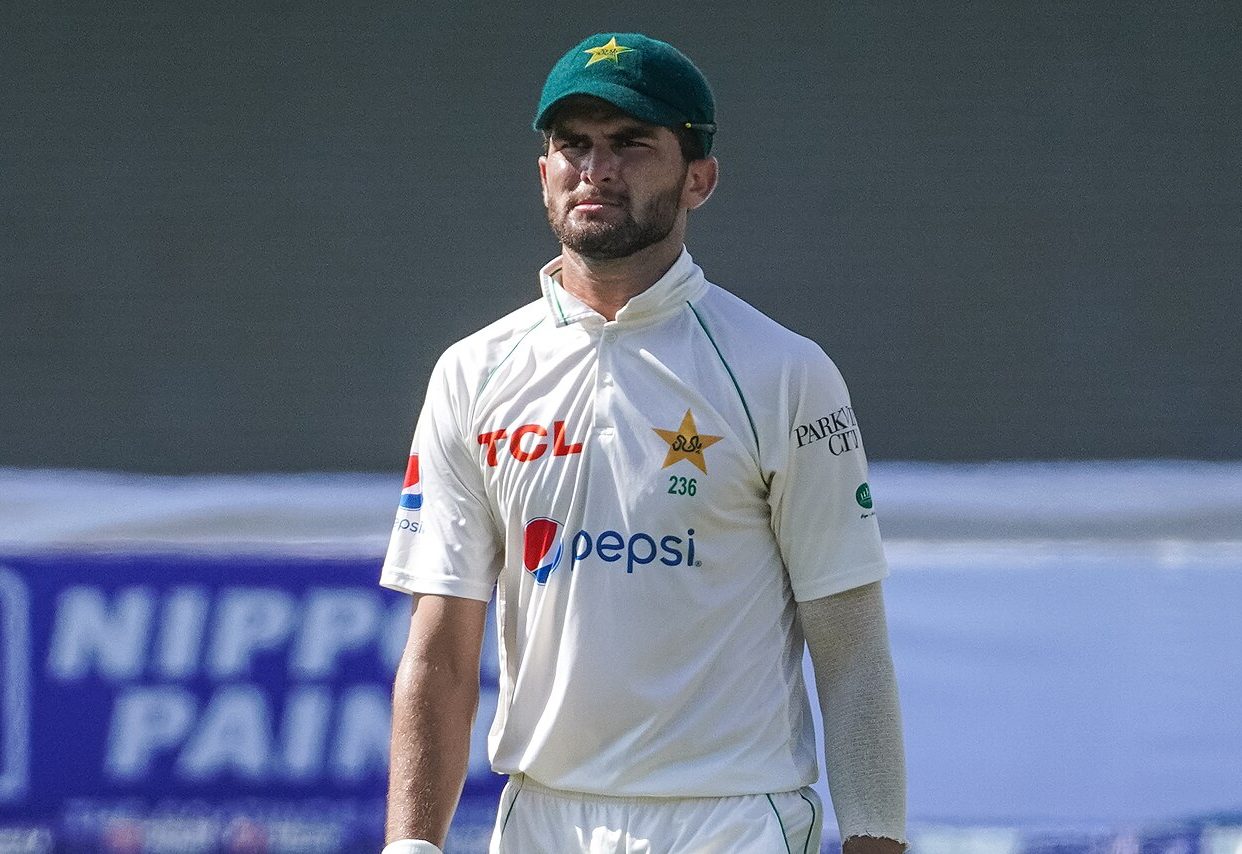
At 1.98 metres, Shaheen Shah Afridi is hard to miss. What made him impossible to ignore, though, was not just the height. It was the sight of a young left-arm quick hurrying batters with late swing, steep bounce and the kind of opening spell that can tilt a match before it has properly begun.
From Landi Kotal to Pakistan’s age-group system
Shaheen Afridi was born on April 6, 2000, in Landi Kotal in the Khyber region of Pakistan, close to the Khyber Pass. Cricket ran through the family. He is the youngest of seven brothers, and his elder brother Riaz Afridi, who played one Test for Pakistan, helped guide his early development. That gave the boy from Landi Kotal both a model and a route into the game.
He moved through regional age-group cricket with FATA Under-16s and Khyber Pakhtunkhwa Under-19s, then into Pakistan’s Under-19 side. By the time the 2018 Under-19 Cricket World Cup arrived, the outline of his game was already clear: left-arm pace, bounce from a high release point, and a strong instinct for wickets rather than mere control. He finished that tournament with 12 wickets and left as one of Pakistan’s most closely watched young fast bowlers.
The first-class debut that changed everything
Some careers build gradually. Shaheen’s domestic breakthrough came with a jolt.
On his first-class debut for Khan Research Laboratories against Rawalpindi in September 2017, he took 8 for 39 in the second innings. Those were the best figures by a Pakistani bowler on first-class debut, and they instantly pushed him into the wider conversation. It was not just a promising spell from a teenager; it was a performance that demanded attention.
He played domestic cricket for KRL in 2017-18, then represented Balochistan, Northern and later Khyber Pakhtunkhwa as Pakistan’s domestic structure evolved. The important point in that stretch was consistency. He was not simply a youth prospect with pace on his side. He was already producing spells that changed matches.
Franchise opportunities followed quickly. He appeared for Dhaka Dynamites in the Bangladesh Premier League and later had county and league stints in England, including spells with Hampshire, Middlesex and Nottinghamshire, as well as a run with Welsh Fire in The Hundred. In the 2023 T20 Blast, playing for Nottinghamshire, he became the first bowler known to take four wickets in the first over of a men’s T20 innings, a reminder that his new-ball threat travels well.
Lahore Qalandars and the making of a franchise leader
If one team has framed his T20 career most clearly, it is Lahore Qalandars. He joined the franchise in the Pakistan Super League in 2018 and soon became central to how the side played: attack early, trust the strike bowler, and keep going for wickets.
Captaincy followed in 2022, and Lahore’s fortunes changed with it. Under Shaheen Afridi, the Qalandars won back-to-back PSL titles in 2022 and 2023, the first team in the tournament’s history to do so. Those seasons mattered because they moved him from star player to on-field leader. He was setting fields, taking the new ball himself, and carrying the pressure overs at both ends of the innings.
Reports about PSL salaries vary, so any exact figure should be treated cautiously. Pakistani media have reported that his Lahore Qalandars deal placed him among the league’s top earners, but franchise contract details are not always fully public.
There is also a lighter detail from his Lahore years: he has spoken about taking an interest in the team’s kit design, a small sign that his involvement with the franchise went beyond match day.
Three-format rise with Pakistan
His international career moved almost as fast as his run-up.
Shaheen made his T20I debut for Pakistan against the West Indies on April 3, 2018. His ODI debut came against Afghanistan on September 21, 2018, and his Test debut followed against New Zealand in Abu Dhabi on December 3, 2018. Within one year, he had gone from youth cricket and a startling first-class debut to all three international formats.
The early impact was immediate. In the 2019 Cricket World Cup, he took 16 wickets, the most by a teenager in a men’s World Cup, and his 6 for 35 against Bangladesh became the best figures by a Pakistani bowler in a World Cup match. It was the sort of tournament that fixed his reputation beyond Pakistan: dangerous with the new ball, capable of striking in bursts, and unfazed by the stage.
His Test career developed a little differently, as fast bowlers often do. There were injuries to manage and workloads to balance, but the threat was obvious. His maiden Test five-for came against Sri Lanka in Rawalpindi in December 2019. When conditions offered movement, he could be devastating; when they did not, he still had bounce and angle to work with.
In T20 internationals, one of his most memorable spells came at the 2021 T20 World Cup against India, when he removed Rohit Sharma and KL Rahul early and finished with 3 for 31. Pakistan won by 10 wickets, and Shaheen’s opening burst shaped the match.
ODI cricket has arguably shown the fullest version of his skill set. He can swing the new ball, return in the middle overs, and still attack the stumps at the death. In 2023, he became the fastest Pakistani bowler to 100 ODI wickets, reaching the mark in 51 matches. That was also the joint-fastest by any bowler in men’s ODIs at the time, alongside Mitchell Starc.
Records, rankings and major honours
The awards came because the performances kept coming.
In 2021, he won the Sir Garfield Sobers Trophy as ICC Men’s Cricketer of the Year, becoming the first Pakistani player to receive that award. In the same period, he was also named in the ICC Men’s Test Team of the Year and ICC Men’s T20I Team of the Year.
He climbed high in the ICC bowling rankings as well, reaching the top spot in ODI bowling. Rankings shift over time, but his place among the leading white-ball fast bowlers of his era has been clear for several seasons.
Some career totals change from series to series, so fixed numbers can date quickly. What matters more in a lasting profile is the shape of the record: he has passed 100 wickets in ODIs and T20Is, collected five-wicket hauls in Tests and ODIs, and become one of Pakistan’s main strike bowlers across formats while still relatively early in his career.
What makes Shaheen Afridi so difficult to face?
Left-arm pace always creates a different angle, but that is only the starting point. Shaheen Afridi’s best bowling comes from the combination of three things: late swing, bounce from his height, and a willingness to attack the stumps.
With the new ball, he looks for movement into the right-hander and away from the left-hander, forcing batters to play. When he is in rhythm, the fuller length is what makes him dangerous. He is not just trying to keep runs down; he is trying to hit pads, timber and edges. Later in the innings, he can go shorter, use the bouncer, or fire in yorkers at the base of the stumps.
His pace has generally sat in the mid-to-high 130s km/h and often climbed into the 140s, with enough control to make that speed matter. More than raw numbers on the speed gun, it is the shape of the spell that stands out. He often makes the first two overs feel urgent.
Captaincy with Pakistan
National leadership arrived early too, though not without complication.
In late 2023, Shaheen was appointed Pakistan’s T20I captain. The move reflected both his standing in the side and his success leading Lahore Qalandars. His time in the role, however, was brief, as Pakistan later made another leadership change. That short stint still said something important about how he was viewed within the game: not only as a strike bowler, but as a cricketer trusted with responsibility.
Off the pitch: family, profile and public attention
Away from cricket, his personal life has drawn attention because of his ties to another well-known cricket family. Shaheen Afridi is married to Ansha Afridi, the daughter of former Pakistan captain Shahid Afridi. Their engagement was publicly reported in 2021, and the marriage later followed. Reports in Pakistani media have also noted the birth of their son; as with all family details, it is best to keep to what has been publicly confirmed by the family or widely reported by reliable outlets.
That connection has produced the occasional neat cricketing subplot. In PSL play, he once faced Shahid Afridi as an opponent, was hit for six, and then dismissed him soon after. It was a small, memorable scene: family link on one side, competitive instinct on the other.
He has often spoken with admiration about Wasim Akram, which is no surprise for a Pakistani left-arm fast bowler. Public interviews and lighter media appearances have also shown a more relaxed side to him, though much of his off-field image remains fairly reserved compared with some modern stars.
Claims about net worth, endorsement income and monthly earnings should be treated carefully unless they come from disclosed contracts or named financial reporting. Various outlets have estimated his wealth and sponsorship income, but those figures are, at best, informed estimates rather than verified public accounts.
As for controversy, any allegation needs careful labeling. There have been moments online and in press conferences that drew attention, but no major disciplinary finding defines his career. If a claim is not backed by an official ruling or credible reporting, it is better treated as rumor than fact.
Shaheen Afridi in context
Pakistan has produced a long line of fast bowlers, which makes any new arrival difficult to place too quickly. Shaheen’s case is stronger than most because his impact was visible so early and across so many settings: youth cricket, domestic cricket, the PSL, World Cups and all three international formats.
The height catches the eye first. Then the left arm, the angle, the swing, the full ball that keeps coming at the stumps. That is the thread running through his career so far, from Landi Kotal to the biggest stages in the game.
FAQ
What is Shaheen Afridi’s height?
He is 1.98 metres tall, or 6ft 6in.
When did Shaheen Afridi make his Pakistan debut?
He made his T20I debut in April 2018, his ODI debut in September 2018, and his Test debut in December 2018.
Who is Shaheen Afridi married to?
He is married to Ansha Afridi, daughter of former Pakistan captain Shahid Afridi.
What kind of bowler is Shaheen Afridi?
He is a left-arm fast bowler known for swing, bounce, new-ball wickets and attacking lengths.
Has Shaheen Afridi won a major ICC award?
Yes. He won the Sir Garfield Sobers Trophy as ICC Men’s Cricketer of the Year for 2021.
Which PSL team is most associated with Shaheen Afridi?
Lahore Qalandars, with whom he has been both a leading bowler and a title-winning captain.
Photo: Nazly Ahmed, CC BY-SA 4.0, via Wikimedia Commons